Inside the Bloomsbury Mews Hiding Britain’s Largest Egyptology Archive

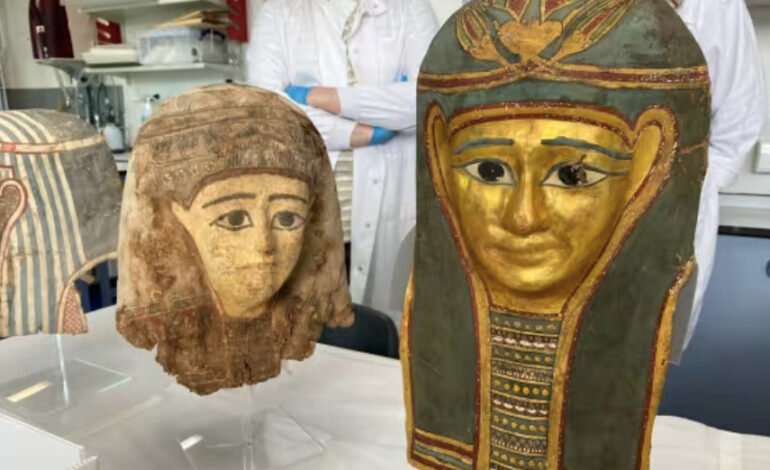
Walk down Doughty Mews in Bloomsbury and you could easily miss the building. It’s a cobbled cul-de-sac behind Doughty Street, the kind of place estate agents now call “characterful,” lined with converted stables and a sundial on one wall. Somewhere along it, behind an unassuming door, sits one of the most significant Egyptology archives in the world. Most of the tourists heading for the British Museum ten minutes away have no idea it exists.
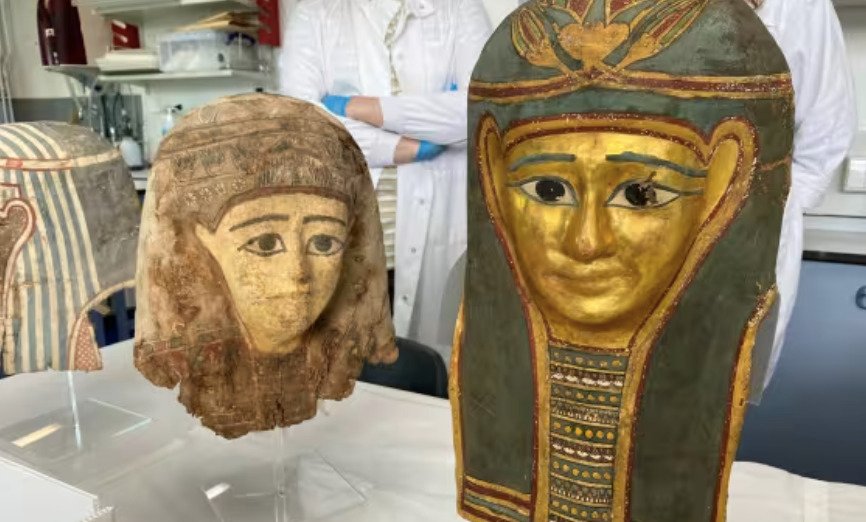
This is the Egypt Exploration Society, founded in 1882 and based at 2-4 Doughty Mews since 1968, when it moved from rented rooms in Marylebone. Inside are original watercolours painted by Howard Carter before he became famous, records from archaeological sites across Egypt, and a substantial photographic archive of early British excavation. Until recently, almost none of it could be properly seen.
The building itself explains why. Doughty Mews was built in the early nineteenth century as stable and coach house accommodation for the grander townhouses around it, the kind of place where horses lived, not archives. The Society has occupied three adjoining two-storey mews houses here for more than half a century, arranged around a residential flat and a set of rooms never designed to hold climate-sensitive papers, let alone welcome the public. A step at the entrance and a spiral staircase to the only toilet make the building genuinely difficult for many visitors to use at all.
Now the Society has been awarded £2,031,927 by the National Lottery Heritage Fund, its largest single grant in 143 years, to finally fix that. The building closed to members, researchers and visitors on 1 April 2026, with its collections moved to off-site storage while Studio Becoming, the architects behind the redevelopment, rebuild the mews houses into what the Society is calling a proper centre for Egyptian cultural heritage. The work is expected to run until 2028.
What’s striking is what the redevelopment is actually for. The Heritage Fund’s own announcement describes the Society’s holdings as including “the world’s largest papyrus collection,” which is true, but that collection, the Oxyrhynchus Papyri, more than 500,000 fragments recovered by Bernard Grenfell and Arthur Hunt between 1896 and 1907, has never been at Doughty Mews at all. It has sat at Oxford University for well over a century. Part of what this redevelopment actually promises is a dedicated papyri storage and research space in Bloomsbury for the first time in the Society’s history, not the rescue of a neglected archive so much as the creation of one that has never existed there.
What genuinely has been squeezed into those cramped mews rooms is different, and in some ways more surprising: Carter’s own artwork. Long before Tutankhamun made him famous, Carter worked as a teenage “tracer” for the Society, hired at seventeen to copy inscriptions and tomb paintings by hand. His largest surviving watercolour, a six-sheet, full-scale reproduction of a scene from the shrine to Anubis at Hatshepsut’s temple in Deir el-Bahari, was painted in 1894 when he was nineteen. It has spent years in the Society’s archive, occasionally lent out (it is currently on long-term loan to the Egypt Centre in Swansea), rather than on permanent public display anywhere in London.
That gap between what the Society holds and what anyone can actually see is the real story here. An organisation with a genuinely significant claim on the early history of British archaeology in Egypt has operated, for decades, more like a private research library than a public institution, run out of former stables with a step at the front door. The redevelopment plans include a ground-floor learning hub, a specialist library, proper accessible facilities including a lift and hearing loop, and a roof garden, modest ambitions by the standards of the British Museum a few streets away, but a genuine transformation for a building that has held this material out of public view since the late 1960s.
Carl Graves, the Society’s director, called the grant confirmation of something the Society has needed for a long time. Whether the finished building delivers on that will only be clear once the doors reopen in 2028. Until then, Doughty Mews stays closed, its watercolours and archive boxes packed into storage somewhere outside London, waiting for a version of this address built to actually be visited.
Doughty Mews stays closed until 2028, EyeOnLondon will be watching to see whether the finished building actually opens up the collection.
For more London arts and culture, visit EyeOnLondon at eye-on-london.com.
[Image Credit | The Egypt Exploration Society]
Follow us on:



Subscribe to our YouTube channel for the latest videos and updates!

We value your thoughts! Share your feedback and help us make EyeOnLondon even better!