Scotty the T. Rex’s 66-million-year-old rib reveals rare evidence of dinosaur healing

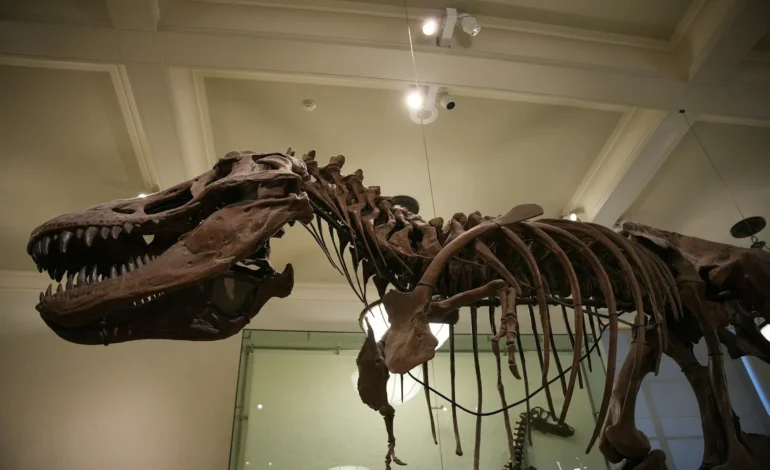
A fractured rib from Scotty, the largest Tyrannosaurus rex skeleton ever discovered, has given scientists an unusually detailed glimpse inside the body of a dinosaur that lived 66 million years ago.
Researchers have found a network of mineralised blood vessels inside the damaged bone, preserving evidence that the injury was still healing when Scotty died. The discovery offers a rare record of how a T. rex responded to serious trauma and shows how modern imaging can uncover biological information hidden inside fossils.
The research is being led by scientists at the University of Regina in Saskatchewan, Canada, with the latest work carried out using neutron imaging at the US Department of Energy’s Oak Ridge National Laboratory (ORNL). The team used the MARS instrument at ORNL’s High Flux Isotope Reactor and the VENUS instrument at its Spallation Neutron Source in April 2026.
Neutrons are particularly useful for detecting light elements such as hydrogen, complementing X-ray techniques that are effective at revealing denser materials. Together, the methods allowed researchers to investigate Scotty’s rib in three dimensions without damaging the fossil.
The investigation began in 2020, when University of Regina doctoral researcher Jerit Mitchell, then an undergraduate, identified structures inside the rib during micro-CT scanning at the Canadian Light Source. Further synchrotron X-ray imaging and microscopy provided evidence of fossilised blood vessels associated with the fractured area.
The vessels appear to have developed as part of the body’s response to the broken rib. Iron-rich blood entered the injured region, while new vessels formed during healing. Scotty then died before the fracture had completely repaired.
Researchers believe the conditions in which the dinosaur died also helped preserve these normally fragile structures. Scotty’s remains ended up in a salty marsh, where slower decomposition may have allowed the vascular network to survive long enough to become mineralised.
Scotty was discovered in Saskatchewan’s Frenchman River Valley, an important fossil site preserving evidence of dinosaur life shortly before the mass extinction of non-avian dinosaurs.
The team now plans to apply neutron imaging to more fossils, comparing injuries and healing across different species. The work could help researchers identify other examples of hidden soft-tissue preservation in museum collections.
For more, visit EyeOnLondon at eye-on-london.com
Follow us on:



Subscribe to our YouTube channel for the latest videos and updates!

We value your thoughts! Share your feedback and help us make EyeOnLondon even better!