The Last Ship, a musical by Sting

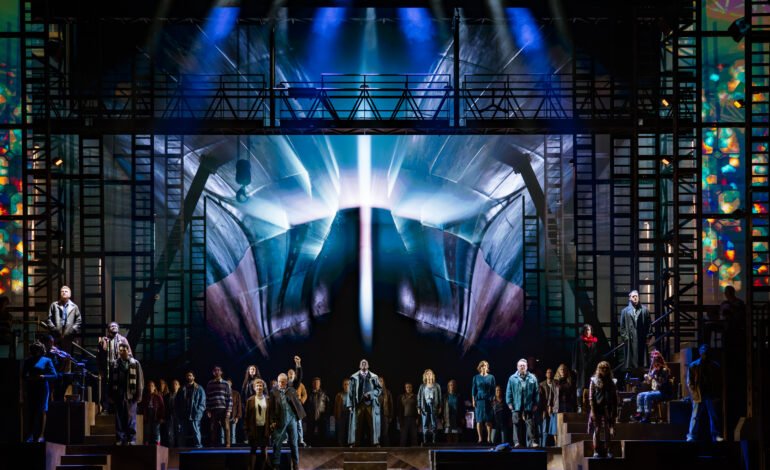
The Last Ship, A Musical by Sting | Theatre Royal Drury Lane until 3 October 2026
Sting takes the helm of his own musical at Drury Lane but the songs don’t move it forward one nautical mile
“The Last Ship: The Musical by Sting” docks at Theatre Royal Drury Lane, its full title perhaps a pre-emptive measure against confusion with other maritime musicals, a similar impulse, one presumes, to “Tina: The Tina Turner Musical.” This project has garnered significant publicity, and understandably so: it’s Sting’s own creation, drawing on songs as far back as his 1991 solo album, “The Soul Cages,” which explored his childhood in the northeast of England.
The musical narrates the demise of the shipbuilding industry in Wallsend, Tyneside, orchestrated by the Thatcher government in the mid-1980s. This highly specific temporal and geographical setting proved, unsurprisingly, not to be an immediate Broadway hit. We are, in fact, on the show’s third iteration. Its initial Broadway run foundered after approximately 109 performances, securing two Tony nominations but no wins. Sting himself joined the struggling cast to boost box office sales, but even he couldn’t salvage that particular sinking ship. Jimmy Nail originally played the lead; now Sting headlines this version himself, an impressive feat for someone turning seventy-five this week. He has penned all the songs, stars in the production, and this is reportedly the third book writer, or writers, the show has had. Having missed its Broadway debut, I gather the plot has been streamlined since. Even so, it still clocks in at three hours.
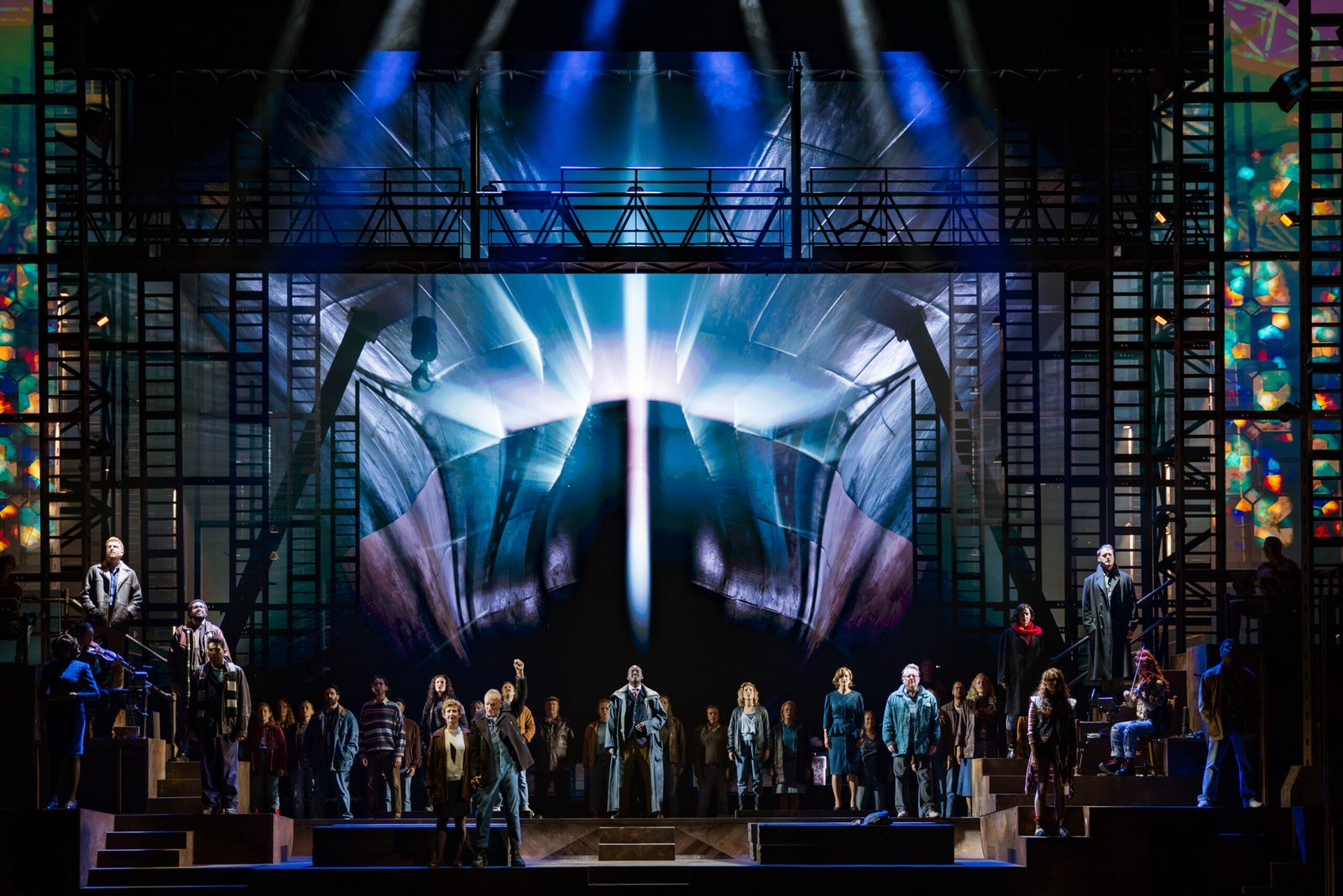
The production is staged at the enormous Drury Lane, where the set has been stripped back considerably. Dominating the rear is what appears to be the bow of a ship, which I initially took for a physical piece of scenery until I realized it was a massive video wall, with girders flying in around it.
My companion at the interval confessed she couldn’t understand a word of the initial singing, a sentiment I shared, wondering for the first twenty minutes if they might be singing in Swahili. It’s only after this initial period that something resembling a plot actually begins to unfold.
Essentially, three interwoven stories drive the narrative. There’s the shipyard itself and the workers’ reaction to a Tory politician arriving to announce its closure. Then there’s Jackie White, the shipyard foreman played by Sting, whose personal struggle, no spoiler, as it’s revealed early on, is his battle with lung cancer. Finally, another character returns after a seventeen-year absence, to his complete surprise, to discover he has fathered a child. This last point stretched credibility for me, as I believed a reasonably effective postal and telephone service existed in the 1980s.
While I’m not an uncharitable person, when it’s made abundantly clear early on that the government stopped ordering ships due to inefficiencies and delays in delivering this current, “last ship,” and then two and a half hours later the workers break into the shipyard, not to occupy it, not to protest, but to finish the boat overnight and set sail, I couldn’t help but think: if they could do this, why didn’t they finish it on time? They might not have been shut down at all!

The set is massive, and the songs are distinctly in Sting’s style. Some of the singing is quite beautiful: Jackie Morrison, as Peggy White, Sting’s character’s wife, delivers a couple of superb solos. Unfortunately, very few of the songs advance the plot even one nautical mile. They are beautiful songs, some dating back to “The Soul Cages,” and this is evidently a project that means a great deal to him, but the issues the show raises felt simplistic to me. “Billy Elliot” and “Pride” both tackle similarly disenfranchised industrial communities, albeit mining rather than shipbuilding, in a far more moving way.

I was lucky enough to see Shaggy in it, though it’s not a permanent arrangement, so don’t go expecting him. Not that you’d be missing a great deal: mostly what Shaggy did was wander around the stage looking mysterious. They’ve introduced a new character for this version, a ferryman based on Charon, the figure who ferries souls across to Hades, and he and Shaggy sang a few bits and pieces together, Shaggy has a genuinely pleasant singing voice, but mostly he just wandered around wafting his coat and looking moody, which, to be fair, he did very effectively. Although I had to check the programme afterwards to work out who he was even supposed to be.
It is undoubtedly sincere, serious in intent, and I wish I could have warmed to it more. Sting himself is really good in it, and if you like Sting, his music, and a bit of spectacle, I think you’ll have a good time.
EyeOnLondon would go for Sting and the spectacle alone, just don’t expect the songs to do much of the storytelling.
For more London arts and culture, visit EyeOnLondon at eye-on-london.com.
Theatre Royal Drury Lane · London
The Last Ship, A Musical by Sting
Until 3 October 2026
★★★☆☆
Sting takes the helm of his own musical at Drury Lane but the songs don’t move it forward one nautical mile
| Book | Barney Norris, based on earlier books by Lorne Campbell, John Logan and Brian Yorkey |
| Director | Leo Warner |
| Music | Sting |
| Cast | Sting (Jackie White) Jackie Morrison (Peggy White) Shaggy (The Wallsend Ferryman, 22-23 September only) |
Follow us on:



Subscribe to our YouTube channel for the latest videos and updates!

We value your thoughts! Share your feedback and help us make EyeOnLondon even better!