A weekend between Hercules and The Lion King shows what works on the West End stage

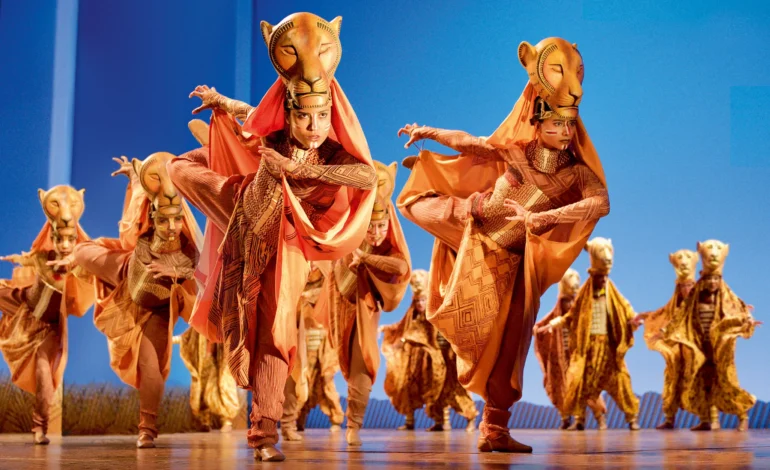
My Double Disney Weekend
Thanks to Disney Theatrical, and arranged by the wonderful Louis at Bread and Butter PR, I was invited to revisit Hercules and The Lion King over a weekend, including a hotel stay in central London. With that, and a pre-show meal on the Saturday evening, how could I refuse?!
Saturday
A Well-Placed Base
The weekend began with a stay in Bloomsbury. My sister and I checked into the DoubleTree by Hilton on Southampton Row and were surprised and delighted to be greeted with warm chocolate cookies by the friendly and efficient front desk staff.
It’s exactly where you want to be for a theatre break: just a fifteen-minute walk to Covent Garden and the West End, yet far enough removed to feel calm when the evening is done.
The hotel itself is modern and comfortable, but unfussy. This is a strength, allowing it to function as a base rather than a distraction, somewhere to reset between shows.
Dinner Beneath the City
Before the theatre, we had dinner beneath Covent Garden in the Courtyard Wine Cellars. I’m always excited to find new pre-theatre dining options, and despite being very familiar with Covent Garden, this truly felt like a gem.
Stepping down from the crowds, you discover a network of vaulted cellars that seem to stretch endlessly. The food is simple and well-executed, featuring sharing boards and light dishes, nothing too heavy before a show. The wine is the focus, and rightly so. It’s the sort of place where you could easily lose track of time if you weren’t heading to the theatre.
Hercules: entertaining, but dramatically adrift
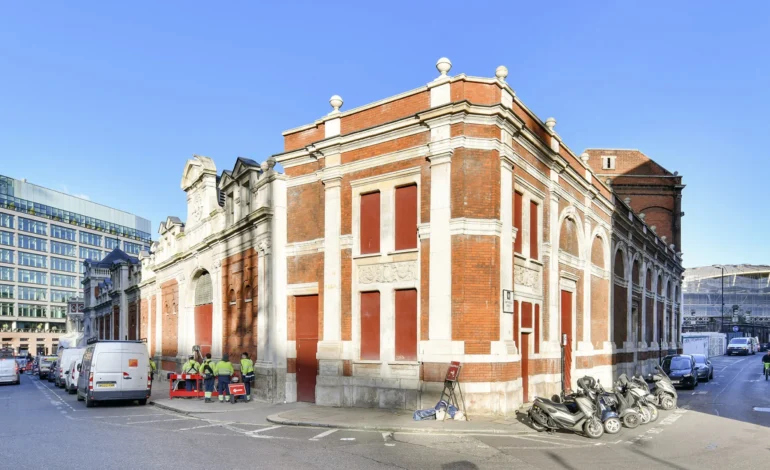
Then a short walk off to the theatre and the beautifully restored Theatre Royal Drury Lane for Hercules, which arrives with energy, colour and is bright, fast-moving and aimed squarely at a family audience. Alan Menken’s expanded score leans into pop and gospel influences, giving the show pace and immediacy.
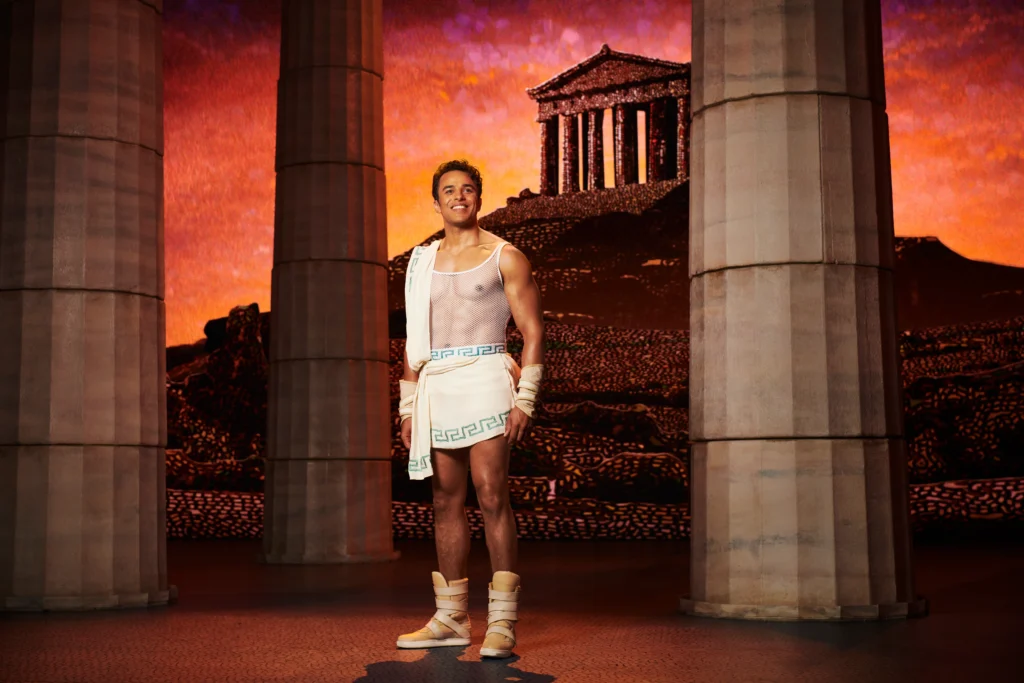
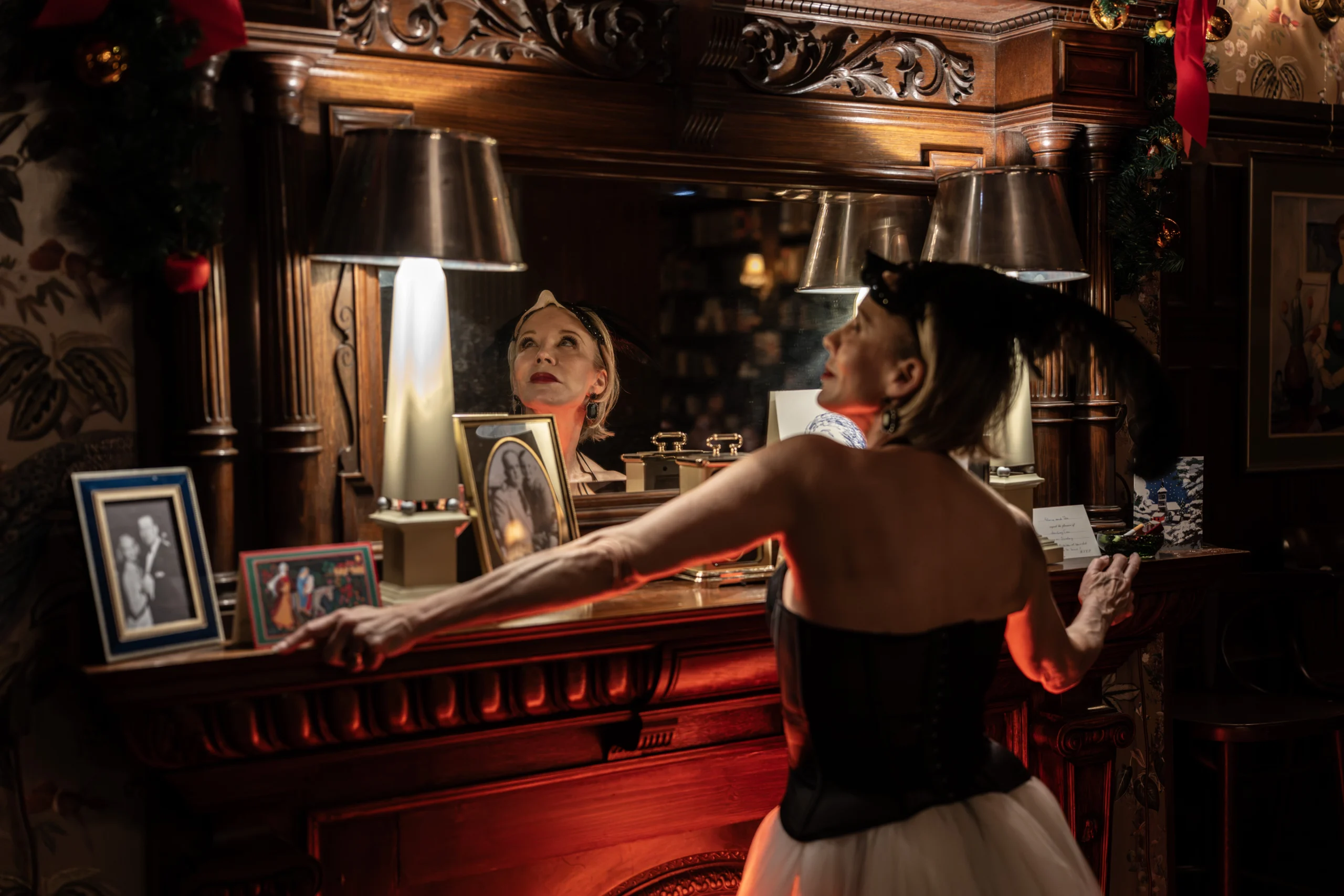
The Muses are the undisputed highlight. They bring precision, power and a sense of purpose that the rest of the show often lacks. Every time they appear, the production sharpens. The difficulty is what surrounds them.
It is admirable that the production doesn’t seek to simply replicate the film on stage. However, the changes made here often feel arbitrary rather than truly creative and imaginative. As with Disney’s Aladdin, curious choices are made that actually make the stage production less magical than the film. Hades’ sidekicks, Pain and Panic, become humans, Bob and Charles. Phil, memorably voiced by Danny DeVito in the film as a centaur, is here again simply human, and where is the winged horse Pegasus?! In fairness, he does make a brief appearance as a piece of topiary, but you only need to look at The Lion King and War Horse to see how magically creatures can be brought to life with puppetry. Where puppetry is used, it is confusing and disjointed, such as the Hydra and Hades’ final transformation.
The result is a loss of focus. The central journey, Hercules’ discovery of what it means to be a hero, becomes less emotional and engaging. Instead of building towards something meaningful, the narrative feels episodic, as if moving from number to number without a strong dramatic spine holding it together. Also, fatally, there is zero chemistry between Hercules and Meg.
However, the Muses and Hades are the undoubted highlights of the show. The latter, performed by Stephen Carlile, is very much in panto territory, but he does bring a sense of energy and villainy to proceedings. I did particularly enjoy his line, “I’ve just been chopping up onions. Oh, he was such a lovely dog!”
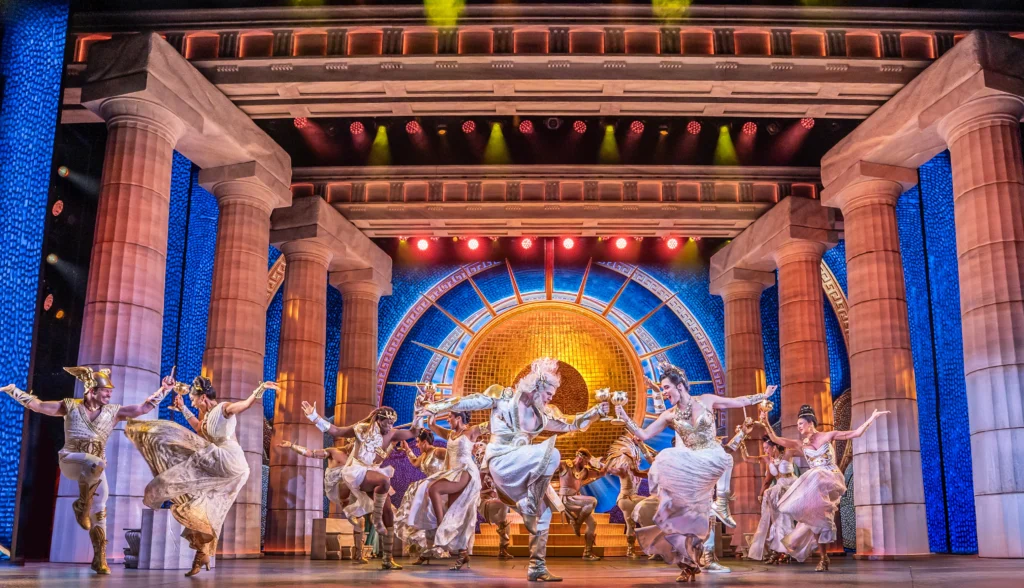
There is also a sense that spectacle has been prioritised over substance. The production is busy, visually active and often enjoyable in the moment, with bright costumes and lively production numbers, but it rarely settles long enough to let anything land with weight.
We were also reminded of the perils of live theatre, as barely ten minutes into the show it ground to a halt and the Muses were unceremoniously led from the stage by various stagehands. We were asked to stay in our seats for what ended up being a fifty-minute show stop. I did inquire afterwards what the reason for this was, but the creative team didn’t wish to share this. I can only speculate that it was the sound system, as when the show started the sound was muddy. My sister remarked that when we did get underway again, it was much clearer, even though the sound mix is not perfect on this production.
When we did get underway, from precisely the point where we stopped, the company handled it with professionalism, and the energy was instantly there. We were off and underway and soon forgot it.
It was a relief not to have to worry about catching trains, and we returned to the hotel to watch, what else, The Big Night of Musicals on the BBC.
Sunday
After a good night’s sleep, I was able to use the small but well-equipped gym at the hotel. Unsurprisingly, on a Sunday morning I was the only person there. We followed that with a delicious buffet breakfast in the hotel restaurant and then a brief shopping expedition around Covent Garden before heading to the Lyceum Theatre for the matinee of The Lion King.
The Lion King: still the benchmark
This is a production that knows exactly what it is and how to deliver it.
From the opening moments of Circle of Life, it still has the power to move you to tears. The stage fills with a myriad of animals, the world expands, and within seconds you are completely inside it.
The brilliance lies in its theatricality and style. Nothing is hidden. You see the puppets, the performers, the mechanics. And yet, instead of breaking the illusion, that openness strengthens it. There’s an old music hall adage that goes, “make ’em work and they’ll love you twice as much.” So, when a giant Venetian blind rises up, we go, “Oh, that’s the sun rising.” “I know what that is, it’s a giraffe.” “I know it’s a leopard.”
After running in the West End for 26 years, winning numerous awards, including Oliviers and Tonys, and grossing more money than Avatar, it is useful to remember that its success was not a foregone conclusion. Disney’s first foray into stage production was Beauty and the Beast, which was fairly traditional. When they announced their next musical was to be The Lion King, it was met with considerable scepticism, with the word on the street that it was going to be some kind of theme park show with people running around in lion costumes.
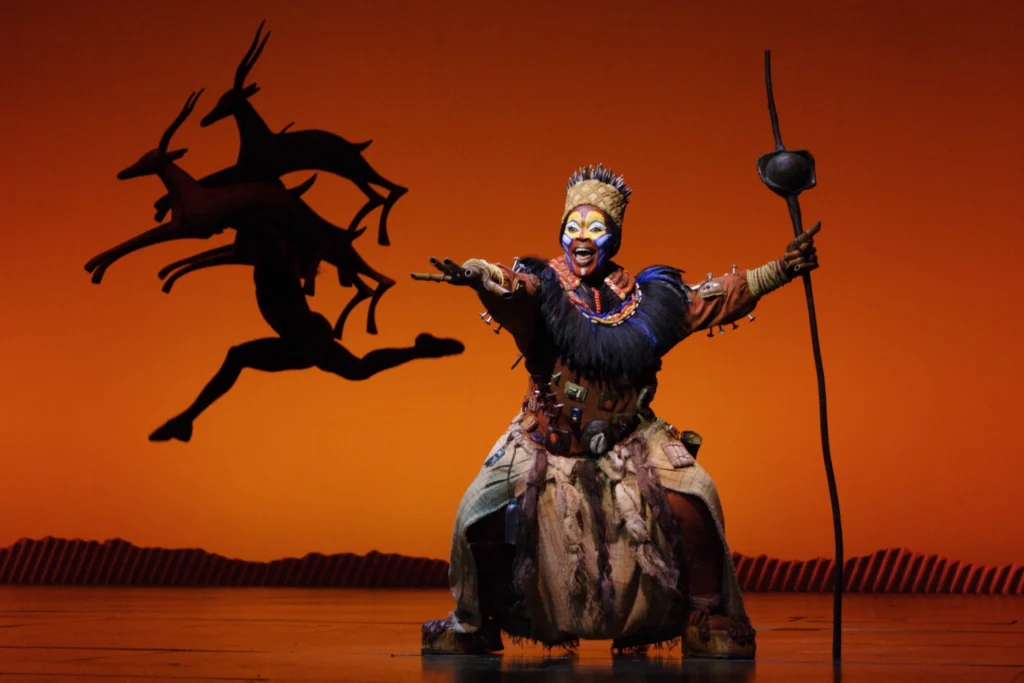
Disney’s masterstroke was engaging the avant-garde director Julie Taymor, who, up until that point, had primarily worked off Broadway. She was skilled and experienced with mask work and puppetry, and she has brought all of that into The Lion King. What you have is this explosion of theatre. You’ve got tried and tested Victorian theatre techniques with a lot of Disney money thrown at them, techniques that are simple in principle but executed with extraordinary skill. Mufasa and Scar have masks that sit above their heads which sometimes drop in front of their faces at key moments. One of the major changes was making Rafiki, who was a male in the film, female in the stage show, strengthening the female roles.
The actors are not just portraying animals; they appear as flora and fauna. Fireflies appear as simple lights on the end of sticks, and a drought is signified by a piece of blue silk being pulled through the centre of the stage. This deeply theatrical approach, which encourages imagination and engagement, is why the musical endures.
It doesn’t work all the time, and sometimes creative people have slightly bonkers ideas. Initially, Taymor had an idea that Act Two was going to take place in a sort of Las Vegas setting in the desert. Disney, quite wisely, said, “Thank you, but no, thank you.” They kept it closer to the original story.
And to further demonstrate that lightning doesn’t strike twice, Taymor was engaged many years later to direct the musical Spider-Man: Turn Off The Dark, which became one of Broadway’s most notorious and expensive flops, previewing for a whole year and running for two years, with a loss of approximately $60 million. Crucially, here there was no one to check her imagination as she turned the traditional Spider-Man story into something far removed from its core.
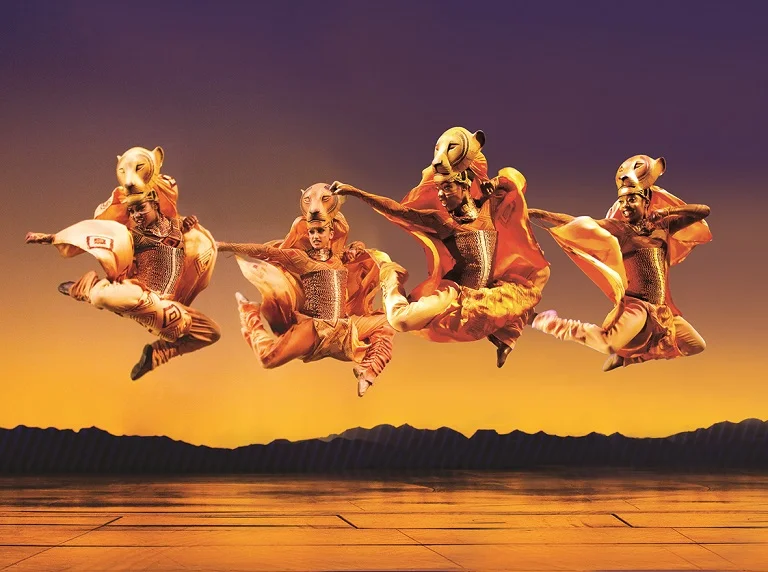
The Elton John and Tim Rice songs, such as Circle of Life and Hakuna Matata, are all present. Interestingly, they were not called in to write the additional songs. The show incorporates some of the original Hans Zimmer score, but it was Lebo M, a South African composer, who was brought in to write the additional material with Tim Rice as lyricist. What could so easily have become a disparate mix becomes a cohesive and authentic musical landscape.
With a cast of 50 and 232 puppets, they create a world that builds on and expands the film without losing sight of it. Because of the origins of the staging, it doesn’t feel dated despite its long run and remains in strong hands with the current cast.
This was a weekend built on contrasts.
Hercules delivers energy and strong performances from the Muses and Hades but struggles with clarity, tone and storytelling focus. The Lion King remains a masterclass in theatrical imagination, where simplicity and confidence create something genuinely magical.
Wrap those two experiences around a well-placed hotel, a memorable dinner, and some retail therapy, and you have something more than just a theatre trip. You have a proper London escape.
If you are deciding what to book next, it is worth thinking about what kind of theatre experience you actually want to sit through. Visit EyeOnLondon for more West End reviews.
Follow us on:



Subscribe to our YouTube channel for the latest videos and updates!

We value your thoughts! Share your feedback and help us make EyeOnLondon even better!