Cronos at BFI Southbank shows how Guillermo del Toro’s gothic cinema first took shape

As part of a May retrospective at the BFI Southbank, Guillermo del Toro’s debut film Cronos returns to the screen.
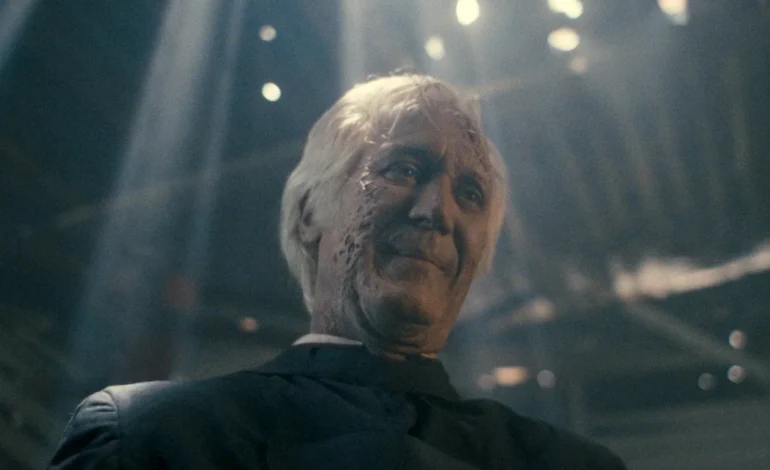
Throughout the month of May the BFI are re-examining and appreciating the cinematic career of Guillermo del Toro. Del Toro is a filmmaker who has garnered the status of auteur from his work, placing a focus on practical effects and becoming a master of gothic cinema. As part of this season, we can get an insight into where this all began with the inclusion of Cronos. Cronos is not only Guillermo del Toro’s feature film debut but also a key touchstone in tracing back many of the ideas and concepts his later films have explored and expanded upon. Cronos tells the story of Jesus Gris, a small time antiques dealer and family man who comes into possession of a dangerous item: a golden scarab beetle simply known as the Cronos device.
More reporting from EyeOnLondon
Film, theatre and cultural stories shaping London’s creative life.
From here, Jesus Gris becomes attached to the beetle both physically and emotionally and as time goes by, the scarab’s powers begin to take effect rendering Gris in an almost vampiric state. Cronos originally released in 1992, the film immediately established Guillermo del Toro as not only an exciting prospect within Mexican cinema but also in the entire landscape of filmmaking as Cronos won the Grand Prix at the 1993 International Critics’ Week at the Cannes Film Festival.
Beginning with what is at the heart of Cronos, the performances. Federico Luppi leads the film as Jesus Gris, Luppi skilfully plays the charming Gris in a role not often seen in a genre like this. Luppi gives a performance that is demanding in both the physical aspects, including the prosthetics he’s encompassed in as the film goes on, but also this is an emotional performance that demands a certain tragedy. A majority of the narrative tension comes from the certain situations Jesus Gris is forced to go through as well as the sweet relationship he has with his granddaughter, Aurora performed delicately by Tamara Shanath. Also part of the Cronos cast is Ron Perlman as Angel who has since become a staple of a Guillermo del Toro cast, collaborating on seven projects to date. Perlman is entirely entertaining as he plays a hired muscle standing in Jesus Gris’ way.
A major reason for this film’s lasting impact both when it was released and also now in 2026 is the key ways in which we can see the birth of Guillermo del Toro’s directorial style. Cronos is practically an exercise for a director figuring out what they want to use their films to say. Firstly, Cronos cultivates this idea of a gothic fairytale, a story about morality as much as it is about mortality. This concept is one that runs throughout a majority of Guillermo del Toro’s filmography, from his critically acclaimed gothic masterpiece Pan’s Labyrinth to his adaptation of Pinocchio, every one of his movies deal with the characters reckoning with their own existence and Jesus Gris is no different.
From a filmmaking standpoint, Cronos also immediately declares the love and importance Del Toro has for practical effects. The effects in Cronos are utilised well, usually in shadows or purposefully crude however it’s clear this laid the foundations to the beautiful creations that can be seen in his later work. Del Toro has since become somewhat of a master of monsters, using makeup and effects to create beloved characters such as Hellboy, his fishman from the Oscar winning The Shape of Water and even in his latest film with the creature from Frankenstein. Finally, Cronos is a balancing act of a film, trying to juggle both a fantastical horror with a sentimental streak. The performances and the direction blend well together to create a tone that is never fully serious but has enough emotional moments for the viewer to engage with. This is another element that Guillermo del Toro has gone on to develop as his films remain as entertaining as they can be thought provoking.
Cronos not only delivers a Mexican folk tale with a lot of heart but also is an essential retrospective point in showcasing the development of a filmmaker who has since become a leading figure in modern storytelling. While Cronos may have many of the trademarks of a debut feature, it is a charming film made with a lot of blood, sweat and tears.
Cronos, along with many of Guillermo del Toro’s other films, can be seen at the BFI Southbank over the month of May. Full programme details, including screening times, are available here: https://whatson.bfi.org.uk.
For more film writing and London screenings that place cinema in context, follow EyeOnLondon.
Cronos
Directed by Guillermo del Toro
An ageing antiques dealer discovers a mysterious device that offers eternal life, but at a cost that slowly reshapes his body and morality.
Mexico | 1992 | 93 mins | Certificate: 15
Federico Luppi · Ron Perlman · Claudio Brook
Screenplay: Guillermo del Toro
Cinematography: Guillermo Navarro
Music: Javier Álvarez
Screening at BFI Southbank — May 2026
Follow us on:



Subscribe to our YouTube channel for the latest videos and updates!

We value your thoughts! Share your feedback and help us make EyeOnLondon even better!