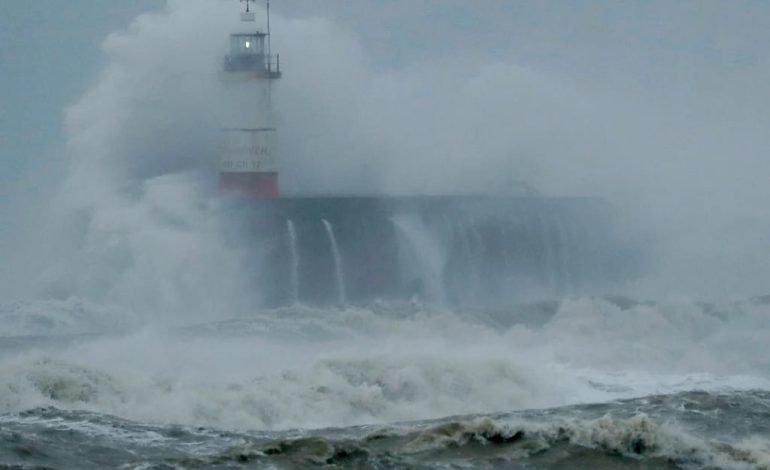
Storm Éowyn has left its mark on the UK and Ireland, with nearly one million properties losing power and widespread travel disruption continuing after gusts of up to 114mph (183 km/h) battered the region. The storm’s impact has been devastating, with fallen trees, severe flooding, and significant damage to homes and infrastructure. Tragically, a young man in Ireland lost his life when a tree fell on his car, a stark reminder of the storm’s ferocity.
Power outages have been one of the storm’s most visible effects. In Ireland, 625,000 homes and businesses were without electricity at the height of the storm on Friday evening, and while tens of thousands have since been reconnected, engineers warn that full restoration could take several days. Northern Ireland also suffered immensely, with 189,000 properties losing power. Northern Ireland Electricity has cautioned that it may take up to 10 days to fully restore services, as crews work tirelessly to repair the extensive damage. Scotland was similarly affected, with around 30,000 properties still without power as of Saturday morning despite ongoing reconnection efforts. In north-west England, reconnection teams are tackling the aftermath of outages that left 20,000 properties in the dark.
Explore More UK News Stories
The impact on travel has been equally severe. Network Rail Scotland reported nearly 400 damage incidents, including 120 fallen trees, causing delays and cancellations on key rail routes. The East Coast Main Line between Edinburgh and Newcastle has now reopened after significant clearing efforts, but ScotRail has warned passengers to expect disruption through the weekend. Air travel has also been affected, with Edinburgh Airport and other hubs operating under challenging conditions. Meanwhile, ferry operators such as CalMac and Irish Ferries are working to restore services, although some disruptions remain in place.
Storm Éowyn has also left a trail of destruction on roads. Northern Ireland Fire and Rescue Service reported over 1,800 incidents involving fallen trees and debris blocking roads. Group commander Paul Morrow described the scenes as “something we’ve never seen before,” urging the public to remain cautious and heed weather warnings.
Beyond power outages and transport chaos, the storm has severely impacted communities. Around 138,000 people in Ireland are without water due to power outages affecting treatment plants, with this figure expected to rise. Schools in Northern Ireland have reported significant structural damage, raising concerns about whether they will be able to reopen by Monday. Flood alerts remain in place across southern England, Scotland, and Wales, with natural resources agencies closely monitoring river levels. Areas such as Gloucester, Reading, and Wrexham are particularly at risk, and authorities are urging residents to stay alert.
Meteorologists warn that strong winds, heavy rainfall, and even snow and ice will continue in parts of the British Isles over the weekend. The Met Office has issued six yellow weather warnings across the UK, covering wind, rain, snow, and ice. Meanwhile, BBC Weather has cautioned that severe weather could still disrupt areas in Northern Ireland, Wales, and western England before conditions begin to ease later in the week.
For those in storm-hit areas, the recovery will take time. Community efforts have been heartening, with local residents like Liam Downs, an electrician from Cardross, stepping in to help clear fallen trees and ensure neighbours are safe. “It’s been like an earthquake,” said Mark Jones, a resident of the Scottish Borders, who described seeing his carport ripped from the ground by violent winds. His words echo the sentiment of many: “I just think the word ‘storm’ is too mild for what we have witnessed here. Only a hurricane could do that.”
For updates on Storm Éowyn and its impact, visit EyeOnLondon.
Follow us on:



Subscribe to our YouTube channel for the latest videos and updates!

We value your thoughts! Share your feedback and help us make EyeOnLondon even better!