A Second Tyrant? Scientists Say Nanotyrannus Was Real After All

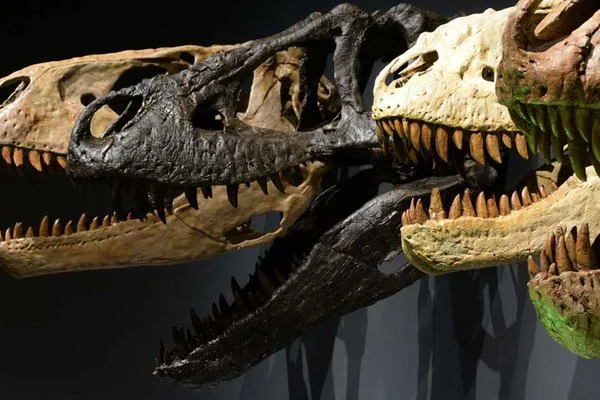
One of palaeontology’s longest and fiercest controversies, the Nanotyrannus T rex debate, may finally have reached its conclusion.
A new study of more than two hundred fossils suggests that Nanotyrannus lancensis was not a juvenile Tyrannosaurus rex at all, but a separate species that hunted beside it at the end of the Cretaceous.
Science & Environment — Latest from EyeOnLondon
Explore today’s evidence-led reporting and keep reading for deeper context and analysis.
Global Climate Tipping Points: 2025 Report
What the latest science says about ice sheets, forests and oceans crossing critical thresholds.
Read the analysisMore Science & Environment
“Dimming the Sun” Could Backfire, Scientists Warn
Why solar geoengineering raises major risks for weather, food systems and global governance.
Read the reportMore Science & Environment
How Lead Exposure Shaped Human Intelligence
The legacy of leaded petrol and paint, and what new studies reveal about lifelong impacts.
Read the featureMore Science & Environment
The story begins in 1942, when researchers from the Cleveland Museum of Natural History unearthed a small tyrannosaur skull in Montana’s Hell Creek Formation. In 1988, the fossil was classified as Nanotyrannus lancensis, and for nearly forty years, scientists have argued whether those slender bones belonged to a teenage T. rex or an entirely different animal.
Now, a team led by Dr Lindsay Zanno of the North Carolina Museum of Natural Sciences believes the question has been answered. Publishing their findings in Nature on 30 October 2025, the researchers say Nanotyrannus was a swift, lean predator, roughly half the size of T. rex and a tenth of its weight, which stalked the same Late Cretaceous landscapes.
“We wanted to shut down the debate once and for all,” Dr Zanno explains. “So we tested the question from every angle.”
A fossil feud reborn
The breakthrough came from the celebrated “Dueling Dinosaurs” fossil, two skeletons, a small tyrannosaur and a Triceratops, locked in apparent combat for sixty-seven million years. Once held in private hands, the pair were acquired by the North Carolina museum in 2020, giving scientists full access for the first time.
Working with Dr James Napoli of Stony Brook University, Zanno’s team CT-scanned and dissected thin bone sections to study growth rings and internal structure. The results upended conventional wisdom.
“There’s no way this animal would have grown into a T. rex,” says Napoli. “Its arms were already larger than an adult’s, its legs proportionally longer, and its skull held extra teeth.”
The specimen’s bone tissue showed around twenty annual growth rings, evidence that it was already mature when it died. CT scans revealed extra sinus cavities and distinct cranial nerves, features fixed early in an animal’s development.
The researchers concluded that Nanotyrannus was an adult in its own right, not a half-grown king in waiting. The findings have been welcomed by some experts as a turning point.
“They left no fossil unexamined,” says Professor Lawrence Witmer of Ohio University. “This is about as definitive as we get in palaeontology – Nanotyrannus is real.”
A smaller, faster tyrant
Drawing on comparative studies from collections across North America and Asia, the team identified several other fossils, among them the Cleveland specimen that sparked the original dispute and “Jane”, held at the Burpee Museum in Illinois, as likely examples of Nanotyrannus.
If correct, the implications are striking. Where T. rex was a forty-foot, nine-tonne ambush hunter, Nanotyrannus appears to have been an eighteen-foot, seven-hundred-kilo sprinter, more cheetah than lion. Its lighter frame and longer legs suggest a predator that relied on speed and endurance rather than brute strength.
Dr Napoli says the discovery means “our field now needs to treat Nanotyrannus as a valid species by default. Entire models of T. rex growth will need revisiting.”
Not everyone is convinced. Professor Steve Brusatte of the University of Edinburgh, who has long argued that Nanotyrannus represents a juvenile T. rex, remains cautious.
“It’s wonderful when new evidence challenges our assumptions,” he says. “But we’re working with tiny samples from deep time, and each discovery has the power to overturn the last.”
For readers interested in the scientific paper itself, the full dataset is available via the Nature research journal.
Why it matters
If Nanotyrannus truly existed alongside T. rex, it changes how scientists picture the Late Cretaceous ecosystem. Two apex predators of different sizes could have divided the landscape much as lions and leopards do today. It also reshapes how palaeontologists interpret growth rates, bone histology and behaviour among the tyrant dinosaurs.
As Dr Zanno puts it: “Every fossil adds a sentence to the story of life. This one may have rewritten the final chapter.”
For more stories uncovering new discoveries in science and history, follow EyeOnLondon for intelligent and independent reporting you can trust.
[Image Credit | Australian Museum]
Follow us on:



Subscribe to our YouTube channel for the latest videos and updates!

We value your thoughts! Share your feedback and help us make EyeOnLondon even better!