Dying stars wiping out giant planets, UCL astronomers find

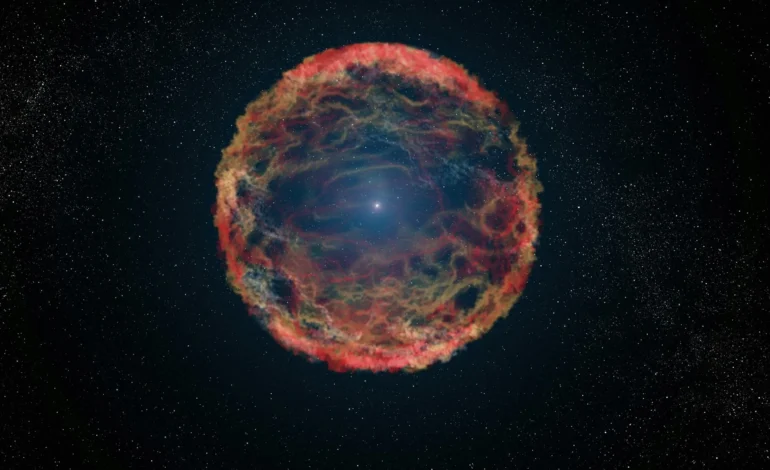
A study led by astronomers from UCL and the University of Warwick has suggested that dying stars could be destroying the giant planets orbiting close to them. The research was published in the Monthly Notices of the Royal Astronomical Society, and come from observations of almost half a million stars that have recently entered the “post main-sequence” phase of their life cycle.
It provides new evidence that the giant planets can be pulled inwards by dying stars and destroyed as the host star evolves.
Stars like the Sun will eventually use all of their hydrogen fuel. When this happens, they begin a process of cooling and expanding, becoming a red giant. It is estimated that our own Sun will become a red giant in around five billion years.
130 planets and planet candidates (that have yet to be confirmed as planets) orbiting close to the stars have been identified. 33 of them had not been previously detected.
A pattern began to appear. Those in close orbits were far less common around a star that had already expanded to become red giant, suggesting that many of them may have already been destroyed.
“This is strong evidence that as stars evolve off their main sequence they can quickly cause planets to spiral into them and be destroyed,” Lead author Dr. Edward Bryant (Mullard Space Science Laboratory at UCL and the University of Warwick) said. “This has been the subject of debate and theory for some time but now we can see the impact of this directly and measure it at the level of a large population of stars. We expected to see this effect but we were still surprised by just how efficient these stars seem to be at engulfing their close planets.”
Stay tuned to EyeOnLondon for the latest news and expert opinions.
Follow us on:



Subscribe to our YouTube channel for the latest videos and updates!

We value your thoughts! Share your feedback and help us make EyeOnLondon even better!