Undergraduate students build “cosmic radio” in dark matter hunt

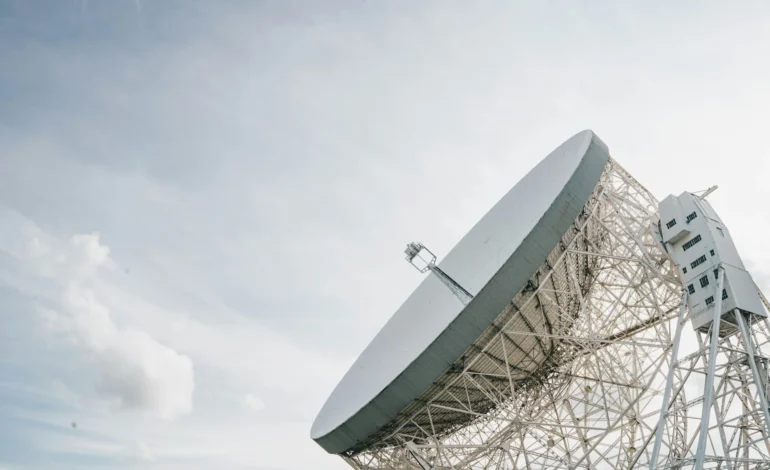
Undergraduate students at the University of Hamburg have created a “cosmic radio” to listen out for dark matter and help uncover one of the biggest mysteries in physics. With limited resources, they designed a stripped-down experiment to hunt for axions, the hypothetical particles that could make up dark matter.
Modern cosmology is often thought of as involving massive observatories, advanced instruments, and international collaborations with a lot of funding behind them. But a recent study published in the Journal of Cosmology and Astroparticle Physics (JCAP), suggests that even small teams with creative approaches and institutional support can still make key contributions.
The undergraduate students built a cavity detector that searchers for axioms, the leading candidates for dark matter. Despite limited resources, they were able to establish new limits for experiments on axioms, showing that even smaller experiments can still advance one of the most mysterious areas in physics.
While the team did not detect any signal that could be axioms, their results still had value, allowing researchers to rule out the presence of axioms with certain characteristics within a tested mass range. By doing so, the study helps refine and guide future experiments in the field.
Funding for the project came from a student research grant from the University of Hamburg, provided by the Hub for Crossdisciplinary Learning which supports independent research projects led by students.
Stay tuned to EyeOnLondon for the latest news and expert opinions.
Follow us on:



Subscribe to our YouTube channel for the latest videos and updates!

We value your thoughts! Share your feedback and help us make EyeOnLondon even better!