London Assembly warns housing design gap is slowing planning decisions across the capital

A warning from the London Assembly’s planning committee this week points to a growing London housing design gap between the homes being built and what people are willing to accept.
Housing design across London is falling out of step with public expectations, raising concerns about delays, resistance and how planning decisions are made across the capital. The findings come as pressure builds to speed up housing delivery while managing local opposition.
The housing debate in London still centres on supply targets and delivery, but attention is shifting toward how new homes are experienced by the people living around them. Where developments feel out of place, opposition tends to follow.
Developments are taking longer to move forward, and consultations are becoming harder to manage as opposition increases. Similar pressures are already visible in London housing policy, particularly in concerns about overheating in homes as temperatures rise.
James Small-Edwards has described the situation as a question of balance. Housing numbers remain important, but they are not the only factor shaping how quickly homes are delivered.
Design sits at the centre of that pressure. The committee’s concern focuses on the gap between what is being proposed and what people feel comfortable living alongside.
In many cases, that understanding is not being built into the process early enough.
One idea gaining traction is the use of locally shaped design codes, developed with residents rather than presented to them at the end of the process. Where people recognise something of their area in new proposals, resistance is less likely.
There are already examples of how that approach can work in practice.
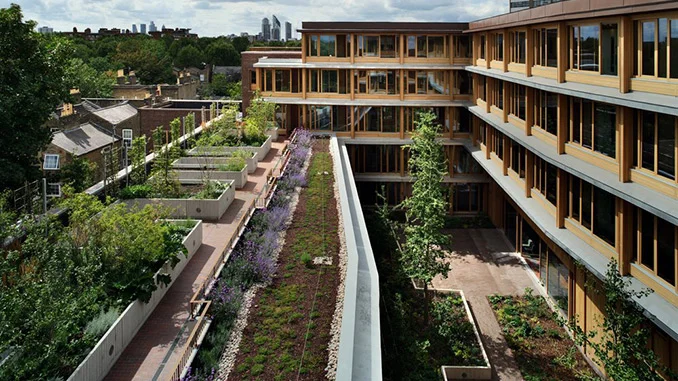
In Bermondsey, Appleby Blue Almshouse offers a different model of housing delivery. Designed by Witherford Watson Mann for United St Saviour’s, the scheme focuses on shared space, light and careful detailing. It went on to win the Stirling Prize and is often described in terms of how it feels to live there.
That distinction is becoming more important. Much of London’s housing output is shaped by speed, density and viability. These pressures are unavoidable, but they do not always leave room for developments to be understood as places in their own right. The same tension is also visible in how homelessness and housing pressures are managed across central London.
Architect Stephen Witherford has spoken about the role of imagination in housing. It is not a term often used in planning discussions, but it reflects a broader gap in how the system is currently framed.
City Hall maintains that community involvement remains central to its Good Growth by Design programme, and that the next London Plan will continue in that direction. The framework is there, but its impact depends on how it is applied.
A closer look at that approach can be found in the Greater London Authority’s design guidance, which continues to shape how housing policy develops across the capital.
What is becoming clearer is that housing delivery depends on more than numbers, including whether new developments are accepted by the communities around them.
London’s housing challenge now depends on whether people accept what is being built, and that question is likely to shape how London develops in the years ahead.
Explore more reporting on London’s housing, planning and city life at EyeOnLondon.
[Image Credit | © Philipp Ebeling]
Follow us on:



Subscribe to our YouTube channel for the latest videos and updates!

We value your thoughts! Share your feedback and help us make EyeOnLondon even better!