Turkana Rift in East Africa breaking apart, scientists find

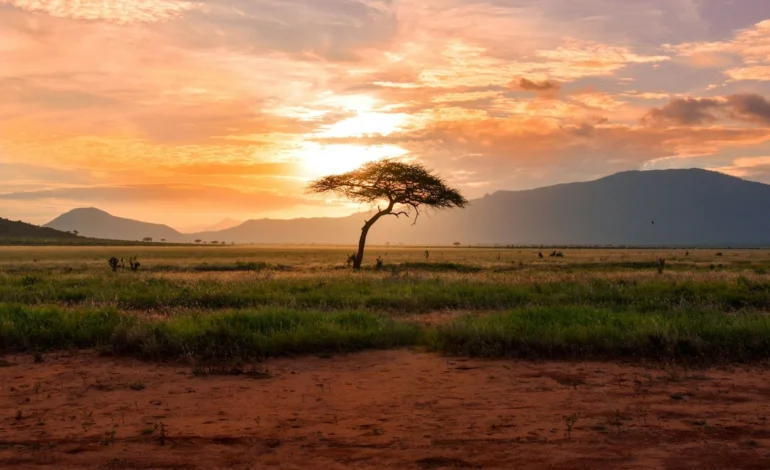
Underneath the Turkana Rift in East Africa, the crust is thinning to a “critical point,” scientists have found. This suggests that the continent is gradually breaking apart. The “necking” process heralds a stage of rifting that could result in a new ocean millions of years from now.
The same geological forces splitting the land could also help to explain why the region contains a great deal of fossils. Rather than being the birthplace of humanity as is often thought, the area may simply be a site where fossils are best preserved. The team, including Paul Betka from Western Washington University and John Rowan from the University of Cambridge, published the findings in Nature Communications.
East Africa’s Turkana Rift is known for both the rich fossil record of early humans, as well as its intense volcanic activity thanks to shifting tectonic plates. Now, researchers say the crust underneath the region has thinned far more than previously thought, suggesting a long-term breakup of the African continent, as well as giving a new explanation for the abundance of early human fossils there.
The Turkana Rift is around 500 kilometres across Kenya and Ethiopia, forming part of the larger East African Rift System which extends from the Afar Depression in northeastern Ethiopia to Mozambique, separating the African, Arabian, and Somali tectonic plates. The African and Somali plates are slowly moving apart at around 4.7 millimetres per year.
As the separation continues, a process called rifting stretches the crust sideways, straining the surface and causing it to buckle and crack. This allows magma from within the planet to rise upwards.
The discoveries also shine a light on the fossil record in the region, with a third of hominin fossils, or over 1,200 from the past 4 million years being discovered there. This has led many to believe that the area served as a key centre for human evolution. But Rowan and colleagues suggest that the sinking rift created conditions where fine grained sediments quickly accumulated, leading to better preservation of fossils.
Stay tuned to EyeOnLondon for the latest news and expert opinions.
Follow us on:



Subscribe to our YouTube channel for the latest videos and updates!

We value your thoughts! Share your feedback and help us make EyeOnLondon even better!