Pterosaur, oldest in North America, uncovered

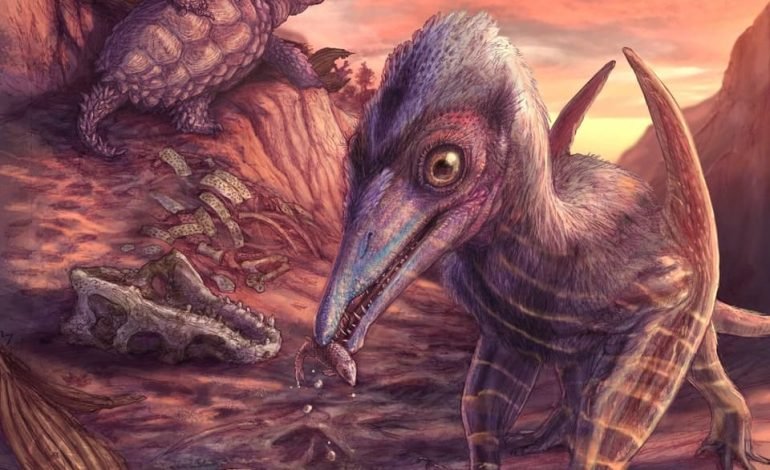
A team of researchers have discovered the oldest known pterosaur in North America. Pterosaurs are the flying reptiles that lived alongside the dinosaurs, being the first vertebrates known to have evolved powered flight. In a paper published in Proceedings of the National Academy of Sciences, the fossil jawbone of the new species is presented, and the sea gull-sized animal is described alongside hundreds of other fossils.
The fossils date back to the late Triassic period, 209 million years ago, presenting a snapshot of the ecosystem where other ancient creatures lived, including giant amphibians and armoured relatives of crocodiles.
“The site captures the transition to more modern terrestrial vertebrate communities where we start seeing groups that thrive later in the Mesozoic living alongside these older animals that don’t make it past the Triassic,” paleontologist Ben Kligman, a Peter Buck Postdoctoral Fellow at the Smithsonian’s National Museum of Natural History, said. “Fossil beds like these enable us to establish that all of these animals actually lived together.”
The new pterosaur species is one of the oldest found outside of Europe. The reptile would have been small enough to perch on a person’s shoulder. They named it Eotephradactylus mcintireae, which means ‘ash winged dawn goddess,’ referencing the volcanic ash at the site where it was found, and its position near the bottom of the pterosaur evolutionary tree.
Stay tuned to EyeOnLondon for the latest news and expert opinions.
Follow us on:



Subscribe to our YouTube channel for the latest videos and updates!

We value your thoughts! Share your feedback and help us make EyeOnLondon even better!