Medieval monk may have recognised Halley’s Comet centuries before Edmond Halley

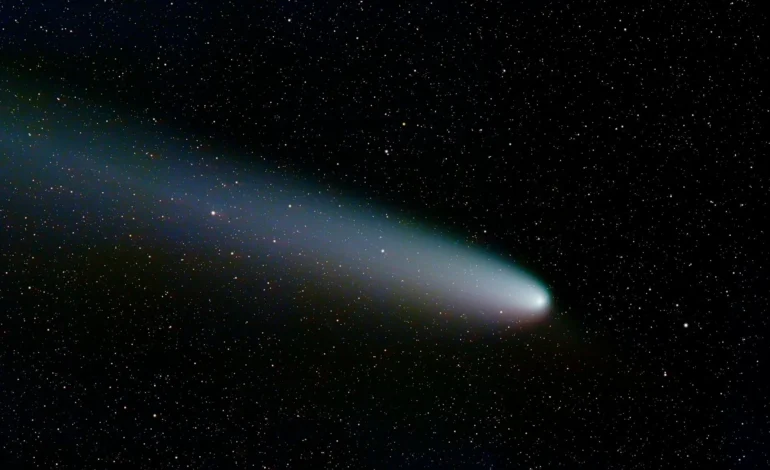
An English monk may have understood something extraordinary about the night sky nearly 700 years before modern astronomy confirmed it. Researchers suggest that Eilmer of Malmesbury, a medieval observer, recognised that the bright comet, later named by Edmond Halley as Halley’s Comet, seen in 1066 was the same object he had witnessed earlier in 989.
If correct, this would place the insight long before the work of astronomer Halley, who later established the comet’s repeating orbit.
The findings draw on medieval accounts recorded by William of Malmesbury, which describe Eilmer’s observations across two separate appearances of the same celestial object. Researchers argue these writings suggest an early recognition of repetition in cometary motion, even if not expressed in modern scientific terms.
Halley’s later breakthrough showed that comet sightings in 1531, 1607 and 1682 were the same object returning roughly every 76 years. That work led to the comet being formally associated with his name and catalogued as 1P/Halley.
The 1066 appearance became one of the most recorded celestial events in medieval Europe, being famously depicted in the Bayeux Tapestry, with the comet is shown above scenes linked to political tension in England during the year of conquest. At the time, comets were widely interpreted as warnings of war, famine or royal death. The sighting occurred during the reign of Harold Godwinson, whose short rule ended later that same year at the Battle of Hastings.
Researchers working on the study, published in Dorestad and Everything After. Ports, townscapes & travelers in Europe, 800–1100, highlight that Eilmer may have recognised the object from his earlier lifetime observation.
The interpretation is drawn from historical analysis rather than direct scientific measurement, and reflects how medieval observers understood repeating celestial events through lived experience rather than formal orbital theory.
As noted in the research, the work involved interdisciplinary collaboration. Simon Portegies Zwart described the process as challenging but rewarding while working alongside historians examining medieval records.
The original research also notes that comets were often linked to major events in oral tradition across the British Isles, shaping how celestial appearances were interpreted by communities long before modern astronomy.
For readers following wider space risk discussions, EyeOnLondon has also explored how asteroid deflection methods could backfire in unexpected ways within Earth-impact modelling research.
The debate over how we interpret early celestial discoveries sits alongside emerging conversations about how humanity may one day extract resources from near-Earth objects, including developing discussions around asteroid mining feasibility.
Explore more stories on EyeOnLondon where history and science reshape what we think we know about the universe.
Follow us on:



Subscribe to our YouTube channel for the latest videos and updates!

We value your thoughts! Share your feedback and help us make EyeOnLondon even better!