How Lead Exposure Shaped Human Intelligence: The Ancient Toxin That Defined Our Evolution

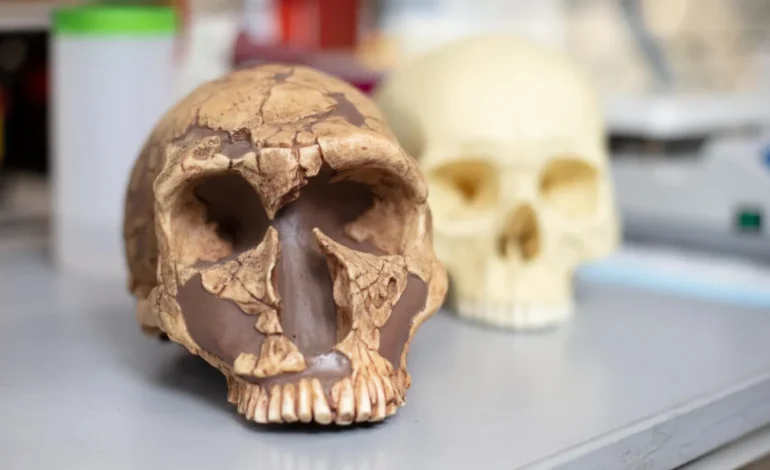
For centuries, lead has been recognised as one of the most dangerous substances humans ever handled. But new research from the University of California San Diego suggests lead exposure and its influence may stretch far deeper into our evolutionary past, shaping the very development of the modern human brain.
According to findings published in Science Advances, scientists have discovered that lead exposure shaped human intelligence millions of years before the first mines existed. Fossil evidence shows that early hominids, including ancient humans and great apes, were exposed to lead as they searched for water in caves long before industrial civilisation appeared.
History & Culture | Latest from EyeOnLondon
Explore London’s art, museums, and archaeology with our latest features.
Hogarth at Barts: The Great Hall
Inside the Baroque setting where Hogarth’s paintings meet the story of Britain’s oldest hospital.
Read the feature“Building the Bank” at the BoE Museum
Architecture, money and power come together in a new exhibition on the making of Threadneedle Street.
Read the featureBones in a Spanish cave
What newly analysed remains reveal about survival, ritual and possible cannibalism.
Read the feature“We stopped using lead in our daily lives when we realised how toxic it is, but nobody had ever studied lead in prehistory,” said Professor Alysson Muotri, senior author of the study and director of the Sanford Integrated Space Stem Cell Orbital Research Center.
Ancient evidence of contamination
Researchers found traces of lead in more than 70 per cent of fossil samples, with some dating back nearly two million years. Teeth from the extinct Gigantopithecus blacki species, for instance, showed acute levels of exposure. Surprisingly, similar contamination patterns were detected in humans born between the 1940s and 1970s, when leaded petrol and household paint were common.
The team believes early humans may have encountered the toxin naturally through contact with mineral deposits in caves, many of which contained underground water sources rich in lead. “One possibility is that they were looking for caves with running water inside,” said Muotri. “Based on the tooth enamel studies, exposure started very early in infancy.”
Lead disrupts brain growth and cognitive function, causing severe developmental problems in modern humans. Yet the discovery that ancient species lived for generations under constant exposure prompted researchers to ask why only modern humans appeared to overcome its effects.
A genetic shift that changed everything
The answer, it seems, lies in a single gene. The study highlights NOVA1, a regulator of brain formation and synaptic development. Almost all modern humans carry a version of this gene that differs by one DNA base pair from the Neanderthal variant.
When Muotri’s team recreated both versions of the gene in laboratory-grown brain organoids, they found that the archaic form matured more rapidly but lost complexity as it developed. The modern NOVA1, by contrast, maintained intricate neural connections even under lead exposure, protecting speech and reasoning pathways.
The researchers observed that only the Neanderthal-era variant interfered with FOXP2, the gene most closely associated with language and communication. “These types of neurons related to complex language are susceptible to death in the archaic version,” said Muotri. “The FOXP2 gene itself is identical between us and the Neanderthals, but how NOVA1 regulates it may explain why their speech never evolved to our level.”
From poison to progress
The findings suggest that the modern NOVA1 variant gave early humans a remarkable evolutionary advantage. It protected against the neurotoxic effects of lead, allowing language and social cooperation to flourish, traits that would ultimately define our species.
“Language is our superpower,” Muotri explained. “It allows us to share ideas and coordinate large movements. There is no evidence that Neanderthals could do that.”
The study, supported by the National Institutes of Health, the Australian Research Council, and the National Science Foundation, adds a new dimension to our understanding of what set Homo sapiens apart.
For readers interested in the underlying study, the full research summary From poison to power: How lead exposure helped shape human intelligence can be found on ScienceDaily.
Evolutionary implications
Lead exposure, it appears, did not simply harm early humans; it may have been a crucible that tested and refined the brain’s resilience. A single mutation, preserved across all modern populations, may have determined the fate of our species, protecting us from neurological decline and enabling the rise of language, culture, and collective intelligence.
For more features exploring London’s history and cultural heritage, follow EyeOnLondon for insightful storytelling you can trust.
Follow us on:



Subscribe to our YouTube channel for the latest videos and updates!

We value your thoughts! Share your feedback and help us make EyeOnLondon even better!