Blood vessels in T. rex bone reveal healing injury

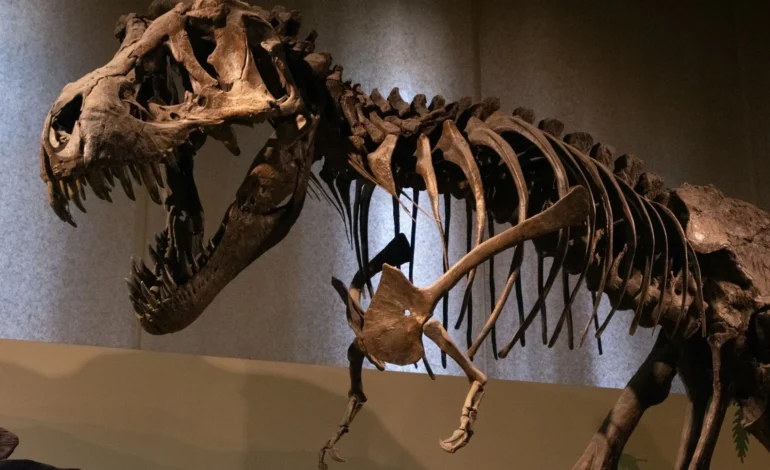
Scientists have uncovered ancient blood vessels inside the fossilised bones of a Tyrannosaurus rex known as Scotty. The team found a network of preserved vessels within the animal’s rib that had fractured and began healing 66 million years ago.
With powerful synchrotron X-rays from particle accelerators, they were able to look inside the fossil without damaging it. In doing so, they discovered the intricate, iron-rich structures left behind as the dinosaur’s bone was healing. The findings were published in the journal Scientific Reports by Jerit Leo Mitchell, Physics PhD Candidate, University of Regina.
Dinosaur DNA has never been recovered, with many scientists focusing on traces of organic materials in fossils. Bones and teeth have been responsible for most of what is known about dinosaurs, as they are more durable and likely to be preserved. But they are limited in what they can tell us about how an animal lived.
Soft tissue, including muscles and ligaments, pigments, and even skin, scales, and feathers, is believed to reveal far more. They can tell us more about appearance, movement, and behaviour. But they are likely to decompose and so are rarely preserved as fossils. Blood vessels are another type of soft tissue that can sometimes be preserved inside of bones.
The preserved vessels came from an “extraordinary specimen” known as Scotty, housed at the Royal Saskatchewan Museum in Canada. It is one of the largest T. rex ever discovered, as well as being one of the most complete.
Most of Scotty’s bones show signs of injury, likely from combat with other dinosaurs or due to disease. One of its ribs shows a large fracture that had only partially healed. When a bone is damaged, the body increases blood vessel activity in the damaged area to support healing. The structure seen in the rib appear to show that process.
Stay tuned to EyeOnLondon for the latest news and expert opinions.
Follow us on:



Subscribe to our YouTube channel for the latest videos and updates!

We value your thoughts! Share your feedback and help us make EyeOnLondon even better!