How London builds 880,000 homes may decide what kind of city it becomes

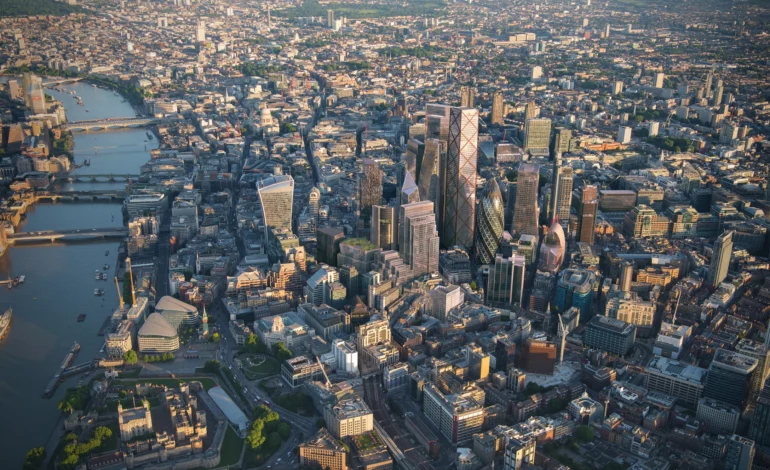
From the river, London still reads as a city built in layers. St Paul’s holds its place, while newer towers gather further east. The skyline has never stood still, but the pace of change now feels different, more deliberate, and under sharper pressure.
As the Mayor begins work on a new London Plan, set out in the Greater London Authority’s consultation, the capital is being asked to confront one of its most difficult questions: how to build at scale without losing what makes London itself.
More reporting from EyeOnLondon
Policy, science and global developments shaping London’s wider world.
That tension runs through a recent response from Historic England, which argues that growth on this scale cannot be treated as a simple numbers exercise. Its position is not to resist development, but to shape it. “Heritage can form part of the solution,” the organisation says, rather than being pushed aside as an obstacle.
The response describes the challenge as unprecedented, but its argument is grounded in something more familiar. When development moves ahead without a clear understanding of place, problems tend to follow. Plans stall. Designs are revised. Proposals return in altered forms. What looks like delay often begins much earlier, with decisions made before the character of an area has been properly understood.
This is not a theoretical concern. Across London, there are already examples where growth and context have struggled to align. In parts of Nine Elms and the wider Vauxhall area, rapid development has transformed the skyline, but not always in ways that sit easily with the historic significance of nearby landmarks. Debates over views of the Palace of Westminster and the setting of Westminster Abbey show how difficult it can be to reconcile density with heritage once a scheme is already in motion.
In central London, the stakes are visible. The Central Activities Zone is not only the city’s economic core but one of its most recognisable cultural landscapes, where historic streets, theatres and institutions sit alongside newer development. Growth here is not simply a question of how much can be built, but how different layers of the city continue to sit together.
A planning consultant working across inner London, speaking on background, puts it more directly. “Most people accept the need for more housing,” they say. “Where it becomes difficult is when places start to feel interchangeable. London works because different areas still feel distinct.”
That distinction is part of what draws people to the city in the first place. It is also part of what sustains its economy. Historic England’s response describes heritage as an “economic catalyst” that supports high streets, creative industries and business districts, shaping the identity that underpins London’s appeal.
Beyond the centre, the argument becomes more practical. Town centres and high streets, many already under pressure, are identified as places where new housing could be delivered without erasing what exists. Converting space above shops, reusing older buildings, and adapting existing structures offer ways to increase supply while keeping neighbourhoods intact.
There is also a quieter environmental case running through the response. Reusing buildings reduces the carbon cost tied to demolition and new construction. In a city trying to meet climate targets while continuing to grow, that matters. Conservation becomes part of how London manages its future, not just how it preserves its past.
At a larger scale, the River Thames is singled out as a defining feature that has not always been handled with enough care in recent development. It is more than a backdrop. It links the city’s history, its geography and its daily life. Where development turns away from it, or treats it as secondary, something less visible begins to shift.
The same idea runs through the rest of the response. Whether dealing with tall buildings, transport-led development or suburban growth, the emphasis is on understanding context before decisions are made. Density is not presented as the problem. The issue is how it is designed, and where it is placed.
This is not an abstract debate for London. It will be felt in the streets people move through, the views they recognise, and the places that continue to give the city its sense of continuity.
The next London Plan will set the direction. The harder question is whether the city that follows still feels like London, or whether, in solving one problem, it quietly creates another.
Follow EyeOnLondon for clear, grounded reporting on the decisions shaping London’s future and how they affect the city’s character.
Follow us on:



Subscribe to our YouTube channel for the latest videos and updates!

We value your thoughts! Share your feedback and help us make EyeOnLondon even better!