Trillionths of a second could be captured by experimental camera

Scientists have revealed a breakthrough imaging method that can capture events in trillionths of a second. The new technique not only tracks how bright something is, but can also reveal subtle structural changes that were previously invisible, in just a single shot.
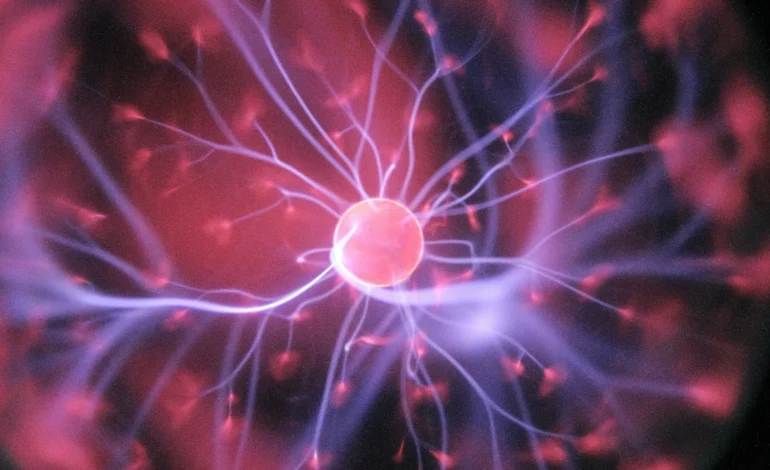
By turning extremely rapid movements into detailed “movies,” the researchers can watch plasma form, electrons moving, and materials transforming in real time.
The new powerful imaging method can reveal far more detail about ultrafast events than ever before, unfolding in very short times, in trillionths of a second. Anything happening at these speeds has always been difficult to study. The new approach allows scientists to observe and analyse the rapid changes with incredible speed and clarity.
“In the fields of physics, chemistry, biology and materials science, many important phenomena happen incredibly fast,” said research team leader Yunhua Yao from East China Normal University. “Our new technique can capture the complete evolution of both the brightness and internal structure of an object in a single measurement. This is a big step forward for understanding the fundamental nature of matter, designing new materials and even uncovering the mysteries of biological processes.”
The metho was described in Optica, a journal for high-impact research by Optica Publishing Group. The technique is known as compressed spectral-temporal coherent modulation femtosecond imaging (CST-CMFI), and allows the researchers to track ultrafast events including plasma forming in water after a femtosecond laser pulse.
The work is part of ongoing research at the Extreme Optical Imaging Laboratory at East China Normal University to advance ultrafast camera technology.
Stay tuned to EyeOnLondon for the latest news and expert opinions.
Follow us on:



Subscribe to our YouTube channel for the latest videos and updates!

We value your thoughts! Share your feedback and help us make EyeOnLondon even better!