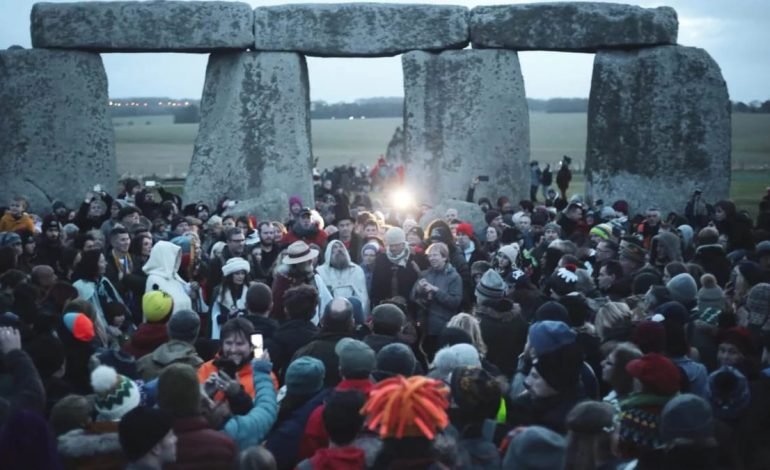
The winter solstice, marking the shortest day and longest night of the year, occurs this Saturday in the Northern Hemisphere. For those longing for more daylight, patience is key: from Sunday onwards, days will gradually lengthen, a promise of brighter moments ahead. This celestial event has fascinated humans for centuries, inspiring awe and architectural wonders such as England’s Stonehenge and Peru’s Machu Picchu, designed to align with the solstices.
What Is the Winter Solstice?
The Earth’s axis is tilted as it orbits the sun, creating uneven distribution of sunlight across the planet. The winter solstice represents the point at which the Northern Hemisphere tilts furthest away from the sun, bringing the shortest day of the year. Meanwhile, the Southern Hemisphere experiences its summer solstice, enjoying its longest day. This astronomical event typically occurs between 20th December and 23rd. Conversely, the summer solstice brings the longest day to the Northern Hemisphere between 20th June and 22nd.
Equinox vs. Solstice
The solstices are bookends to the Earth’s seasonal journey, while equinoxes mark moments of balance. During the equinoxes in spring and autumn, the Earth’s axis aligns such that both hemispheres receive equal sunlight. The term “equinox” derives from Latin words meaning “equal” and “night,” highlighting this balance. The spring equinox typically occurs between 19th March and 21st, while the autumn equinox falls between 21st September and 24th.
Meteorological vs. Astronomical Seasons
Seasons can be divided by meteorological patterns or astronomical events. Meteorological seasons, based on temperature cycles, divide the year into equal three-month periods starting on the first day of March, June, September, and December. Astronomical seasons, however, are determined by solstices and equinoxes, defining the start of winter, spring, summer, and autumn according to the Earth’s position relative to the sun.
A Global Celebration
The winter solstice is not just a moment on the calendar but a global phenomenon that has inspired traditions and rituals for millennia. Stonehenge remains a focal point for winter solstice celebrations, showcasing the historical alignment of ancient structures with celestial events, as explained by the Royal Museums Greenwich. For those in urban areas, the solstice provides an opportunity to pause and reflect on the interplay between light and darkness, a reminder of our connection to nature’s rhythms.
As days begin to lengthen, the solstice marks a turning point, offering hope and anticipation for the seasons ahead.
For more updates on celestial events and their historical significance, follow EyeOnLondon for unique perspectives and insights into London’s connection with the world.
Follow us on:



Subscribe to our YouTube channel for the latest videos and updates!

We value your thoughts! Share your feedback and help us make EyeOnLondon even better!