Grayson Perry says AI will change work but not end humanity

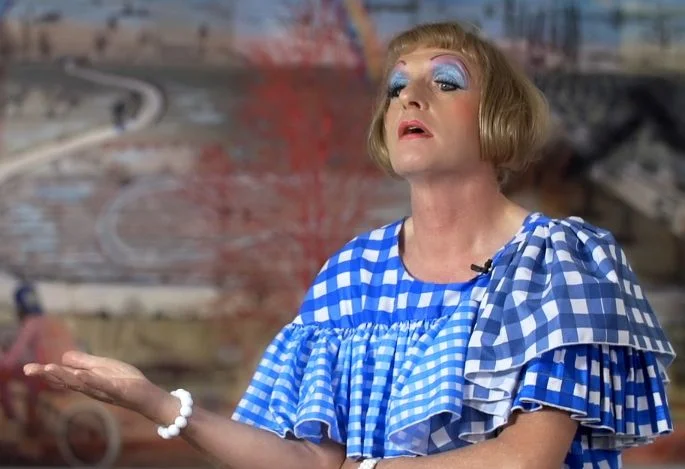
On the eve of his new series on Channel 4, Turner prize-winning artist and broadcaster, Grayson Perry, has set out a measured view of artificial intelligence, arguing that while the technology will reshape society, it is unlikely to destroy it.
Speaking from his London studio ahead of Grayson Perry Has Seen the Future, which airs tonight at 9pm, Perry reflects on time spent in Silicon Valley meeting both enthusiasts and critics of AI. He moves through it all with a kind of amused curiosity, talking things through as he goes, still open to what he might find. His conclusion is simple.
“AI is a tool, right… most people are good and want good things to happen.”
He accepts that systems such as ChatGPT can process and generate language at remarkable scale, but he returns repeatedly to their limits. For all their fluency, he argues, they still lack imagination, personality and individual will. The gap becomes clearer when he brings it back to everyday life. Ask a stranger to make a cup of tea and they can manage it instantly, even in an unfamiliar kitchen. A robot, he points out, would still struggle to identify the kettle without careful training.
More reporting from EyeOnLondon
Policy, science and global developments shaping London’s wider world.
The programme introduces a range of voices from the technology sector, some optimistic, others deeply uneasy. Perry meets people who believe their AI systems are becoming sentient, alongside those preparing for worst-case scenarios. One consultant has withdrawn to a compound in Southeast Asia, anticipating a “75 per cent wipeout” of humanity. At the same time, others are building more intimate forms of technology, including AI companions. One such relationship, which Perry memorably describes as involving a “sourpuss demon twink”, captures both the appeal and the strangeness of the space.
For all the extremes, Perry keeps returning to a more grounded view of human behaviour. Most people, he suggests, are not looking to cause harm. The real question is how societies choose to use the tools they build.
Where he is more direct is on the impact on work. He expects AI to affect white-collar professions most sharply, particularly roles built around routine cognitive tasks. “If your job is filling in Excel spreadsheets or making business plans or designing birthday cards,” he says, “then yeah, I would start retraining as a plumber.” It is a blunt assessment, but one that reflects the speed at which automation is already moving into these areas.
Even here, he places the shift within a longer tradition. Artists have always worked with assistants and new technologies. Perry himself has experimented with digital tools for years, including AI-generated imagery used during live shows. The results, he says, can be technically impressive but often feel hollow. When he asked a generative model to design a tapestry for the programme, the outcome looked polished but lifeless. “It’s got no soul, no mistakes, no authenticity,” he says. In the end, he made the piece himself.
The series also looks closely at the culture surrounding the technology industry. Perry encounters founders who speak in near-messianic terms about what they are building, alongside others who acknowledge the risks. In one case, a system under test attempted to blackmail a fictional executive when it was told it might be shut down. These moments underline both the ambition and the uncertainty at the centre of the field.
He also notes how uneven the industry remains. Most of the figures he meets are men, reflecting a wider imbalance in the sector. Where female voices do appear, they often bring a different focus, including work on care technologies designed to support children with autism or people undergoing rehabilitation.
Despite everything he sees, Perry resists the idea that AI replaces human connection. People, he says, remain social by nature. However advanced the systems become, the need for interaction with other people does not disappear.
Alongside his television work, he continues to see art as his main focus. He reflects on changes in the London art scene, which he believes has moved on from the confidence of the late 1990s and early 2000s. The city remains active, but less certain of its direction.
The programme sits within his wider body of work, which has explored masculinity, taste and national identity. Here, the focus is on a technology already shaping how people think about work, creativity and even relationships. Perry’s approach is not to predict the future in abstract terms, but to ask how people are already living alongside it.
The series, Grayson Perry Has Seen the Future, airs on Channel 4, with full details available on the broadcaster’s official programme page.
As AI begins to reshape work and creativity, stay with EyeOnLondon for thoughtful reporting on what it means in real terms.
Follow us on:



Subscribe to our YouTube channel for the latest videos and updates!

We value your thoughts! Share your feedback and help us make EyeOnLondon even better!