Weymouth dig begins to uncover the medieval roots of Melcombe Regis

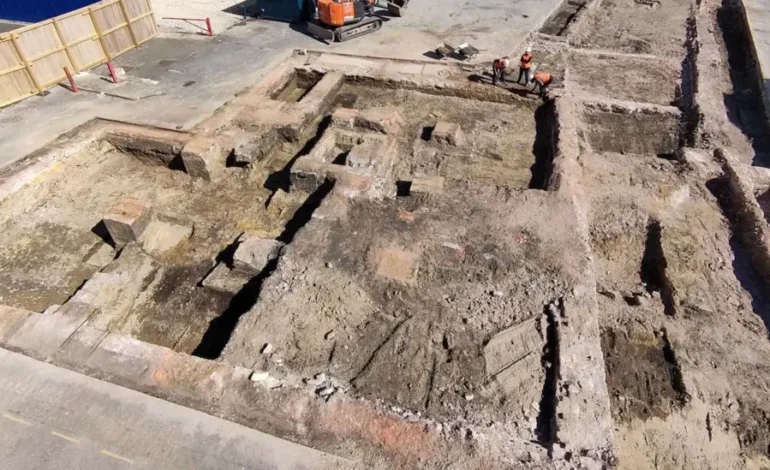
An eight-week archaeological dig has begun in Weymouth, Dorset, where archaeologists and volunteers are excavating a former bowling alley site on St Nicholas Street to better understand the origins of Melcombe Regis in the 13th century.
The site has long been known to contain significant remains beneath its surface. Earlier investigations carried out for Dorset Council identified the footprint of a medieval building, along with a stone well and the remains of a 19th-century chapel that had later been adapted into a theatre. That sequence alone hints at how often the site has been reshaped over time, each layer leaving part of its story behind.
More reporting from EyeOnLondon
Policy, science and global developments shaping London’s wider world.
This latest excavation is being led by Context One Archaeology, with volunteers coordinated by Dig the Street. More than 200 people applied to take part, with around half selected, and 15 excavators working on site each day alongside a smaller team processing finds. The scale of interest is striking. It reflects how even modest sites can open up a much wider sense of place when people are invited to take part in uncovering them.
The dig is focusing on an area believed to contain the remains of three medieval houses and associated plots. Archaeologists are also looking for evidence of an earlier Anglo-Saxon settlement thought to have existed near the harbour. Richard McConnell, director of Context One, said the medieval structures appear to date from the late 13th century, around the founding of Melcombe Regis as a port settlement. If Anglo-Saxon material is found, it would push the site’s history back even further.
What gives the excavation a wider significance is how it connects to the movement of people and goods along England’s southern coast. Melcombe Regis is often identified as one of the entry points for the Black Death in 1348, arriving by ship before spreading inland along established trade routes. From ports like this, the disease is believed to have reached larger centres, including London, where it would have a devastating impact on the population. That connection is not immediately visible in the modern town, but it is part of the deeper history now being explored.
Alongside the medieval material, archaeologists are also examining traces of post-medieval activity, including cottages later used as a dissenter’s meeting house, and evidence that the original foreshore once extended further inland. These details help place the site within a longer working history, rather than treating it as a single moment in time.
The project is being opened up to the public as it progresses. An open day on 9 May will offer guided tours, displays of finds, and demonstrations of historical techniques. A weekday “Finds Station” will also allow visitors to see artefacts being cleaned and recorded. Further information about the excavation and its context can be found through Dorset Council, which is overseeing the work.
Follow EyeOnLondon for reporting that keeps history close to the surface, connecting London to the wider stories that have shaped it.
[Image Credit | Context One]
Follow us on:



Subscribe to our YouTube channel for the latest videos and updates!

We value your thoughts! Share your feedback and help us make EyeOnLondon even better!