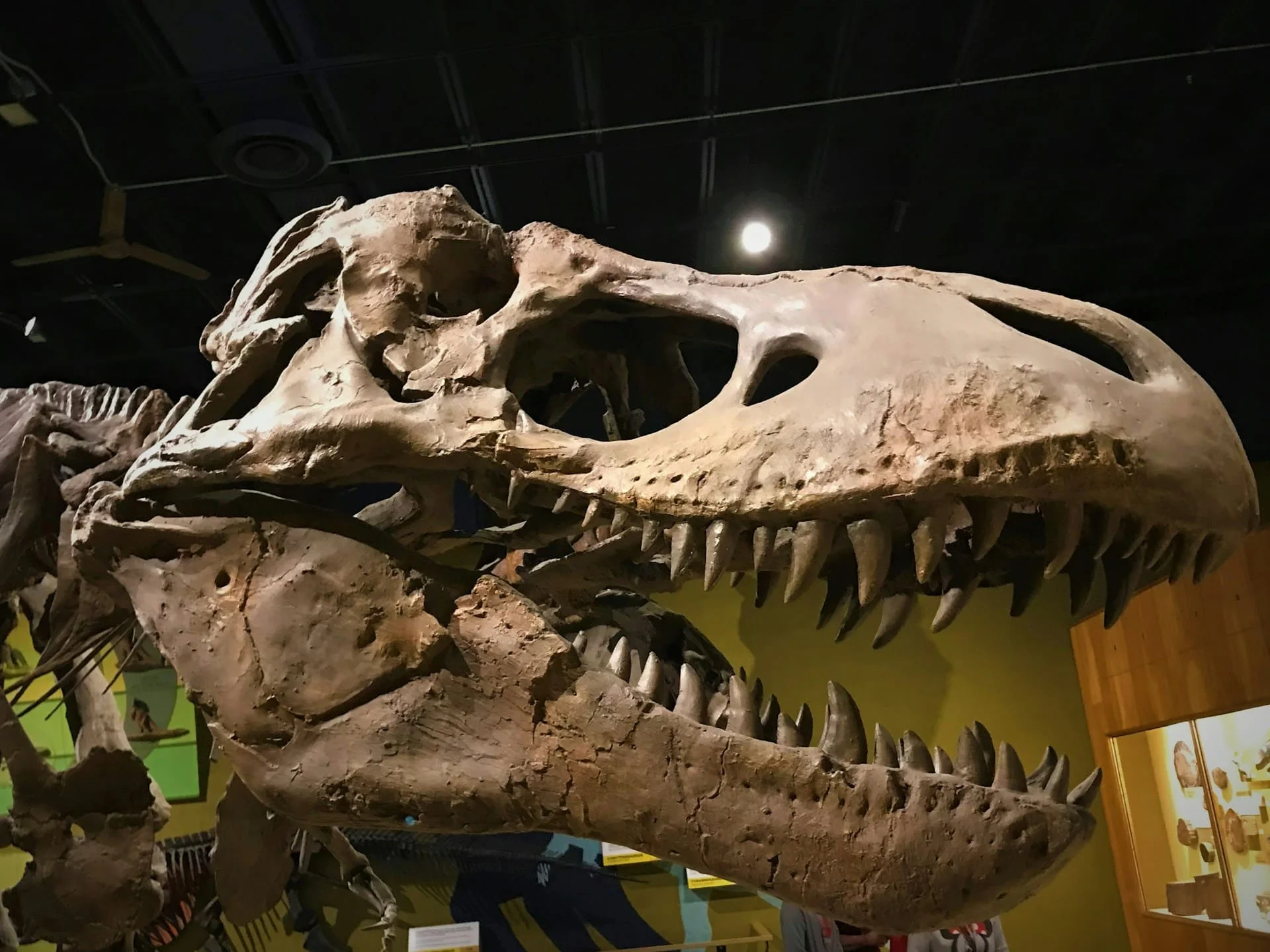
T. rex body temperature revealed by fossilised teeth


Scientists have taken the temperature of Tyrannosaurus rex for the first time, finding that the giant dinosaur maintained a body temperature of about 97.3°F (36.3°C), remarkably close to that of modern humans.
The result comes from a study led by researchers at the University of California, Los Angeles (UCLA), published in Science Advances on 16 September 2026. By analysing chemical signatures preserved in fossilised tooth enamel, the team found direct evidence that T. rex was warm-blooded rather than relying primarily on external heat to regulate its body.
The research builds on years of evidence suggesting that tyrannosaurs had relatively high metabolisms. Fossils discovered in places including Alaska had already raised questions about how T. rex could remain active in environments where a cold-blooded reptile would have struggled.
The new technique effectively turns tooth enamel into a prehistoric thermometer. Researchers examined the way rare carbon and oxygen isotopes became bonded within the enamel. The frequency of these bonds is influenced by temperature, allowing scientists to estimate the animal’s internal body temperature millions of years after its death.
The UCLA team had been developing the method for more than a decade and reduced the amount of fossil material required by about 90 per cent. That advance allowed the Natural History Museum of Los Angeles County to provide tiny samples from two teeth belonging to Thomas, its exceptionally complete T. rex specimen.
The researchers also examined fossilised crocodilians from the same Hell Creek Formation in Montana. Their estimated temperature was about 86°F (30°C), considerably below the T. rex measurement. The difference provides an important check against the possibility that geological changes after burial had produced the temperature signal.
A body temperature of around 36°C places T. rex between modern reptiles and birds, which are its evolutionary descendants. The finding supports the view of tyrannosaurs as active animals capable of generating and maintaining their own internal heat.
It may also help explain their ability to occupy a broad range of environments. Researchers say a warm internal temperature could have allowed T. rex to survive in colder parts of ancient North America, including regions close to the Arctic.
The study offers something unusually precise in palaeontology: not simply evidence that T. rex was warm-blooded, but an actual measurement of how warm its body was.
For more, visit EyeOnLondon at eye-on-london.com
Follow us on:



Subscribe to our YouTube channel for the latest videos and updates!

We value your thoughts! Share your feedback and help us make EyeOnLondon even better!