Gatwick second runway won its last legal fight

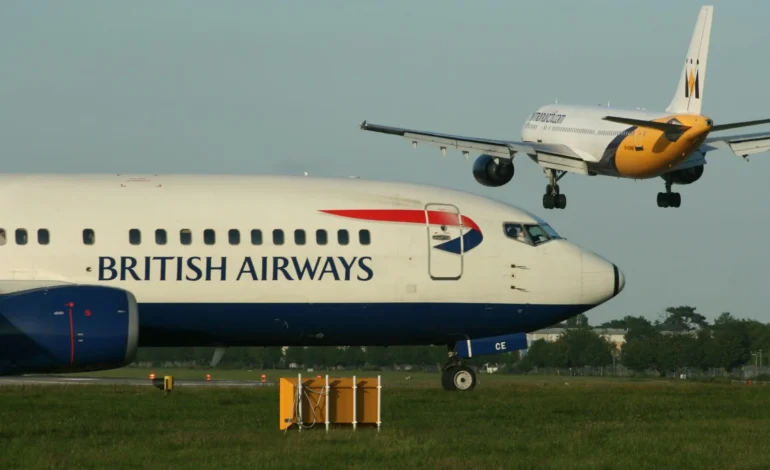
If you are booking a flight out of London this autumn and it happens to leave from Gatwick rather than Heathrow, there is now a very good chance that is not an accident of price comparison sites but a sign of where London’s air travel is actually heading. On 4 August, judges at the Court of Appeal refused campaigners permission to challenge a High Court ruling that cleared a Gatwick second runway for full-time use.
Communities Against Gatwick Noise Emissions, represented by the law firm Leigh Day, had its application to appeal denied, with Lord Justice Holgate and Lord Justice Dove concluding that every ground of appeal raised was unarguable and that neither appeal had a real prospect of success. Barring some further legal surprise, that closes an eight-year planning fight and clears the way for Gatwick’s northern runway, currently used only as a backup and for taxiing, to start handling full departures from 2030.
The practical effect for someone booking a holiday is bigger than the court ruling makes it sound. Heathrow has spent years turning away the airlines that would happily fly more routes from London, because it simply has nowhere to put them.
EasyJet’s finance chief has pointed out that Heathrow’s slot constraints have long limited the airline’s access, calling a primary base at Heathrow “probably the white spot we have in terms of primary airports throughout Europe.”
British Airways currently holds around 46% of Heathrow’s capacity, followed by Virgin Atlantic, American Airlines, United Airlines, and Lufthansa, leaving little room for the low-cost carriers most leisure travellers actually fly with. Gatwick, by contrast, is already the airport where those carriers have built their real capacity: easyJet is the largest carrier there, holding a 35.2% share of all departure seats as of January 2025, a dominance no rival at the airport comes close to matching.
That imbalance is exactly why a Gatwick second runway matters more than a straightforward capacity story.
Gatwick’s £2.2 billion plan to bring its northern runway into routine use handled 42.8 million passengers in 2025 and can now raise that capacity to as many as 80 million passengers a year, with first flights under routine dual-runway operations expected from 2030.
The airport will handle up to 100,000 additional flights each year once dual-runway operations begin.
None of that capacity is going to long-haul flag carriers competing for transatlantic business travellers. It is going to the airlines that fly package holidays to the Mediterranean, city breaks to European capitals, and the routes that fill up every half-term and summer.
Heathrow’s own answer to the same capacity problem is still years behind Gatwick’s, tied up in a consultation process that will not resolve until Parliament votes on the final Airports National Policy Statement this autumn. Heathrow submitted a proposal for a third runway and new terminal complex in 2025, but as of this year the scheme remains, in the airport’s own planning language, a proposal rather than an approved project, with construction not expected to begin until permission is secured and a first flight realistically a decade away even after that. Gatwick’s runway already exists physically. It has been sitting there for decades as an emergency strip. The court ruling means Gatwick only has to move it 12 metres and widen its use, not build anything from scratch, which is precisely why its timeline to 2030 looks so much shorter than Heathrow’s.
For a Londoner deciding where to fly from, the practical consequence is that Gatwick is turning into the airport where competition and choice will actually grow over the next five years, while Heathrow’s growth remains a promise dependent on a parliamentary vote that has not yet happened.
One recurring argument among industry watchers is that most airlines are only at Gatwick because they cannot get Heathrow slots, and would move to Heathrow given the chance, but that theory only bites once Heathrow’s third runway is real, not while it is still a planning document. Until then, the growth, the new routes and the added flights are happening at Gatwick, not Heathrow.
There is also a simple reason this shift will not feel like a downgrade to most travellers booking from London.
Thameslink now reaches Gatwick in under 35 minutes from more than 50 stations across central London and beyond, with up to eight trains an hour, while Southern’s services connect the airport directly to London Victoria and Clapham Junction. Gatwick is not a remote alternative to Heathrow in the way it might have felt a decade ago. It is a genuinely fast, frequent journey from most of the city, which matters more to a family catching an early flight than which airport happens to have the bigger long-haul lounge network.
An economic impact assessment has forecast that the expansion will create 14,000 new jobs and deliver an additional £1 billion in economic benefits every year.
For more, visit EyeOnLondon at eye-on-london.com
Follow us on:



Subscribe to our YouTube channel for the latest videos and updates!

We value your thoughts! Share your feedback and help us make EyeOnLondon even better!