Holy Fool Turns Shostakovich’s Terror Under Stalin Into Theatre With Live Piano

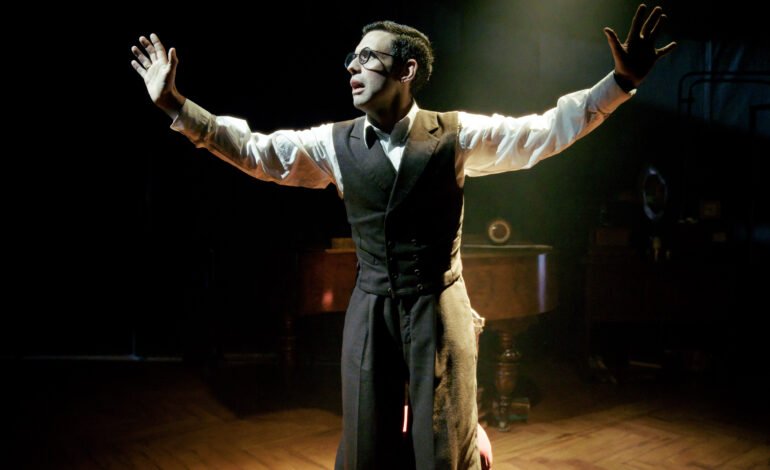
Holy Fool | Park Theatre until 10 October 2026
Shostakovich’s most perilous years come to the Park Theatre, live piano and all
Dmitri Shostakovich was one of the twentieth century’s greatest composers, and for a long stretch of his life, one of its most endangered. In January 1936, an editorial in Pravda, widely believed to have been penned by Stalin himself, denounced his opera Lady Macbeth of Mtsensk as “muddle instead of music.” From then on, Shostakovich lived in genuine fear of arrest: he famously kept a suitcase packed by the door, and by some accounts, waited by the lift on certain nights so that if he was taken, his family wouldn’t have to witness it. Stalin himself telephoned him at least once, offering notes on what he liked.
Holy Fool takes that period as its subject, a new play receiving its world premiere at the Park Theatre. It’s told through a cast of four, with two actors playing multiple characters around Shostakovich and his wife. The play explores a man forced to walk an impossible line, one wrong note could topple him, while something Stalin happened to like might just save his life. He had to live a double life: outwardly compliant, inwardly defiant, composing music that revealed as much as it concealed. It’s a story about tyranny, the bravery of resistance, and the triumph of the human spirit, all set under Stalin’s regime.
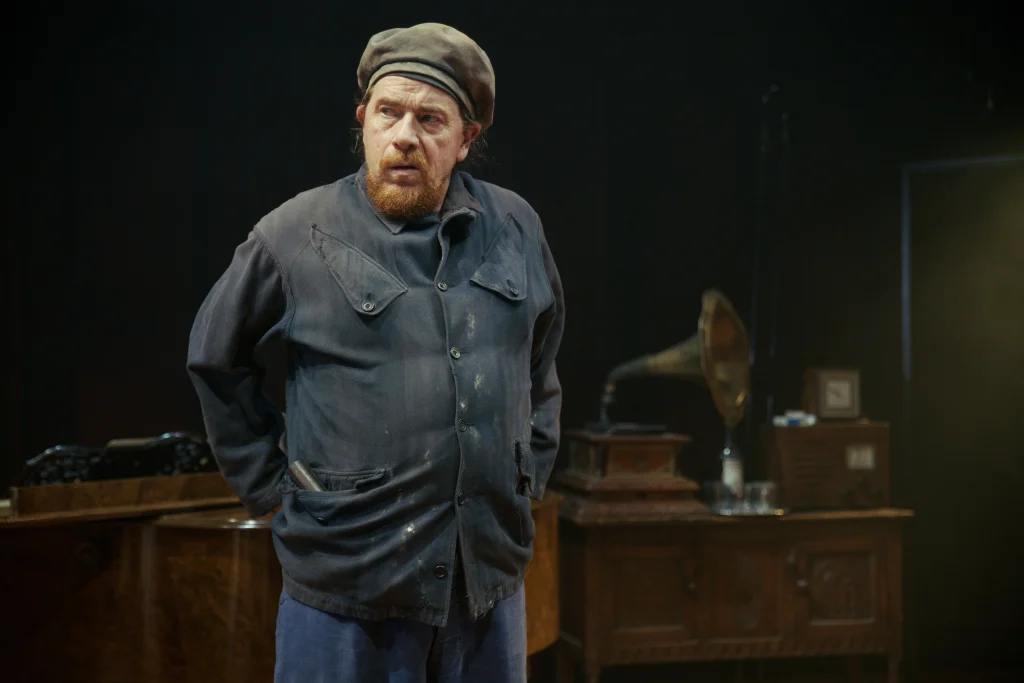
The play takes us up to just after the interval, when Stalin dies. In reality, the two men never met, though Stalin did telephone him once with notes on what he liked, and at one point pushed him to go to America, which he didn’t want to do, until Stalin told him, “I think you do want to go,” and he agreed. So, we only get that one telephone call from Stalin himself; otherwise, he’s an off-stage presence, glimpsed once as a portrait, running through perhaps half the play.
One of the basic rules of theatre is “show, not tell,” but here we are treated to long voiceovers that cover time jumps in Shostakovich’s life. We follow him into his later years, when he visits America and is convinced to finally release his Fourth Symphony. All this, unfortunately, robs the play of drama, turning it into a series of events. I honestly feel it would have been better to have concentrated more on his period with Stalin still alive, and I would have liked to understand more about how he coded rebellion and resistance in his music.
Is it historically accurate? Having seen it, the answer is yes and no. Shostakovich and his wife did exist. However, the two other actors, playing multiple characters, also carry a plot I ended up calling a tale of two plumbers: a plumber who comes to fix his pipes in act one and observes him from the sidelines, and a lady plumber who visits him later in act two, goes on to America, and turns out to be the daughter of the plumber from act one, encouraging him to perform and publish his Fourth Symphony. Both of those characters, as I understand it, are entirely fictional. I would have preferred a little more fact rather than adding two characters that make you wonder, can this possibly be real? And the answer, in this case, is no.
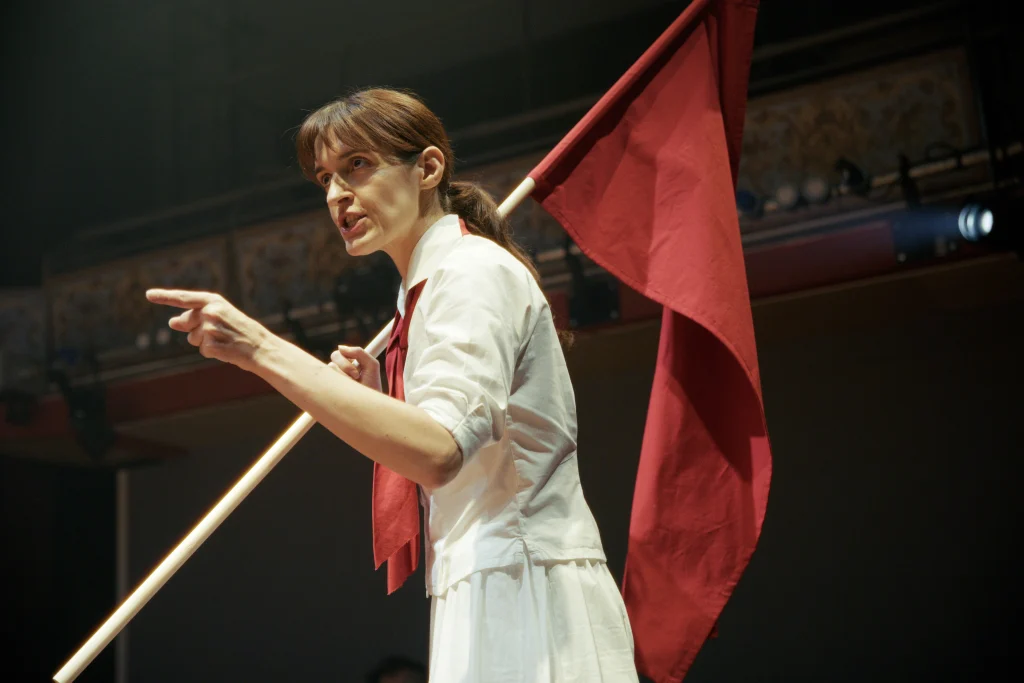
They also play out various other characters, and we see Shostakovich being interrogated. There’s a genuinely ridiculous moment, ridiculous-sounding, but true, where the only reason he’s allowed to go home is that his own chief interrogator gets arrested. That absurdity is baked right into the play.
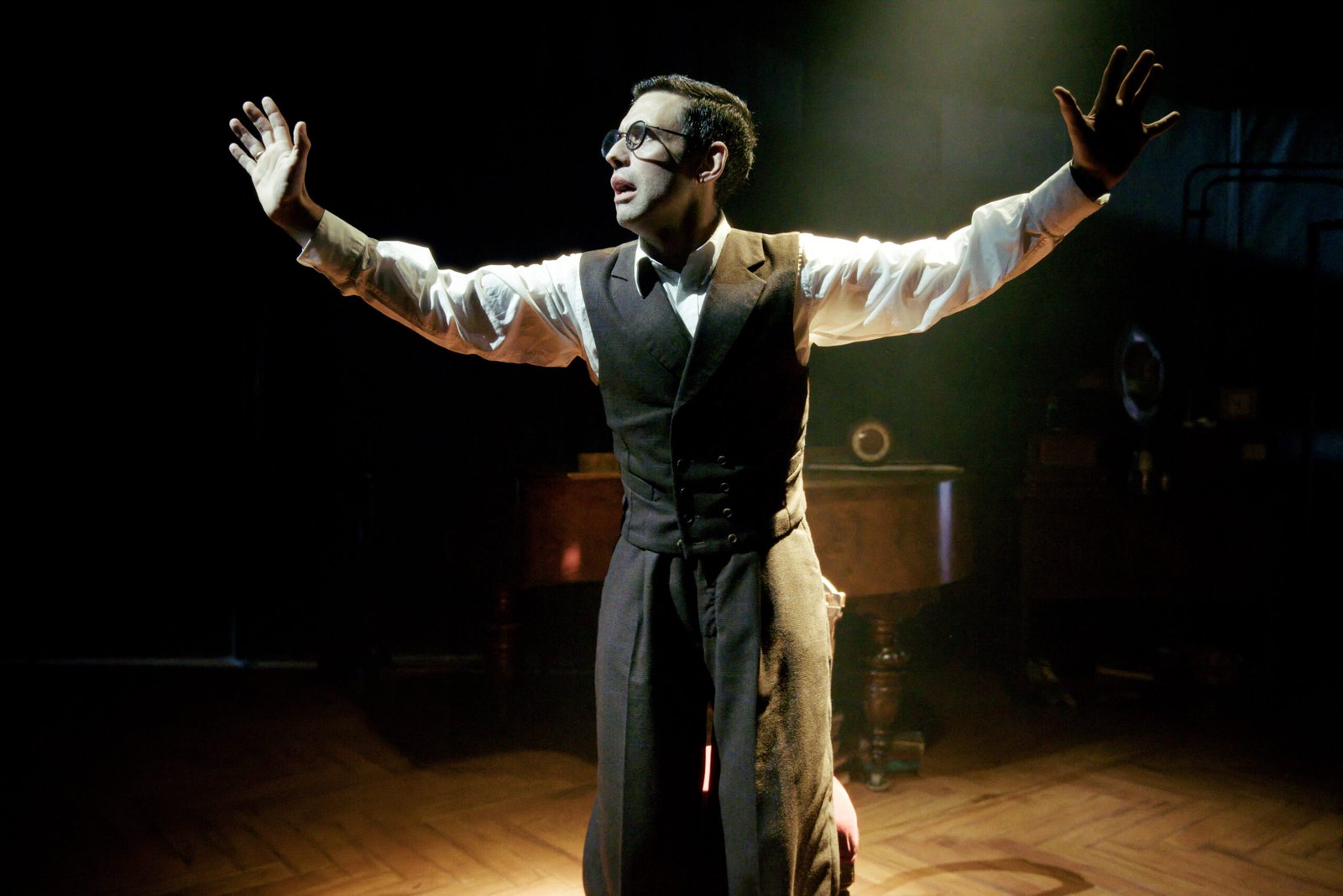
Some of the music is played live by Benjamin O’Mahony, who plays Shostakovich himself, though I only found that out afterwards. The piano was positioned so you couldn’t see his hands, and with a suspicious wire running towards it, I rather assumed there was a speaker doing the work. But no, he was actually playing it live, which, once you know it, adds a great deal to the experience, though people on the other side of the theatre may well have worked it out for themselves. It certainly made me want to hear more of Shostakovich’s music. I went in largely unfamiliar with it, and came out wanting a great deal more. It really is quite beautiful.
O’Mahony faces the challenge of aging from his mid-30s to 70 during the play, a task he acquits very well, though his hand tremors were a little inconsistent. In his later years, his performance is even more impressive when you realize he is actually playing the piano. He is ably supported by Jenna Augen as his long-suffering and pregnant wife, a character that, thanks to the writing, just about avoids becoming a cliché. Fergus O’Donnell effectively plays one of the fictional plumbers in Act 1 and multiple other characters throughout the play. Phoebe Pryce is also excellent as the second fictional plumber and shares a long scene with O’Mahony at the end of Act 2.
Go for the true story and the live Shostakovich under O’Mahony’s fingers. EyeOnLondon would have traded the fictional plumbers for more of the real coded resistance.
For more London arts and culture, visit EyeOnLondon at eye-on-london.com.
Park Theatre · London
Holy Fool
Until 10 October 2026
★★★☆☆
Shostakovich’s most perilous years come to the Park Theatre, live piano and all
| Writers | Rosalind Adler & Lea Sellers |
| Director | Kate Fahy |
| Cast | Benjamin O’Mahony as Shostakovich Jenna Augen as Nina Fergus O’Donnell as Izaak Phoebe Pryce as Katya |
Further Reading on EyeOnLondon
- Aigul Akhmetshina Turns Femme Fatale Cliché Into Real Drama on Mujer Fatal — a different route into the same question Holy Fool keeps circling, whether a performer can find real feeling inside a role built on received, second-hand ideas of a historical figure or type.
- Pride the Musical Finds the Joy in a True Story of Miners and Gay Activists — another new British stage work built from real political history, worth reading alongside Holy Fool for how differently two shows handle turning documented struggle into drama.
Follow us on:



Subscribe to our YouTube channel for the latest videos and updates!

We value your thoughts! Share your feedback and help us make EyeOnLondon even better!