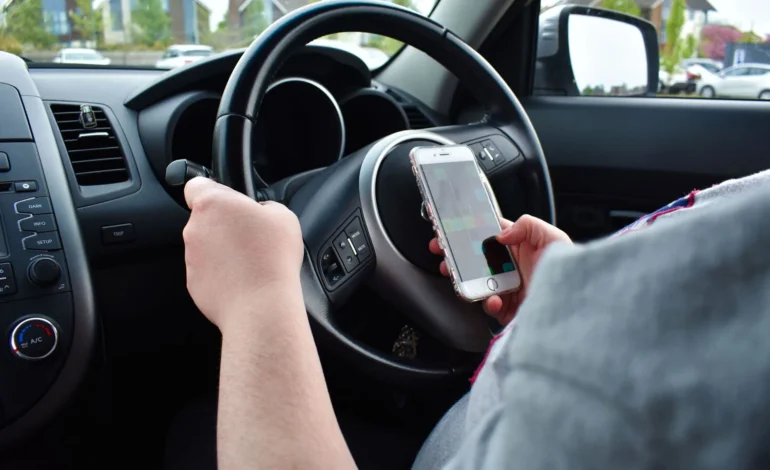
Drivers across the UK are being warned that using a handheld mobile phone while driving can lead to a £200 fine and six penalty points, including when the vehicle is stopped in traffic.
Road safety organisation GEM Motoring Assist says too many motorists still treat being stationary at traffic lights or sitting in a queue as an opportunity to check a message, change music or adjust their navigation. Under the rules, handheld use is generally prohibited while driving, regardless of what the phone is being used for.
That includes making calls, sending messages, scrolling through playlists, programming a satnav, taking photographs and checking notifications.
The consequences can be particularly serious for newly qualified drivers. Anyone who reaches six penalty points within two years of passing their test can have their licence revoked automatically.
Government figures recorded mobile phone use as a contributory factor in 32 fatal collisions in Great Britain in 2025. GEM says the actual impact of phone-related distraction may be greater because some cases involving hands-free devices are not identified as such.
Research has also found that using a mobile phone while driving can increase crash risk by around four times. The organisation stresses that hands-free operation is legal in many circumstances but does not remove the distraction created by holding a conversation or interacting with a device.
Enforcement is also becoming harder to evade. Police forces and local authorities are investing in roadside cameras and AI-assisted technology capable of identifying drivers using phones, including devices held low or resting on a lap.
GEM is also backing consideration of camera enforcement at traffic lights, arguing that drivers distracted by phones can delay traffic when they fail to move away promptly after lights change.
The safest approach is to prepare before setting off. Navigation and music should be programmed in advance, while drivers needing to use a phone should pull over somewhere safe and switch off the engine.
There are limited legal exceptions, including using a phone to make a genuine emergency call to 999 and making a contactless payment at a toll booth or drive-through while stationary.
Follow EyeOnLondon for more practical London and UK news, transport updates, and road safety stories.
Follow us on:



Subscribe to our YouTube channel for the latest videos and updates!

We value your thoughts! Share your feedback and help us make EyeOnLondon even better!