The knowledge made cabbies’ brains grow. Robotaxis could end the experiment

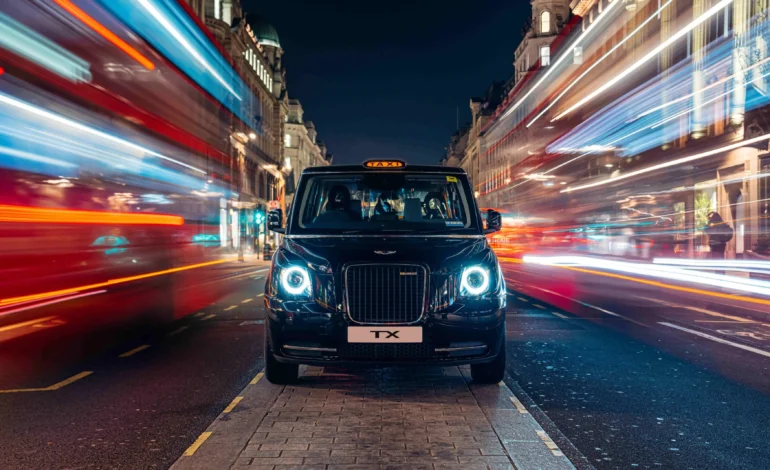
Every licensed London taxi driver carries, somewhere in the back of their skull, a slightly larger posterior hippocampus than the rest of us. This is not a metaphor. It is a measurable, published finding, first shown in a landmark year 2000 study by Eleanor Maguire and colleagues at UCL, and it exists because passing the Knowledge of London, the notoriously brutal exam requiring drivers to memorise thousands of streets and points of interest without satnav, appears to physically reshape the brain region used for spatial memory and navigation.
That finding turned London’s black cab trade into one of neuroscience’s most useful natural experiments, a working population that had, unintentionally, run a decades-long trial in cognitive training on itself. The problem now facing that experiment is not scientific. It is commercial. The population of licensed taxi drivers it depends on has been shrinking for years, and the arrival of robotaxis on London’s streets is about to test how much longer that population can hold.
Transport for London granted Private Hire Vehicle licences to a small fleet of Wayve’s autonomous vehicles this month, still with a safety driver behind the wheel, and that single decision is what has turned a slow-burning licensing question into a countdown. The London Assembly Transport Committee has spent months taking evidence on how autonomous passenger vehicles might reshape jobs, licensing and road safety in the capital, hearing from figures including UCL’s Professor Jack Stilgoe and Dr Nick Reed of the Department for Transport’s Science Advisory Council. Its report, with formal recommendations, is expected soon. Committee chair Caroline Russell AM has said the TfL approval was “not entirely unexpected,” while making clear the Committee still has “many questions about the safeguarding of passengers” before anything closer to full autonomy is allowed.
None of this threatens black cabs overnight. The vehicles licensed so far still require a qualified driver at the wheel, and full driverless operation needs a separate permit from the Driver and Vehicle Standards Agency that nobody currently holds. But the number of people willing to spend three to four years learning the Knowledge was already falling before a single robotaxi carried a paying passenger. TfL’s own licensing figures show the number of licensed taxi drivers in London has fallen from around 25,500 in 2013/14 to roughly 15,850 by mid-2026, and the number of new taxi driver licences issued each year has collapsed even faster, from 1,010 in 2016 to just 104 in 2024. Rising vehicle costs, the end of the scrappage and plug-in grant schemes, and competition from private hire apps have all been blamed for the decline, well before autonomous vehicles entered the conversation.
What makes this more than a labour story is what the Knowledge actually produced in the people who passed it. Maguire’s 2000 study scanned the brains of sixteen licensed London taxi drivers and found their posterior hippocampi were significantly larger than those of control subjects who had never driven a cab, with hippocampal volume correlating with the number of years spent driving. Follow-up work through the 2000s, including comparisons with London bus drivers who navigate the same city on fixed routes, strengthened the case that it was the active, exam-tested acquisition of a mental map of London specifically, not simply years spent behind a wheel, that drove the change.
That finding has since fed into a much wider question about the hippocampus and disease. A 2024 study published in the BMJ, led by researchers at Mass General Brigham and Harvard, examined Alzheimer’s mortality across 443 occupations using US death records from 2020 to 2022, and found taxi drivers and ambulance drivers, both jobs demanding constant real-time spatial navigation, had the lowest rate of death from Alzheimer’s disease of any profession studied. The researchers were explicit that the study was inspired by the London hippocampus findings, though it examined American drivers and death certificates, not scans of London cabbies’ brains, and its authors and independent commentators, including Dr Richard Oakley of the Alzheimer’s Society, have stressed the results are observational and cannot on their own confirm that navigation-heavy work protects against the disease.
What the Knowledge offers researchers, in other words, is not proof of a cure but something rarer: a large, real, decades-deep population of people who acquired an extraordinary, verifiable navigational skill in adulthood and can be studied against those who did not. Shrink that population, and the natural experiment shrinks with it. Nobody at UCL or on the Transport Committee has suggested halting robotaxi trials to protect a research resource, and the Committee’s own focus, understandably, is on passenger safety and driver livelihoods rather than neuroscience. But the Knowledge’s decline was already underway, driven by cost and competition long before autonomy became a factor, and a technology capable of accelerating that decline further is now operating on London’s roads with TfL’s own signature on the licence.
For more, visit EyeOnLondon at eye-on-london.com
Follow us on:



Subscribe to our YouTube channel for the latest videos and updates!

We value your thoughts! Share your feedback and help us make EyeOnLondon even better!