NHM study suggests sturgeon once bred in UK rivers and could inform future reintroduction plans

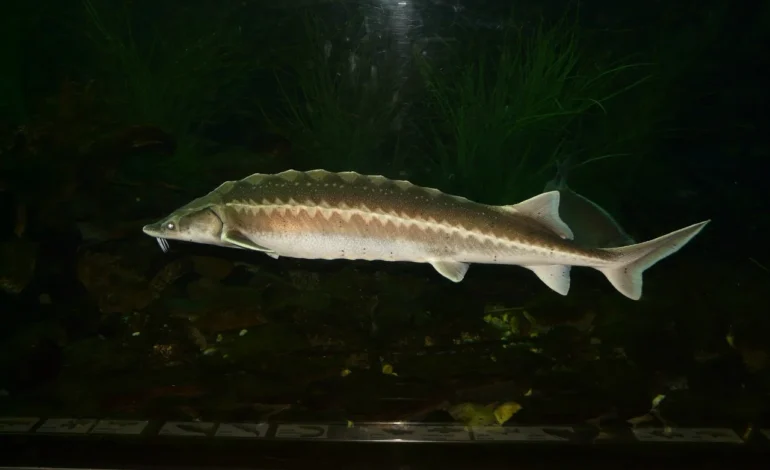
A new study involving London’s Natural History Museum suggests that Atlantic and European sturgeon reproduced in UK rivers within the past 200 years, providing fresh evidence that the species were once part of Britain’s native wildlife and could become candidates for future conservation work.
The research, led by the Zoological Society of London (ZSL) with museum scientists and researchers from across the UK, examined preserved fish specimens alongside historical records to better understand whether sturgeon were breeding in Britain or simply passing through its rivers and coastal waters.
Atlantic and European sturgeon are among the largest bony fishes found in Europe. They hatch in rivers before migrating to sea, later returning to freshwater to breed. Over time, populations have declined because of overfishing, pollution and river infrastructure such as dams and weirs that interrupt these migrations.
According to the researchers, the species’ slow life cycle makes recovery especially difficult. Sturgeon can take more than a decade to reach breeding age, and the only remaining breeding population of European sturgeon is now found in France’s Garonne River.
To investigate Britain’s historical connection with the fish, the research team reviewed archived newspaper reports and museum collections, including specimens held by the Natural History Museum. Evidence was identified from several major river systems, including the Severn, Solway and Tay, with many records dating from the breeding season.
Rather than proving the fish were only occasional visitors, the researchers say these seasonal records suggest breeding activity took place in British rivers within the past two centuries.
Dr Rupert Collins, Senior Curator of Fishes at the Natural History Museum and a co-author of the study, said the project included an extensive review of the museum’s sturgeon collections alongside historical material from other institutions. He said the findings would contribute to future planning for sturgeon recovery while demonstrating how museum collections continue to support biodiversity research.
The researchers stress that this does not mean reintroductions are imminent. Further studies would be needed to identify suitable habitats, assess the condition of modern river systems and understand what restoration work would be necessary before any future conservation programme could be considered.
Hannah McCormick, a ZSL conservationist leading the UK Sturgeon Alliance, said the fish had survived since the time of the dinosaurs but had been pushed towards extinction by overfishing, pollution and river infrastructure blocking their migration routes. She said confirming that sturgeon once bred in British rivers represented an important milestone in understanding how the species might one day recover.
The findings add another piece to the picture of Britain’s lost freshwater biodiversity while highlighting the role scientific collections can play in guiding modern conservation decisions.
For more about the museum’s scientific research and collections, visit the Natural History Museum website.
Interested in how London’s scientific institutions are shaping conservation and environmental research? Discover more London science, nature and environment stories at EyeOnLondon.
Follow us on:



Subscribe to our YouTube channel for the latest videos and updates!

We value your thoughts! Share your feedback and help us make EyeOnLondon even better!