Silverpit Crater beneath North Sea confirmed as ancient asteroid impact after decades-long debate

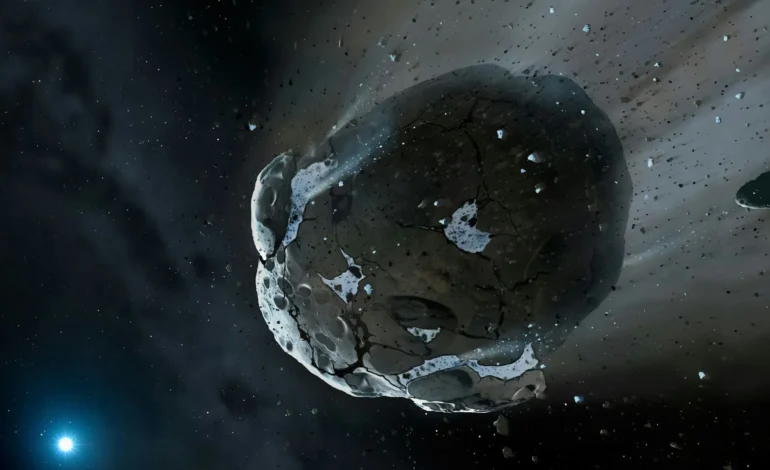
Scientists have confirmed that a mysterious structure beneath the southern North Sea, known as the Silverpit Crater, was formed by an asteroid or comet impact around 43 to 46 million years ago, resolving a geological debate that has lasted more than two decades.
The finding places the Silverpit Crater among a small group of confirmed impact craters on Earth and has been published in Nature Communications by a research team led by Dr Uisdean Nicholson of Heriot-Watt University in Edinburgh, with funding from the Natural Environment Research Council (NERC).
The Silverpit Crater lies around 700 metres below the seabed, approximately 80 miles off the Yorkshire coast. It measures roughly three kilometres across and is surrounded by a wider system of circular faults extending around 20 kilometres, features that have long intrigued geologists studying its origin.
Researchers combined advanced seismic imaging, rock samples from a nearby oil exploration well, and computer modelling to reanalyse the site. Within the samples, they identified shocked quartz and feldspar crystals, microscopic structures that form only under extreme pressure conditions associated with asteroid impacts.
The evidence indicates that an object approximately 160 metres wide struck the seabed at a shallow angle from the west. The impact would have excavated vast quantities of rock, sediment and seawater, sending material into the atmosphere and generating a tsunami estimated to have exceeded 100 metres in height.
The study overturns earlier competing theories that the structure was created by shifting underground salt deposits or volcanic collapse. Although a formal geological vote in 2009 saw most participants reject the impact hypothesis, the new seismic data provides what researchers describe as the strongest evidence yet for an extraterrestrial origin.
Silverpit’s preservation makes it a rare scientific resource. Earth’s active geology, including erosion and plate tectonics, typically erases most ancient impact structures over time, leaving only a small number detectable today. Fewer than 40 confirmed impact craters are known beneath the world’s oceans.
Researchers say the crater offers an important opportunity to better understand how asteroid impacts shape planetary surfaces, both on Earth and across the wider solar system. It may also help improve modelling of future impact scenarios.
Explore more EyeOnLondon science coverage uncovering how space events continue to shape our understanding of Earth.
Follow us on:



Subscribe to our YouTube channel for the latest videos and updates!

We value your thoughts! Share your feedback and help us make EyeOnLondon even better!