War Horse Returns to the National Theatre and Still Stops Fifteen Hundred Hearts at Once

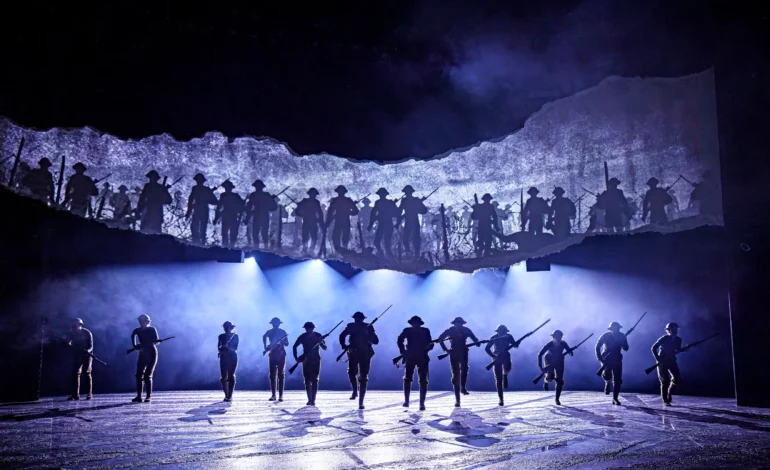
War Horse | National Theatre until 30 July 2026
Neigh-saying is not an option War Horse gallops back to its National Theatre
War Horse began its life at the National Theatre nearly twenty years ago, at a time when most people thought it simply couldn’t be done. How do you stage a book narrated by a horse, from the horse’s point of view, without a talking horse on stage or, not to put too fine a point on it, endangering the cast?
The answer came through a partnership with the South African puppet company Handspring. There were early workshops, apparently involving people running around with buckets and tails made of newspaper, and a famously rocky beginning: the opening preview ran for about four hours and had to be substantially reworked. But what emerged from that unpromising start is one of the most extraordinary pieces of theatre I’ve seen.
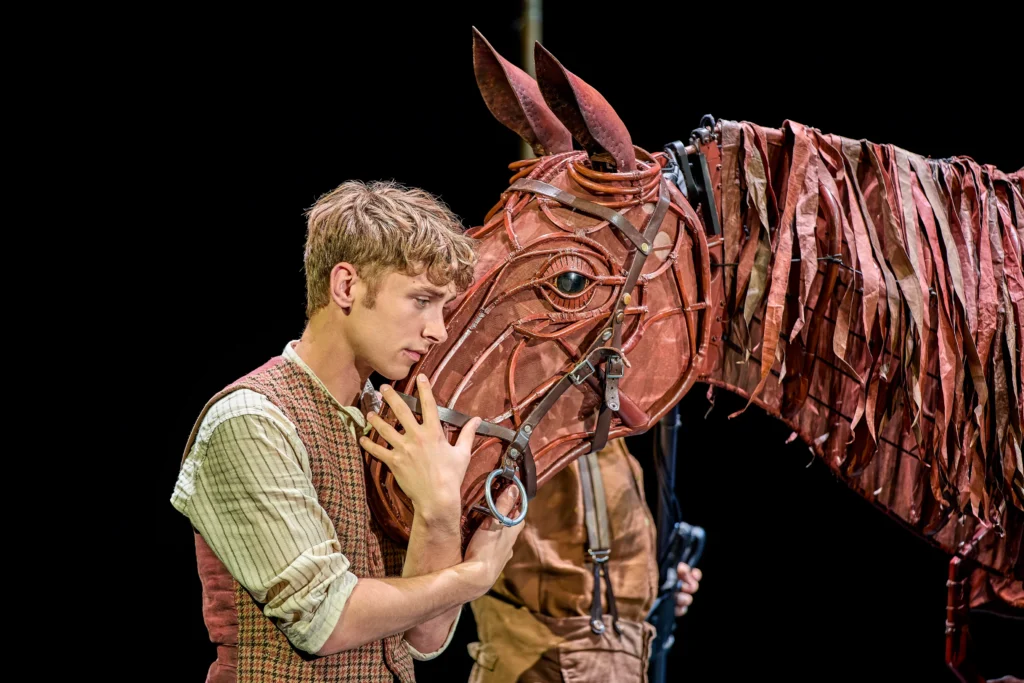
Joey, the horse at the heart of the story, is operated by three puppeteers, one for the head, one for the hindquarters, and one for the front legs. It’s worth looking him up on YouTube if you’ve never encountered him; he’s appeared at Armistice Day and other national occasions. He’s a heavy, intricate puppet made of metal and leather. And the extraordinary thing is: you believe he’s real.
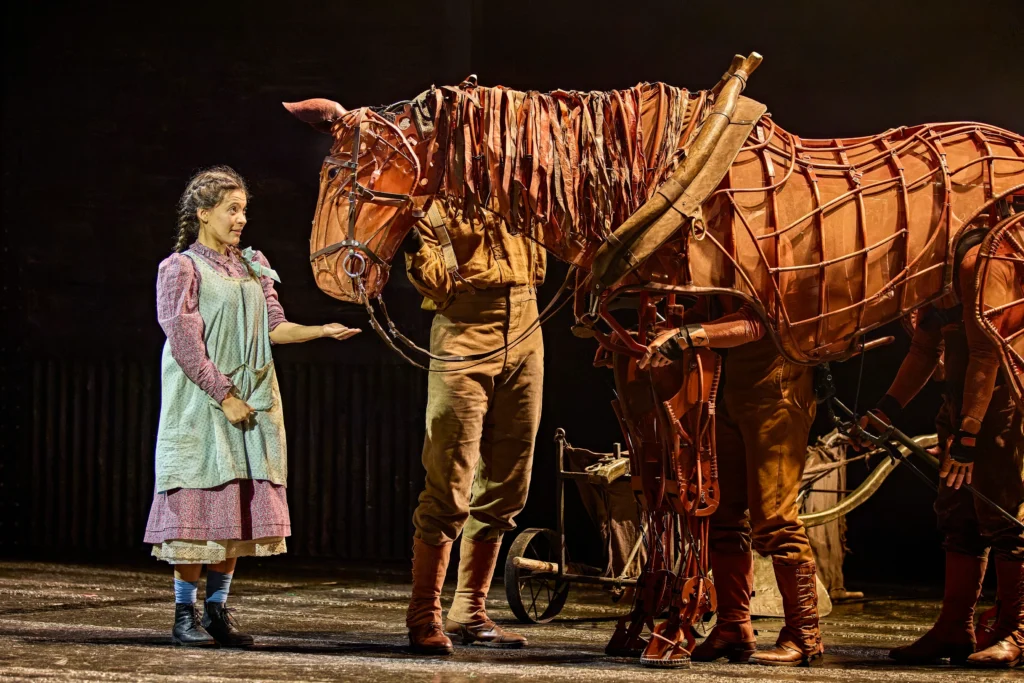
The proof of that is in what happens in the second half, when Joey is malnourished and weakened. Audience members have asked the puppeteers, “When did you change the puppet?” The answer is they didn’t. It’s the same puppet, simply manipulated differently. That kind of theatrical skill is exactly what I mean when I cite an old music hall adage: “Make ’em work and they’ll love you twice as much.” We have to create Joey ourselves. We emotionally invest in him. So when the bolt gun is put to his head in Act Two, you hear fifteen hundred people gasp simultaneously. Because we’ve decided, all of us, together, that he’s real.
The play follows Joey from his rural beginnings just before World War One through to the trenches of France, where he is sold to the army. Young Albert, his owner and devoted friend, enlists, underage, and goes to find him. Along the way, Albert endures trench warfare, gas attacks, losing friends, and being shot at. We see all of it. And for people to be reminded of the true horrors of war, this production is more powerful than almost anything I can think of, more powerful, I’d argue, than Steven Spielberg’s film version, which is good, but which nowhere near has the emotional impact of the stage production.
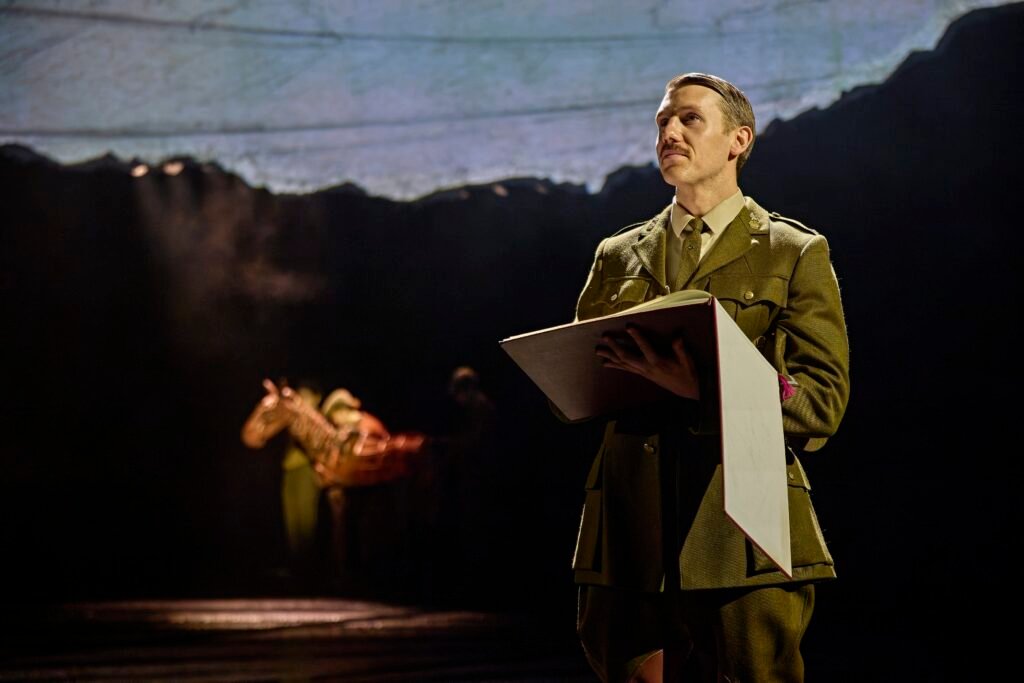
It is not the greatest play in the world. And at the beginning of Act Two, some of the shakiness of the acting is exposed when some of the ensemble have to multi-roll, and their accents and performances are decidedly dubious. Two notable exceptions to this are Tom Sturgis as Albert and Joe Castleton as his mother, both detailed and moving performances. However, acting honours for the night go to the puppeteers who operate both Joey and Topthorn, and of course, the goose, who never makes it through the door!
As a piece of drama, it is relatively simple. But as a piece of theatre, as a demonstration of what live performance can do that no other medium can replicate, it is, I think, unbeatable. I was in tears.
For more London arts and culture, visit EyeOnLondon.
National Theatre · London
War Horse
Until 30 July 2026
★★★★☆
War Horse is back where it all began, and it still stops the heart. Three puppeteers operate a metal-and-leather horse, and fifteen hundred people gasp as one. A remarkable, moving piece of theatre
| Writer | Nick Stafford, based on the novel by Michael Morpurgo |
| Director | To be confirmed |
| Cast | Tom Sturgis Joe Castleton |
Follow us on:



Subscribe to our YouTube channel for the latest videos and updates!

We value your thoughts! Share your feedback and help us make EyeOnLondon even better!