Natural History Museum to reopen gallery not seen since 1943

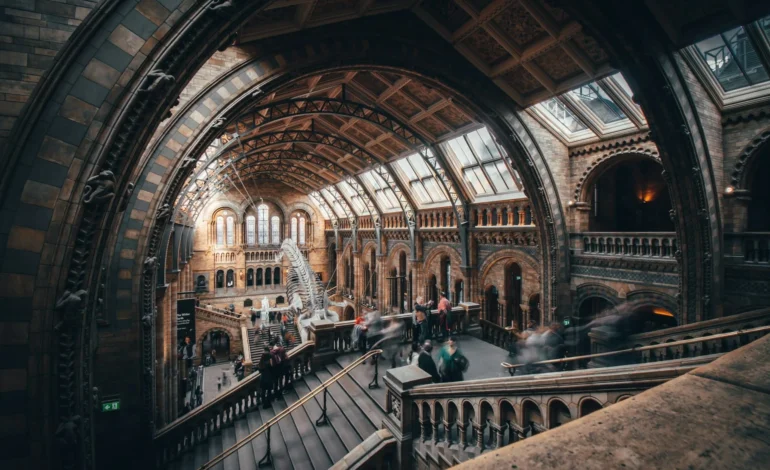
There is a room on the second floor of the Natural History Museum’s Waterhouse building that has not held a single visitor since 1943. It has spent the eight decades since as a working store for the museum’s botanical collections, its original wooden herbarium cabinets still lining the walls, untouched by daylight from the public side of the glass. On 16 September, for the first time since the middle of the Second World War, the doors to this gallery open again.
The space will reopen with Nature and Us, a free exhibition supported by the Natural Environment Research Council, built around 50 objects that trace how people’s relationship with the natural world has shifted over time. It runs for an initial 18 months, which is deliberately not permanent. The museum wants visitors to help decide what stays.
The objects themselves span from the sentimental to the genuinely strange. There is a miniature model of a Crystal Palace dinosaur, useful less as science and more as a record of how Victorian scientists and artists pictured prehistoric life before anyone had assembled a real skeleton. There is Jenny, a Victorian monk seal skeleton whose history as a performing animal says more about nineteenth-century entertainment than about seals. There is a 400,000-year-old handaxe, the kind of find that has previously forced archaeologists to redraw the timeline of when humans existed at all. And there is a bryozoan-encrusted Star Wars toy from the 1980s, plastic reclaimed by the sea and turned, by marine life growing over it, into something closer to a specimen than a collectible. Visitors will also be able to handle a replica jaw from one of Britain’s earliest known domesticated dogs, dated to roughly 14,300 years ago.
That range, a plastic toy sitting a few rooms from a Pleistocene handaxe, is the point of the exhibition rather than an accident of curation. Nature and Us treats a supermarket action figure and a half-million-year-old tool as data points in the same continuous story, which is a more interesting curatorial bet than most museums make with new gallery space.
The room’s own past adds a layer the exhibition itself does not need to explain. It served first as an osteology gallery, then as a mammals gallery, before the museum’s original herbarium was damaged during the Second World War and its collections were shifted into this space, sealing it off from the public in the process. The wooden cabinets built to hold that herbarium remain exactly where they were installed, now framing an exhibition about humanity’s changing relationship with nature inside a room whose own history is a small case study in the same thing.
The gallery’s reopening is only possible because of a much larger, less visible operation running in parallel, the ongoing move of millions of specimens out of South Kensington and down the M4 to a new research centre near Reading. Freeing up back-of-house storage space is precisely what allows rooms like this one to return to public use, and Nature and Us is the first tangible, walk-through result of that logistics project rather than a separate initiative.
It also sits inside NHM150, the museum’s wider campaign to open or refresh a gallery every year in the run-up to its 150th anniversary in 2031. That campaign has already produced Fixing Our Broken Planet, which the museum says has drawn 3 million visitors since opening in 2025, and the wider transformation project behind it carries a price tag of roughly £550 million, most of it aimed at increasing the museum’s public space by around 16 per cent and drawing a million extra visitors a year once complete.
That permanent gallery, due in 2029, is where the experimental framing of Nature and Us actually matters. The museum has said the current run is a testing ground: whichever stories and objects resonate with visitors over the next 18 months will help shape what becomes fixed. It is a rare instance of a national museum treating its own gallery content as genuinely unsettled, rather than presenting Nature and Us as the finished article dressed up as a trial.
For more London arts and culture, visit EyeOnLondon at eye-on-london.com
Follow us on:



Subscribe to our YouTube channel for the latest videos and updates!

We value your thoughts! Share your feedback and help us make EyeOnLondon even better!