Luton was London’s clean air control group, and its children’s lungs just proved the point

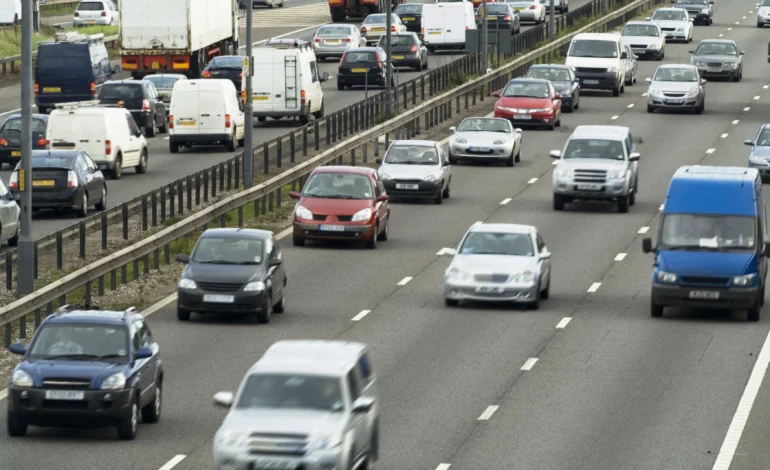
For five years, a child’s postcode in this study was not incidental. It was the experiment. Every child recruited into the Children’s Health in London and Luton study breathed easier or harder depending on which side of a line on a map they lived. Between July 2018 and April 2019, researchers signed up 3,414 children aged six to nine, 1,664 of them in central London, 1,750 of them thirty miles north in Luton.
London got the Ultra Low Emission Zone (ULEZ) in April 2019. Luton, a town with a broadly similar mix of traffic pollution but no charging zone of its own, got nothing. It simply carried on as it was, which is exactly what the study needed it to do.
That is the part of this story easiest to miss under the headline figures: Luton was not a subject of London’s clean air policy. It was the town that had to stay unchanged so London’s policy could be measured against something. For five years, thousands of Luton schoolchildren breathed the same kind of traffic-heavy air with no charging zone, no behavioural nudge, no political announcement, purely so their lungs could serve as the baseline against which London’s children were compared.
At the outset, the two groups were not equal. Children in London had measurably worse lungs than children in Luton before the ULEZ existed. Researchers used FEV1, a standard breathing test measuring how much air a person can forcibly exhale in one second, and found London’s children averaged about 38 millilitres lower than Luton’s, even after accounting for sex, ethnicity, deprivation, and asthma. Their modelled exposure to nitrogen dioxide, the pollutant most closely tied to vehicle exhaust, ran almost 19 micrograms per cubic metre higher than in Luton.
Then the zone came in, and the two towns’ air pollution levels diverged fast. Nitrogen dioxide fell by 3.77 micrograms per cubic metre per year in central London, more than double the 1.77 recorded in Luton over the same period. London’s children’s lung growth accelerated too, gaining roughly 10 millilitres more FEV1 per year than Luton’s children managed. By the end of five years, the gap in that particular measure had closed almost entirely. The proportion of children with clinically low FEV1 fell from 14% to 8.8% in London, compared with a smaller fall, from 8.9% to 6.9%, in Luton.
Not every measure caught up equally. Forced vital capacity, which reflects the structural volume of the lungs rather than the speed of breath, told a slower story. London’s children started around 55 millilitres behind Luton’s on this measure and grew faster than Luton’s children over the study, but the gap narrowed rather than closed, leaving London roughly 25 millilitres behind by the end. The researchers suggest this is because FVC reflects deeper structural lung growth than FEV1, and structural change simply takes longer to show up than a breathing-speed test does.
The study’s authors, led by Dr Helen Wood at Queen Mary University of London, are careful about what this evidence can and cannot claim. It was a natural experiment, not a randomised trial, so it cannot prove the ULEZ caused the improvement in the way a clinical drug trial would. What it can show is a pattern: pollution fell faster where the zone existed, lung growth improved faster in the same place, and the town without a zone improved more slowly on both counts. Across the whole cohort, higher long-term exposure to nitrogen dioxide and particulate matter was linked to poorer lung growth generally, with nitrogen dioxide showing the clearest association of all, the pollutant most directly tied to the traffic a charging zone is designed to reduce.
Dr Ian Mudway of Imperial College London, joint senior author on the study, has argued since the ULEZ was first introduced that it should be judged as a public health intervention, not just a transport one. He said the findings demonstrate that clean air zones can be an effective public health intervention to prevent damage to developing lungs, work published in The Lancet Public Health that gives that 2019 argument something concrete to stand on.
None of this makes Luton the loser of the story, exactly, but it does make the town the quiet cost of London’s proof. A comparable urban area, chosen because its traffic pollution profile was similar enough to London’s to make a fair test, spent five years as the town that did not get the zone, so the town that did could show its working. Luton’s children’s lungs improved too, just more slowly, on a pollution trend that fell at roughly half London’s rate over the same period. Professor Gurch Randhawa of the University of Bedfordshire, joint senior author on the study, noted that the findings will be of interest to Luton and Bedfordshire as they plan for future development and regeneration, which is one way of saying the town that hosted the control group might now reasonably ask when its own turn comes.
The equity point cuts in more than one direction. Central London has relatively low car ownership, meaning many of the children breathing the worst of its traffic pollution live in households that contribute little to it themselves. Luton’s children, in turn, absorbed years of a slower pollution improvement so that a policy built for a different city could be tested properly. Traffic pollution, on this evidence, is not distributed according to who benefits from driving, and clean air policy is not distributed according to who needs it most, either.
For more, visit EyeOnLondon at eye-on-london.com
Follow us on:



Subscribe to our YouTube channel for the latest videos and updates!

We value your thoughts! Share your feedback and help us make EyeOnLondon even better!