Why so many Londoners are quietly giving up on Dickens halfway through

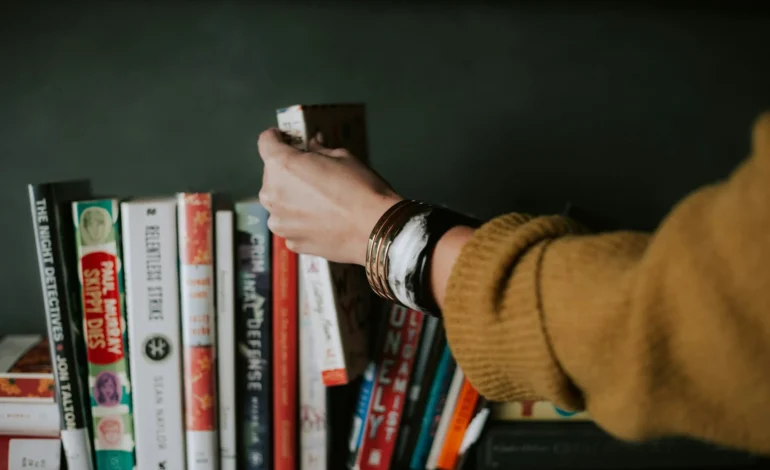
Sixty-odd pages into Our Mutual Friend, on a book he had once loved, the writer Ioan Marc Jones found himself checking football scores instead, despite not much caring about football. He put the book down. It joined two other classics abandoned in the same few weeks: The Life and Opinions of Tristram Shandy, Gentleman, and Dracula, both closed early, both blamed at first on the books themselves, until the pattern became too obvious to ignore. In a Guardian essay published recently, Jones traces exactly this collapse, and asks the question that has since travelled well beyond the books pages: has reading changed, or has he?
The prompt was the Guardian’s own new list of the 100 best novels ever written. Jones had read 68 of them and set out, in a fit of enthusiasm, to finish the remaining 32. Most were the big Victorian novels he’d “devoured” in his twenties, when he took Dickens on package holidays and read David Copperfield by the pool. This time, the same books that once felt like company felt like an obstacle. Sterne’s digressions, once a source of delight, became “infuriating.” Van Helsing’s moralising in Dracula “did my head in.” Even Dickens, a writer Jones has defended against Orwell, Ford Madox Ford, and E.M. Forster, could not hold his attention past chapter ten.
Jones’s essay does not treat this as a personal failing so much as a symptom, and points to research that gives the feeling some shape. The psychologist Gloria Mark, whose years of studying attention and screen use produced the 2023 book Attention Span, has documented how digital interfaces train users to switch focus rapidly rather than sustain it, a habit that transfers, inconveniently, to the page. Separate data from the analytics firm Chartbeat, cited in the same essay, found that a third of online readers abandon an article within fifteen seconds. Jones’s own conclusion is blunt: the page asks for one thing at a time, no pop-ups, no notifications, and increasingly, that single demand is the hardest one to meet.
Kate McLoughlin, professor of English literature at the University of Oxford, offers the essay’s sharpest reframing of the problem. Rather than reading less, she argues, we are reading constantly, just not books. The skill in question, on this account, is not reading itself but a specific, kind: linear, monologic, sustained across hundreds of pages with no interface competing for the eye.
For a London reader, that distinction lands somewhere quite specific. The city runs on precisely the reading habits McLoughlin describes: a commute spent scrolling, a lunch break spent on headlines, a working day built from emails and Slack threads and captions. London Underground carriages are, on paper, some of the best sustained reading environments left in daily life, phone signal patchy or absent for long stretches between stations, and yet the habit of picking up a nine-hundred-page Dickens novel for that stretch has become, if Jones’s experience generalises at all, a genuinely unusual thing to do. Tfl’s own long-running Poems on the Underground scheme, marking its fortieth anniversary this year, has always worked on the assumption that a short, self-contained text suits that environment better than a long one. Perhaps it always did.
What makes Jones’s essay useful rather than simply gloomy is that it resists a tidy verdict. He does not conclude that Victorian prose has become unreadable, only that reading it now requires something closer to deliberate retraining than casual pleasure, the same distinction McLoughlin draws between reading as constant background noise and reading as a single, sustained act. Whether that skill can be relearned, and what it would actually take for a busy Londoner to get it back, remains the open question his essay poses rather than answers.
For more London arts and culture, visit EyeOnLondon at eye-on-london.com
Follow us on:



Subscribe to our YouTube channel for the latest videos and updates!

We value your thoughts! Share your feedback and help us make EyeOnLondon even better!