Tropical ocean warming helped Antarctica gain 695 billion tonnes of ice

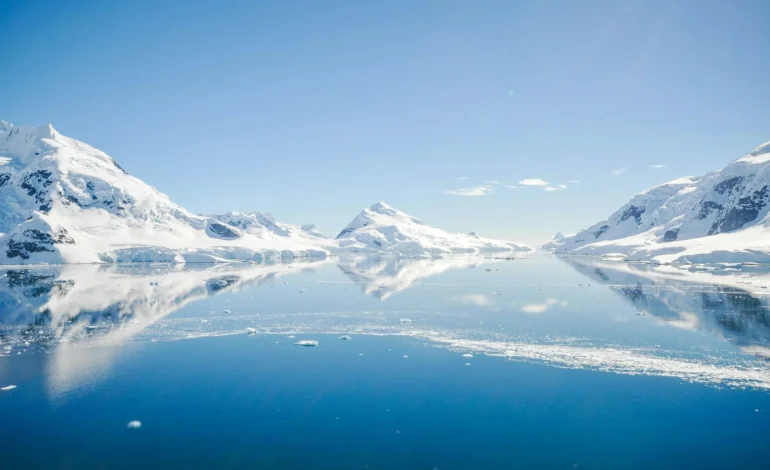
A sustained spell of unusually warm tropical ocean water helped trigger heavier snowfall over East Antarctica, contributing to a temporary gain of around 695 billion tonnes of ice between 2021 and 2023, scientists have found. The surprising connection has been identified in a study published in Nature on 19 August 2026. The research was led by scientists at the Institute of Oceanology of the Chinese Academy of Sciences (IOCAS), with researchers from China, the United States, Japan, Belgium, and Hungary also involved.
The Antarctic Ice Sheet has generally been losing mass for decades. The study puts its average loss at about 140.5 billion tonnes a year over the past two decades. The temporary reversal between 2021 and 2023 was the largest mass-gain event recorded by the GRACE satellite missions.
Scientists wanted to understand how such a large increase could happen. They combined satellite measurements of changes in gravity with ice-core evidence, atmospheric observations and climate-model experiments. Their results point to a chain of events that began thousands of miles away in the tropics.
The researchers found unusually persistent warming in the tropical warm pool between 2021 and 2023. This region stretches across parts of the western Pacific and eastern Indian Ocean and contains some of the world’s warmest ocean waters. The warming generated a large atmospheric disturbance known as a Rossby wave train. These waves can carry changes in atmospheric circulation over vast distances.
As the disturbance moved towards Antarctica, it helped establish a north-south pressure pattern over East Antarctica. A high-pressure anomaly developed along the East Antarctic coast, while lower pressure occurred farther north around the region south of Australia. That circulation altered the routes taken by moisture through the atmosphere.
In particular, it helped transport more water vapour from the mid-latitude Indian Ocean towards East Antarctica through atmospheric rivers, narrow bands of exceptionally moist air capable of carrying large quantities of water over long distances.
When that moisture reached the cold Antarctic interior, much of it fell as snow. The strongest effects occurred across Queen Mary Land and Wilkes Land, where sustained snowfall added enough mass to significantly alter the Antarctic Ice Sheet’s overall balance.
The researchers also examined whether human-caused climate change was responsible for the snowfall anomaly. They found that anthropogenic forcing accounted for only about 9% of the observed snowfall anomaly, suggesting that it was not the main driver of this particular event.
Instead, the study identifies the tropical warm pool as part of a recurring climate connection between the tropics and East Antarctica. Similar periods of prolonged tropical warm-pool warming appear to occur roughly once every decade in observations and historical climate simulations. That means the 2021–23 ice gain is unlikely to represent a permanent change in Antarctica’s long-term trajectory.
The researchers describe the mechanism as a previously underrecognised “tropical warm pool–East Antarctic Ice Sheet” teleconnection. For people trying to understand future sea-level rise, the finding matters because Antarctica does not respond to climate change through one simple process. Changes in ocean temperatures, atmospheric circulation, snowfall and ice loss can interact across enormous distances.
The 695 billion tonnes of additional ice therefore should not be interpreted as evidence that Antarctic ice loss has been stopped. The wider ice sheet remains in long-term decline, with West Antarctica continuing to lose mass.
Instead, the study shows how a temporary change in tropical ocean temperatures can reach across the planet, reshape atmospheric circulation and produce an unexpected increase in Antarctic snowfall.
For more, visit EyeOnLondon at eye-on-london.com
Follow us on:



Subscribe to our YouTube channel for the latest videos and updates!

We value your thoughts! Share your feedback and help us make EyeOnLondon even better!