Twelve London museums just agreed to sell their photographers’ work to AI firms

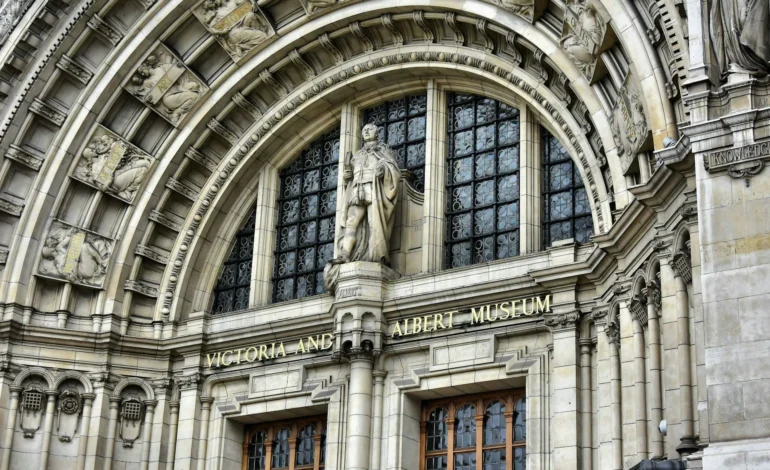
Twelve UK cultural institutions, including the Natural History Museum, the National Archives, the National Portrait Gallery, and the Victoria and Albert Museum, have been named as pilot participants in the Creative Content Exchange, a government-backed marketplace designed to let AI developers buy and licence digitised museum content for training their models. The scheme was confirmed in a Department for Science, Innovation, and Technology press release on 26 January 2026, with an operational pilot platform due to launch this summer.
The mechanics sound straightforward. The Creative Content Exchange will let AI developers pay for access to high-quality, rights-cleared cultural data, rather than scraping it without permission, which is the practice at the centre of most current disputes between the creative industries and AI companies. The Museums Association’s own report on the announcement describes the exchange’s stated aim as exploring how digitised content can be used by consumers, technology companies, and AI developers, while respecting the rights of creators and copyright owners. A beta version of the platform, built by Harbr Data, launched to a small group of stakeholders on 27 April 2026, with wider access expected to follow.
Whether that respect extends to actual payment, and how much, is the question the pilot has not yet answered. Culture secretary Lisa Nandy told a committee of peers in January that the project has the potential to help AI developers access the data they need for training while ensuring creators are fairly remunerated. But “fairly remunerated” is doing a great deal of work in that sentence, and nobody involved in the pilot has yet said what a fair rate actually looks like, or who decides it.
That gap matters more to a working photographer than to the institution employing them. Doug Gurr, the Natural History Museum’s director, welcomed the scheme in the government’s own announcement, saying it was an innovative new way of opening up the museum’s collections and sharing stories with wider audiences. Richard Deverell, director of the Royal Botanic Gardens, Kew, said much the same, framing the scheme as a route to new commercial models that could fund biodiversity research. Both institutions stand to gain a new revenue line from assets they already hold. Neither statement mentions the photographers, illustrators or digitisation specialists whose original work forms the content actually being licensed, many of whom were commissioned decades ago under contracts that never anticipated AI training as a use case.
The scale of the concern became public just days before the Creative Content Exchange pilot was named. Five creator-led bodies, the Association of Photographers, the Independent Society of Musicians, the Society of Authors, Equity and the Association of Illustrators, published a joint report on 27 January 2026 titled Brave New World? Justice for Creators in the Age of Generative AI, drawing on evidence from more than 10,000 creators across photography, music, writing, illustration and performance. The Association of Photographers’ own membership survey, released the same month, found that 58% of respondents had lost work to generative AI, alongside a 65% fall in commissioned images being licensed by its members compared with the previous year.
Those figures describe the market a working photographer is already operating in, months before the Creative Content Exchange has traded a single licence. A museum photographer who shot a national collection ten years ago, on whatever day rate and licence terms applied at the time, has no obvious mechanism within the current pilot for renegotiating what happens when that same image is repackaged as AI training data. The five creator organisations’ report proposes a CLEAR framework, standing for consent, licensing, ethical use, accountability and remuneration, as the minimum standard any such marketplace should meet. Whether the Creative Content Exchange actually adopts anything resembling it will only become clear once trading begins.
The pilot sits inside a larger government push. It forms part of the £380 million Industrial Strategy investment first announced in June 2025, alongside five separate “kickstarter” projects, including one using National Archives legal data to help small businesses navigate contracts, and a further £16 million investment in AI supercomputing capacity at Cambridge University. Digital Government and Data Minister Ian Murray framed the wider package around public service improvement and economic growth, a framing that sits comfortably alongside museum directors’ enthusiasm but says nothing about what a photographer, illustrator or archivist should expect to be paid when their own work becomes the product being sold.
For London specifically, the stakes are concentrated. Of the twelve pilot institutions, at least eight, including the Natural History Museum, the National Archives, the National Portrait Gallery, the Science Museum Group, Royal Museums Greenwich and the V&A, hold their primary collections in the capital, making London’s own museum photographers and digitisation staff among the first whose work will actually pass through this marketplace once it goes live.
Watch what price the Creative Content Exchange actually sets when trading opens this summer. EyeOnLondon will be checking whether “fair remuneration” turns into a real number or stays a promise.
For more London arts and culture, visit EyeOnLondon at eye-on-london.com
Follow us on:



Subscribe to our YouTube channel for the latest videos and updates!

We value your thoughts! Share your feedback and help us make EyeOnLondon even better!