Ariel, moon of Uranus, may once have hidden an ocean deeper than 170 kilometres

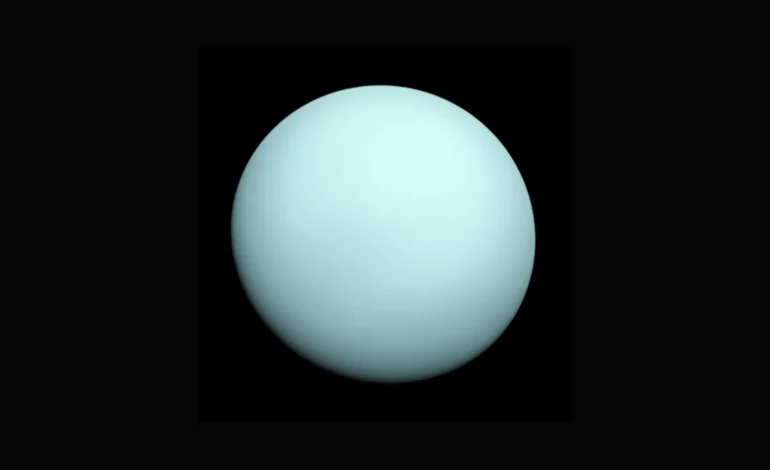
Uranus’ moon Ariel may have once contained a vast ocean beneath its frozen crust, with new research suggesting the hidden water layer could have reached more than 170 kilometres deep.
The study, published in Icarus, used the unusual surface geology of Ariel, as well as computer modelling of its past orbit to investigate how the moon’s interior may have changed. The moon is about 1,159 kilometres across, making it the fourth-largest moon in the Uranian system, yet its surface contains an unexpectedly complex mixture of ancient and younger features.
Researchers from the Planetary Science Institute, University of North Dakota, and Johns Hopkins University Applied Physics Laboratory examined large fractures, ridges, and grabens across Ariel. Some smoother regions may also have formed through cryovolcanism, in which water, ice or other volatile materials erupt onto the surface of an icy world.
The team then modelled the tidal stresses produced as Ariel moved around Uranus. A moon with a more eccentric orbit is subjected to greater variations in gravitational forces, repeatedly stretching and squeezing its interior.
Their results indicate that its orbital eccentricity may once have been around 0.04, approximately 40 times its present value. That would have produced substantially stronger tidal stresses and could help explain the enormous fractures visible on the moon today.
The modelling suggests that an ocean beneath the moon’s ice was needed to produce the observed geological structures. Depending on the thickness of the ice shell and the moon’s past orbit, that ocean may have been more than 170 kilometres deep. For comparison, the Pacific Ocean has an average depth of roughly 4 kilometres.
The findings follow earlier research by the same team suggesting that another Uranian moon, Miranda, may also have hosted a substantial subsurface ocean. Together, the studies raise the possibility that Uranus once had two ocean-bearing moons.
Both moons have only been imaged in detail across their southern hemispheres. The researchers say a future Uranus mission could examine their unexplored northern regions and test predictions about where additional fractures and ridges should be found.
For more, visit EyeOnLondon at eye-on-london.com
Follow us on:



Subscribe to our YouTube channel for the latest videos and updates!

We value your thoughts! Share your feedback and help us make EyeOnLondon even better!