Natural History Museum sending 38 million specimens down the M4

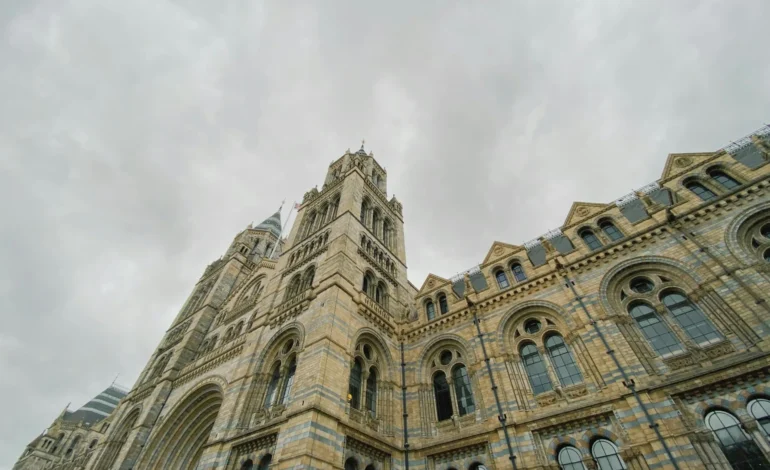
Somewhere in a storeroom in South Kensington, a fox suspended in a jar of amber-coloured preserving fluid sits a few feet from a tortoise Charles Darwin brought back from the Galápagos. Soon, both will go on the back of a lorry and travel forty miles down the M4 to a business park in Berkshire that, until recently, was best known for hosting a film studio and a quantum computing start-up.
It is the literal, physical shape of what the Natural History Museum calls NHM Unlocked, and by the time it finishes in 2031, it will be the largest movement of natural history specimens ever attempted anywhere in the world.
Of the museum’s roughly 80 million objects, 38 million are on the move in some form, and 28 million of those, close to a third of the entire collection, are leaving London altogether for a new collections, science and digitisation centre at Thames Valley Science Park in Shinfield, near Reading.
The museum’s South Kensington buildings, some dating to the 1880s, are, in the words of Clare Valentine, who leads the NHM Unlocked programme, running out of room. A feasibility study into expanding on site came back with a price tag of £400 million, more expensive than building fresh from the ground up at Shinfield. The new facility, backed by £201 million in UK government funding, will bring 28 million specimens together under one purpose-built, net-zero roof with cryo-facilities for tissue storage, ancient DNA labs, and computing clusters, sitting within what the University of Reading, which owns the science park, calls one of the UK’s leading technology and innovation hubs.
Two galleries, one shut since 1948 and another since 2004, will reopen to the public once the specimens currently stored behind them have gone to Berkshire. A further four galleries are due to be overhauled.
In 2022, Fred Naggs, then a scientific associate in the museum’s Department of Life Sciences, published a paper in the taxonomy journal Megataxa describing the relocation as “a self-imposed act of institutional vandalism” that would “mutilate a national treasure.” He argued that splitting the collections and staff away from central London would not just be disruptive but would actively undermine the reason the museum exists in the first place, since natural history collections and the experts who understand them are supposed to function as one cohesive institution, not a warehouse in one county and a research department in another.
In November 2023, thirty academics and experts, including seven former NHM staff, wrote to the Times arguing the move would cause a lasting loss of expertise, noting that while the museum’s total staff numbers have almost doubled over fifty years, the proportion of that staff actually caring for collections and researching animals and plants has fallen from 55 per cent to 15 per cent.
Their letter went further, calling for an independent public inquiry into the museum’s scientific activities, and pointedly asked why a London university could not have been found to house the specimens instead of a science park forty miles away. Valentine’s own response to the criticism, given later to the Telegraph, was candid about how personally it landed. She had known several of the signatories for years and admitted she was “surprised” and “upset” by the letter, adding that she did not recognise the museum they were describing, while allowing that she might, in her own words, be too far inside the institution’s “inner circle” to see it as outsiders do.
Nobody involved disputes that natural history collections matter more, not less, as climate change and biodiversity loss accelerate. The disagreement is over what kind of proximity that urgency requires. The museum’s position, reflected in its own materials, is that digitisation and modern laboratory space are themselves a form of access, letting “researchers from around the world” work with specimens without needing to be in the same postcode, let alone the same building.
The Natural History Museum has been a fixture of South Kensington since 1881, and the two galleries reopening as a direct result of the move will only exist because a third of the museum’s specimens are living somewhere else. Whether that trade, more public gallery space in London for less resident expertise in London, turns out to be a fair one will not be settled by anything written on the museum’s own website. It will be settled by 2031, when the collections, the people, and the arguments over what was actually lost or gained all arrive at the same address in Berkshire.
Whether this counts as expansion or amputation depends entirely on who you ask inside the Natural History Museum, and EyeOnLondon will be watching which answer the empty South Kensington galleries end up giving in 2031.
For more London arts and culture, visit EyeOnLondon at eye-on-london.com
Follow us on:



Subscribe to our YouTube channel for the latest videos and updates!

We value your thoughts! Share your feedback and help us make EyeOnLondon even better!