Dolly Parton Turned Her Own Films Into Some of Musical Theatre’s Best Nights Out

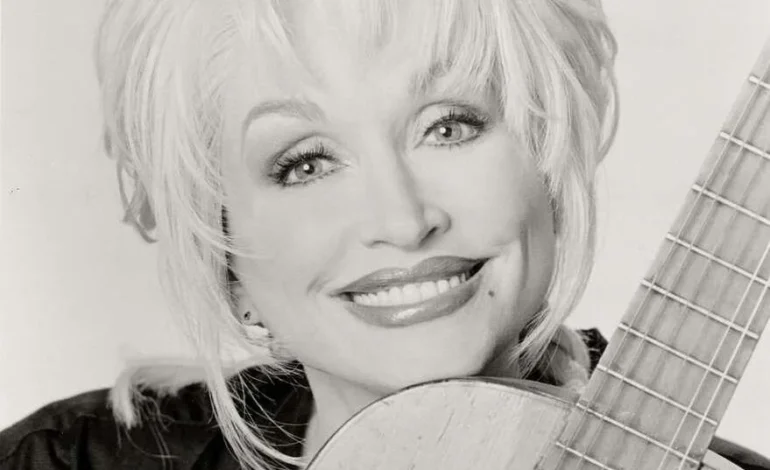
Songwriter, singer, film star, philanthropist, businesswoman and one of musical theatre’s most generous voices.
Dolly Parton died on August 25th, at the age of eighty, after a brief battle with cancer. She leaves behind a career spanning seven decades, including more than three thousand songs, dozens of studio albums, and a reputation as one of the most beloved figures American entertainment has ever produced. She was, by any measure, a phenomenon.
But for lovers of musical theatre and film musicals in particular, she was something more specific: a songwriter who transformed her own films into some of the most purely enjoyable stage musicals of the last twenty years. Her songs also powered shows in which she never even set foot.
It began in 1980 with 9 to 5, the workplace comedy in which she starred alongside Jane Fonda and Lily Tomlin as three secretaries who turn the tables on their sexist, bullying boss. Parton wrote the theme song herself, and it simultaneously reached number one on the pop, country, and adult contemporary charts, a rare feat for any songwriter, let alone a film star moonlighting as one.
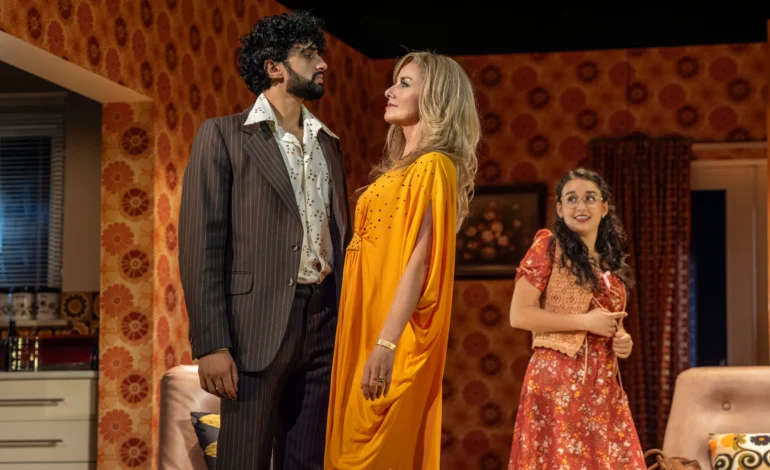
Nearly thirty years later, in 2009, she adapted the film into 9 to 5: The Musical, writing every note and lyric herself, with Patricia Resnick, the film’s original screenwriter, supplying the book. It opened on Broadway at the Marquis Theatre and garnered four Tony nominations, including one for Parton’s score. The show toured widely and arrived in the West End at the Savoy Theatre in 2019. On opening night, Parton herself came on stage at the curtain call to tell the cast, with typical warmth, that they’d made her look good.
She followed 9 to 5 two years later with another film musical, playing Miss Mona, the no-nonsense madam of a small-town Texas brothel under threat of closure, in The Best Little Whorehouse in Texas, opposite Burt Reynolds. By all accounts, it wasn’t the happiest production behind the scenes, but on-screen, Parton was the film’s warmth and its engine. She contributed two songs of her own to the score, one of which was a reworking of a song she’d written years before, which went back to number one on the country charts all over again.
That reworked song, as it happens, was “I Will Always Love You,” which Parton had first written and recorded in 1973 as a farewell to her long-time musical partner Porter Wagoner. Two decades later, Whitney Houston’s version turned it into one of the best-selling singles of all time. Two decades after that, it became the emotional centrepiece of The Bodyguard, the stage musical built from Houston’s film, which opened in the West End in 2012 and has toured ever since.
Not every venture was a success, of course. Rhinestone, in 1984, teamed her with Sylvester Stallone as a cabaret singer trying to turn a New York cab driver into a country star and is remembered as one of the era’s more spectacular film flops. Even there, though, the songs did what Parton’s songs generally did: two of them made the country top ten, regardless of what the film around them was doing.
What runs through all of it is the same thing that ran through everything Dolly Parton did: a songwriter’s instinct first, stardom second. She wrote her way into film, and then, unusually for a star of her generation, wrote her way onto the stage too, on her own terms and in her own voice.
There’s a fittingness, now, to the timing: an autobiographical musical she co-wrote about her own life, Dolly: A True Original, was already booked to open on Broadway this coming January, on what would have been her eighty-first birthday. It will open as a tribute instead of a victory lap. Either way, it’s proof of the same thing 9 to 5 and The Bodyguard already proved: that Dolly Parton could turn her own life, and everyone else’s heartbreak, into a show that filled a house.
She was a beacon and a lesson to us all in being unapologetically true to herself and her persona, once saying, “It takes a lot of money to look as cheap as this.” Two other stories about her that I hope are true: one is that she once entered a Dolly Parton look-alike contest and wasn’t even placed amongst the finalists. The other is that someone asked her, “How do you do your hair?” and her answer was, “I don’t know. I’m never there when it’s done!”
In addition to all of this, she was a very shrewd businesswoman. For example, she refused Elvis Presley the copyright when he wanted to record “I Will Always Love You.” She was also a philanthropist, both in her book scheme and her promotion of vaccines, and indeed, even in her last dying days, she offered to test various cancer drugs.
A truly phenomenal woman whose appeal broke barriers. As corny as it is, it is absolutely true to paraphrase your lyrics, Dolly: we will always love you.
Her songs are still filling West End houses years after the films that spawned them closed. EyeOnLondon will be watching how London’s stages mark her.
For more London arts and culture, visit EyeOnLondon at eye-on-london.com.
[Image Credit | picryl.com]
Follow us on:



Subscribe to our YouTube channel for the latest videos and updates!

We value your thoughts! Share your feedback and help us make EyeOnLondon even better!