Malaria, not just climate, may have decided where early humans could live

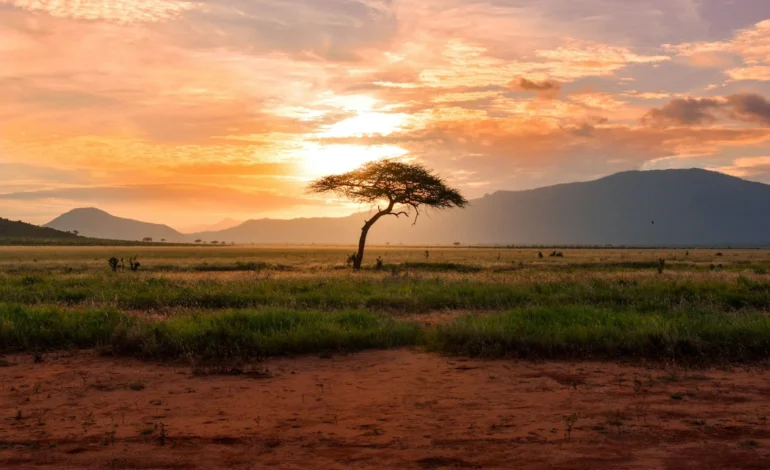
For seventy thousand years, a mosquitoes, or more specifically, malaria, may have had more say over where early humans lived than the weather did. That is the striking implication of a new study in Science Advances, which set out to test something almost impossible to check directly: whether the disease, and not just climate, helped decide where in Africa our ancestors could actually settle.
Led by Dr Margherita Colucci of the Max Planck Institute of Geoanthropology and the University of Cambridge, working with Dr Michela Leonardi of the Natural History Museum, the team built two entirely separate maps, one tracking where malaria-carrying mosquitoes were likely to have lived across sub-Saharan Africa going back 74,000 years, the other reconstructing where humans themselves were living over the same span. Neither map was allowed to influence the other while it was being built. Only afterwards were they laid side by side. The overlap was almost nonexistent.
“We may not think about it today in England, but malaria is one of the most problematic diseases worldwide, and it has really shaped our evolution as humans,” says Leonardi. “It was thought that it mostly impacted the last 10 to 20 thousand years of our story. Instead, what our results suggest is that humans likely avoided areas where the risk of contracting malaria was higher way earlier than that.” She has said she did not expect the pattern to be so pronounced.
The idea that our species emerged from a single place, one ancestral population walking out of a single African cradle, has been steadily dismantled by recent research. The more current picture has Homo sapiens forming across a much wider patchwork of populations scattered through the continent, each isolated for periods, then meeting, exchanging genes, tools, and ideas, then drifting apart again. What has been missing is a clear account of what kept those populations apart, and what eventually let them meet. Climate, rivers, mountains, and deserts have carried most of that explanatory weight until now.
Testing disease as a factor is unusually difficult, precisely because it leaves so little behind.
“There are diseases that leave traces, for example, in our skeletons. But because we don’t have a lot of skeletal remains from the ancient past, it’s not that easy to find individuals with these characteristics,” Leonardi has explained. Malaria is worse still, since it does not mark bone at all. So the team went looking for evidence in the mosquitoes themselves rather than in human remains, mapping the present-day range of the three African mosquito species most responsible for spreading the disease, then combining that with historic climate data to model where those insects, and by extension malaria, would most plausibly have been found at any given point across seventy-four millennia.
Set against Leonardi’s own earlier reconstruction of habitable human range over the last 120,000 years, the pattern held with striking consistency. By mapping the current distribution of three African mosquitoes most responsible for transmitting malaria, the researchers could build up a picture of which climatic environments they live in.
Two moments stand out against that pattern. Around 60,000 years ago, overlap between human settlement and malaria risk increased, roughly coinciding with the successful migration of Homo sapiens out of Africa. And again around 12,000 years ago, as climate shifted and people began settling in one place rather than moving with the seasons, the overlap rose once more, human populations pressing into territory they had previously avoided.
None of this proves malaria itself was the deciding factor, and the study’s own authors are careful about that distinction. The correlation between mosquito range and human settlement is strong and independently reconstructed, but the study cannot distinguish avoidance from failure to survive, a distinction that matters for how the finding gets used going forward.
What the researchers can say with more confidence is that the absence of overlap is not simply noise. Over tens of thousands of years, the presence of this disease shaped how human populations met and mixed, allowing genes to be exchanged and helping create the population structure seen in humans today.
The study’s suggests ancient human populations appear to have strongly avoided the areas where malaria risk was highest, for most of the period the team examined.
The next step, according to the team, is to check whether the same method holds for other ancient diseases beyond malaria, to see whether this is a pattern specific to Plasmodium falciparum or part of a broader relationship between disease and where humans have historically been able to live. Either way, the finding adds a genuinely new variable to a question that has mostly been answered with maps of rainfall and temperature: not just where the climate let people live, but where the mosquitoes would let them stay.
The Natural History Museum keeps turning up in stories like this, quietly reshaping how we think about our ancient past. Worth watching what the same team finds when they turn this method loose on the next disease.
For more London arts and culture, visit EyeOnLondon at eye-on-london.com
Follow us on:



Subscribe to our YouTube channel for the latest videos and updates!

We value your thoughts! Share your feedback and help us make EyeOnLondon even better!