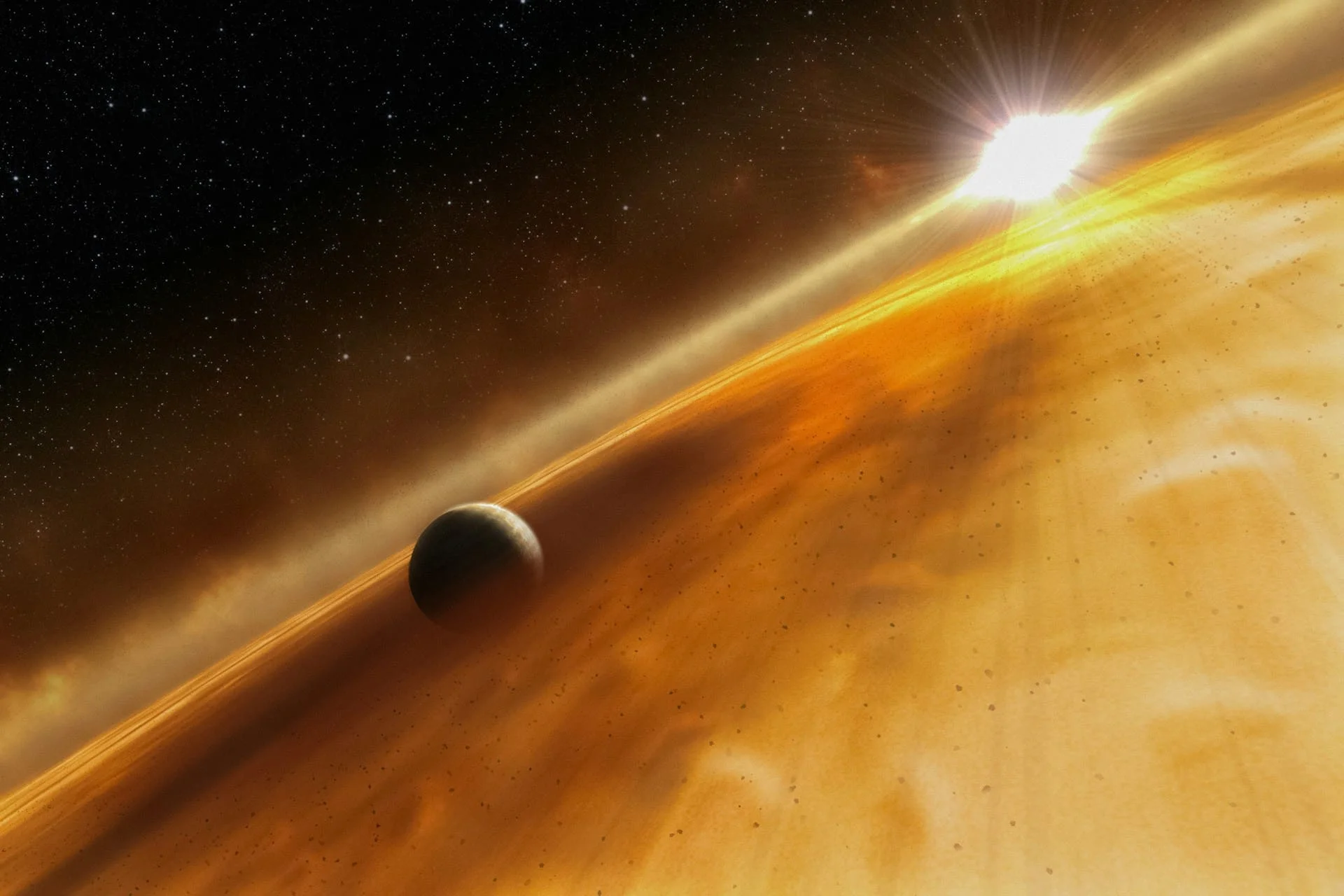
Scientists warn key signs of alien life may be going undetected in new Nature Astronomy study


A new study has raised concerns that the search for extraterrestrial life may be missing evidence that is already present in space data, simply because it is not being recognised as such. The research, published in Nature Astronomy, focuses on the problem of “false negatives” in astrobiology, where signs of life exist but go undetected.
The paper is led by Professor Inge Loes ten Kate, an astrobiologist at Utrecht University and the University of Amsterdam. It highlights a gap in current scientific approaches to detecting life beyond Earth, particularly in how missions are designed and how data is interpreted.
While scientists have long worked to avoid false positives, where non-biological signals are mistaken for life, this study argues that the opposite issue may be just as important. In false negative cases, evidence of life could exist but remain unseen due to limitations in detection methods or interpretation.
According to the research, several factors can contribute to this challenge. Biological traces may degrade over time, become too faint to detect, or be altered by environmental conditions on other planets. In other cases, instruments used in space missions may not be capable of identifying unfamiliar biological signatures.
The study, published in Nature Astronomy, calls for more structured approaches to future exploration. It suggests combining laboratory research, field studies and modelling to better understand what signs of life might look like under different planetary conditions. It also highlights artificial intelligence as a potential tool for identifying patterns that might otherwise be overlooked in complex datasets.
Researchers note that missing evidence of life could have wider implications for future exploration. Potentially habitable environments might be overlooked if scientists fail to recognise relevant signals, reducing the chances of targeted investigation in promising locations.
The paper also raises concern that unidentified life could be affected by future human activity. If life exists but is not detected, exploration or resource extraction could proceed without awareness of biological systems in place.
The study references ongoing uncertainty in interpreting unusual findings, including mineral patterns observed on Mars. These examples are presented as areas requiring further investigation rather than confirmed evidence of life or missed detections.
Ultimately, the research emphasises the need for careful planning before sending missions to other worlds, ensuring that scientists understand both the environment and the possible range of biosignatures they may encounter.
Read more science reporting and space exploration insights across EyeOnLondon. Explore more science and space coverage at EyeOnLondon.
Follow us on:



Subscribe to our YouTube channel for the latest videos and updates!

We value your thoughts! Share your feedback and help us make EyeOnLondon even better!