Study suggests Earth microbes could survive briefly in Venus clouds

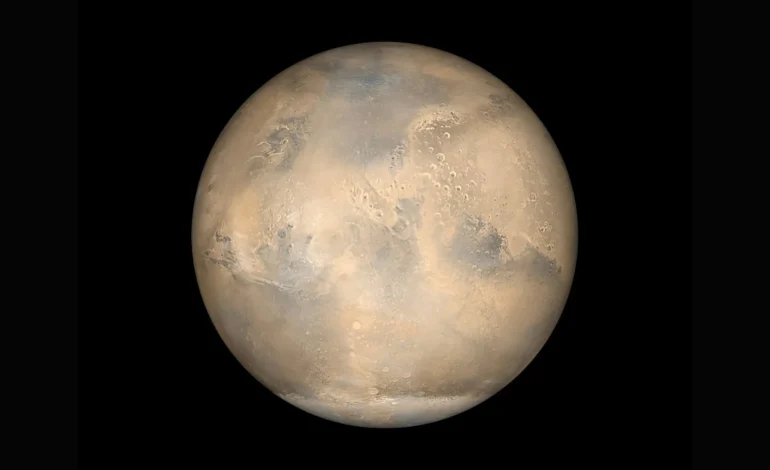
New research presented at the 2026 Lunar and Planetary Science Conference (LPSC) suggests microscopic life from Earth could survive briefly in Venus’ cloud layers after travelling through space aboard debris blasted from our planet by asteroid impacts.
The study was conducted by researchers from The Johns Hopkins University Applied Physics Laboratory (JHUAPL) and Sandia National Laboratories, who investigated whether material ejected from Earth, including microbes, could eventually reach Venus and remain viable long enough to influence the planet’s atmosphere.
Their work examined the theory of panspermia, which proposes that life, or the building blocks needed for it, can spread between planets on asteroids, comets and other rocky objects. Scientists have long debated whether this process may have occurred between Earth and Mars, but growing interest in the possibility of microbes within Venus’ cloud layers has brought Venus into the discussion.
To explore the idea, the researchers used the Venus Life Equation, a framework introduced by Noam Izenberg and colleagues in 2021 that estimates the likelihood of life existing on Venus by considering factors including the origin of life, its ability to survive changing conditions and whether suitable environments have persisted over time.
The team also modelled how meteorites from Earth would behave as they entered Venus’ atmosphere. Their simulations suggest that hundreds of billions of microscopic “cells” may have reached Venus over geological time, with many potentially surviving the journey. Their preferred estimate indicates that around 100 cells could become dispersed through Venus’ clouds every Earth year, adding up to roughly 20 billion transferred cells over the past one billion years.
The researchers acknowledge that their modelling includes significant uncertainties and cannot reproduce every aspect of how incoming meteorites behave in Venus’ atmosphere. Even so, they conclude that panspermia between Earth and Venus remains scientifically plausible.
If a future astrobiology mission were to detect life within Venus’ cloud layers, the findings suggest one possible explanation could be that some of those microscopic organisms originally came from Earth.
This research does not show that life exists on Venus, but it strengthens the scientific case for studying whether life can move naturally between planets across the Solar System.
Curious about the latest discoveries shaping our understanding of space and science? Explore more of EyeOnLondon’s science coverage for the research behind the headlines. Read more original reporting and science news at EyeOnLondon.
Follow us on:



Subscribe to our YouTube channel for the latest videos and updates!

We value your thoughts! Share your feedback and help us make EyeOnLondon even better!