SAS Rogue: Major Peter Weaver and Dr William A. Ward

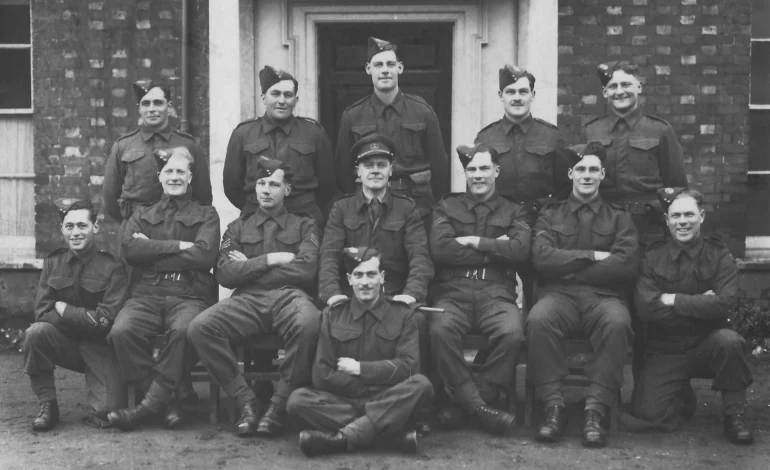
“I was getting restive for something more belligerent.”
– Peter Weaver, SAS Rogue: The Clandestine Life of Peter Weaver
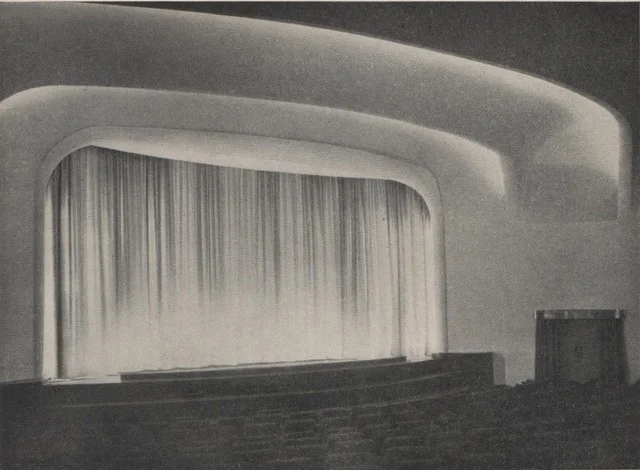
In January 1944, several hundred Auxiliary Units men filed into the Curzon Cinema, Mayfair, to hear Colonel Robert Blair Mayne make his pitch for the SAS. Later to be known as one of the war’s most decorated soldiers, he promised them “nothing but hard work, and action.” Peter Weaver had been restive for exactly that. When ‘Paddy’ Mayne finished, the lights went down. Those who did not fancy their chances were free to leave unseen. Weaver stayed.
Among everything Weaver lived through, Operation Bulbasket stands out, the same operation that later filled a chapter of Ben MacIntyre’s SAS Rogue Heroes and found its way into the BBC drama it inspired. People had been asking for years why he had never written these experiences down. He always laughed it off, said he’d get around to it one day. A heart attack, years later, gave him “time to spare,” as he put it, and that’s when the writing began. He never quite reached the end. After his death, it fell to William Ward to reconstruct the life Weaver never finished writing, using the surviving manuscript and the archive preserved by his daughter, Joanna Burri-Weaver.
Ward could easily have written another action-packed SAS history for an already crowded genre. Instead he spent a decade piecing together a single life, drawing as much on family testimony as military archives, looking beyond the soldier to recover the man, and finishing what Weaver had started. Weaver’s own prose, plain, wry, occasionally startling, sits in italics throughout, checked line by line against military records to work out roughly when and where each vague, undated memory actually happened. In his acknowledgements, Ward is direct. He wanted to back up Weaver’s account wherever he could, since so much of it would otherwise sound made up. The manuscript needed corroborating, and Ward, already an established SAS and Auxiliary Units researcher, was well placed to do so. But facts alone were never enough.
Ward’s introduction sets out the argument. The book means to show how one SAS officer was produced, in his words, “not by brief periods of combat, but through an education system designed to create officers, a recognition of the value of non-academic ability and intensive training across a broad range of skills, coupled with a good deal of life experience.” Weaver makes an unusually strong case study for the claim. Dyslexia had already made any conventional academic path difficult. He’d lost his father in Mesopotamia at three. And what he’d gathered instead was ‘a good deal of life experience,’ on the right side of the law, though only just.
By the time the SAS took on Weaver, all of this had already shaped the man. Proof came months before Operation Bulbasket, when two aircraft collided on the runway at the parachute school in Ringway, and Mayne himself told Weaver, “You were the only one to save your parachute, you kept cool. Congratulations, you did well.” That same steadiness under pressure was tested again a few weeks later.
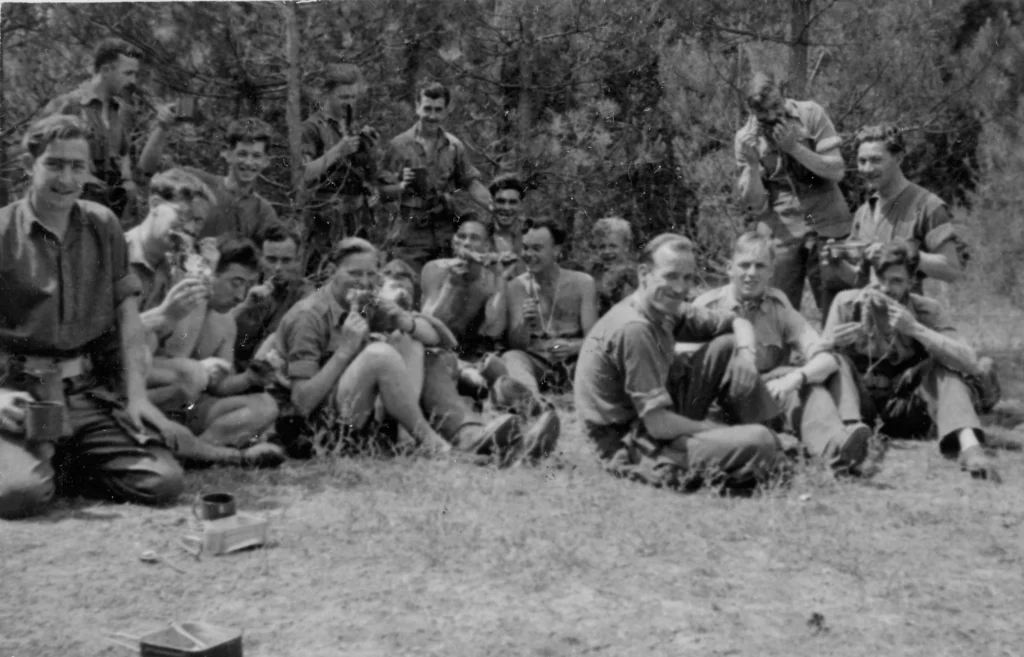
A coin toss, on the night of 10th June 1944 during Operation Bulbasket, decided which stretch of French railway Weaver and his corporal would sabotage. His corporal won the toss and Weaver drew the southern objective. Preparing for the drop, he collected a new Army watch, the same one he would still be wearing thirty years later. His own landing went smoothly. Three weeks later, the SAS camp at Verrières was overrun, and Weaver ran for the trees alongside Lieutenant Twm Stephens, who stopped mid-flight to explain, “I must have a crap, I can’t wait!” “I could hardly believe him,” Weaver writes, even as the Germans closed in. He went on without Stephens. The following morning, Captain John Tonkin told him a German sergeant had “knocked his brains out with a rifle butt,” a detail Tonkin had in fact misheard from French villagers in a language he barely spoke. That false version entered the wartime record and continued to be repeated for decades. Ward’s achievement is to show how the misunderstanding arose, setting Tonkin’s account against the post-mortem evidence and the testimony of Denis Chansigaud. Taken together, they show that Stephens had been wounded, was still waving the others to safety, and was then shot.
Stephens deserved that much.
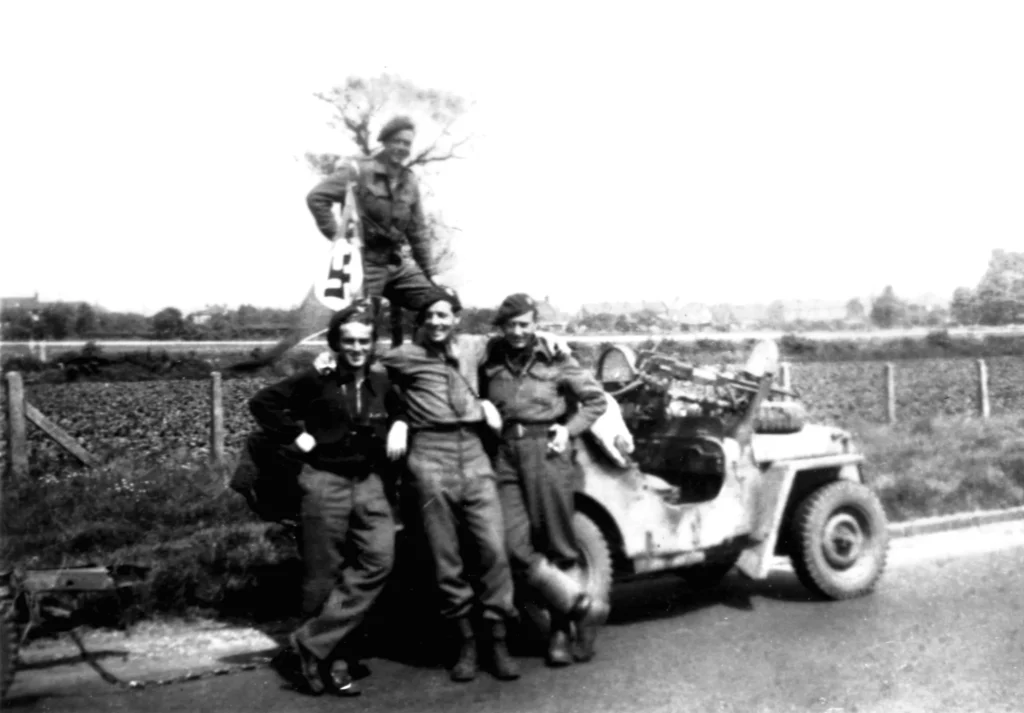
Ten months later, Weaver was among the first British soldiers into Bergen-Belsen, and could only put what he saw there into one paragraph. Ward spends several pages on the same event, drawing on the truce agreement that let armed troops into the camp on 15th April 1945, and on testimony like Mady Goldgruber’s, a fourteen-year-old Hungarian Jewish girl in the camp who recognised the wartime photograph of one of the officers who entered that day, sixty years later. In Ward’s own words, it was an event that “would stay with him for the rest of his life”. Joanna agrees. His silence on the matter, she has said, speaks for itself. It never comes up again in the memoir.
In May 1945, Weaver arrived in Norway, part of the SAS force sent to oversee the German surrender, and that posting is as far as his own account goes. He left behind a typed list of chapter headings for the rest of his Army career and the decades of civilian life that followed, but if he ever wrote those chapters, no copy has survived. From here, Ward has to piece almost everything together himself, from service records, family recollections, surviving photographs and the archive Joanna preserved after her father’s death. The result reveals a very different man from the one Mayne glimpsed at Ringway.
He was never much good at ‘housekeeping’, and more than once fell short as a father and husband. His second daughter, Susan, from his first marriage, was born on 17th October 1944 while he was on operations in France. He never mentions her birth in his own account, not even in passing, though the record suggests he may have gone home on leave around that time. That part of Weaver’s life can only be pieced together from the surviving evidence. Family legend has Weaver out on the golf course the day Jacqueline, Joanna’s older sister, was born. Ward offers a rather weak defence, suggesting he’d also missed the births of his two daughters from his first marriage, so perhaps he was simply avoiding any show of favouritism. But even Ward doesn’t sound convinced by his own explanation: fathers played a smaller part in that era, he notes, but it was still considered good form to at least be in the same building.
Jacqueline’s early years reach us through what her family told Ward. Within months of her birth, Jacqueline’s development was clearly “significantly delayed.” Doctors took over a year to say anything definite and, even then, offered no diagnosis, only a bleak prognosis: she would never walk or talk. Jacqueline proved them wrong. Once the scale of her condition became clear, Weaver abandoned a plan to farm in Rhodesia alongside old SAS comrades. That hardly reads as the decision of an indifferent father. He bought a chicken farm instead with his Army gratuity, a farm that barely paid its way, and had left the Army just early enough to miss a full pension besides. There is no speculation here. Though her sister and mother helped where they could, Barbara carried much of the pressure, which in time wore her into a depression that kept returning. “Weaver’s thoughts about this are not known” is all he offers. Instead of guessing, he gives us a cricket score: 69 runs, struck in what one newspaper called “hurricane hitting”. Combat and competition, it’s tempting to think, were the places in which he seemed to flourish most.
These are the episodes from civilian life which point back to the book’s title and what Ward means by an “independent streak”. They explain why, to those who knew him, Weaver was “a bit of a rogue” long before the title made the pun explicit. A tobacconist’s sweet shop bled money for a year before he gave it away. A boxing night at Winchester Guildhall, headlined by Buddy Baer, nearly ran into trouble when police arrived at midnight to enforce the city’s curfew on public entertainment. Weaver, sitting on the box office takings, told them straight: stop the fight now and you’ll have a riot on your hands. He talked them into letting it finish.
His personal life proved no less unpredictable. The first marriage, to a woman named Bridget, ended in divorce on 2nd January 1951. Nineteen days later he married Barbara, fourteen years his junior, at Hampstead Registry Office. He had forgotten to arrange witnesses, so he pulled a dustman and a road sweeper off the street to stand in instead. Taken on their own, the stories are funny, but Ward never tells them simply for the laugh. Barbara’s parents did not attend the wedding. The age gap alone may have been enough to put them off, but there was the divorce too, and two children already in the picture. No one else came either. Almost all of these stories survive only because someone kept a photograph, a letter, or a memory alive long enough for Ward to find it. Evidence of that kind is never straightforward, and Ward never pretends otherwise. Throughout the book he is careful to distinguish between what can be documented and what rests on recollection decades later. The biography is more persuasive because Ward never confuses memory with evidence.
Some of those recollections point somewhere darker. There are moments in the book that suggest Weaver’s experiences in the SAS left a more lasting mark on his life than he ever admitted. In 1974, a gas leak filled the engine room of his boat, moored in Swanage Bay, and ignited the moment the engine started. Weaver, badly burned, jumped straight into the water to put the flames out, then had to be hauled back into his own dinghy, losing more skin in the process. Seventeen-year-old Joanna drove to the hospital with her older half-sister Sally and found her father’s head so swollen from the burns that he looked, she said, “like an Egyptian mummy.”
Bandaged and facing months of skin grafts, what worried Weaver most was his watch, the one he had worn behind enemy lines in France thirty years earlier. He asked Joanna to take it to the jewellers, and she did, without question. No archive could preserve a detail like that. Perhaps only those closest to him would remember it. Through Ward’s retelling of Joanna’s memories, the episode becomes more than an anecdote. The watch is one of Weaver’s first concerns after the explosion, suggesting that beneath the stories of the rogue and adventurer, the war remained close at hand. If many of the earlier stories illuminate his independence and irreverence, this one hints at something altogether more private. His wartime experiences continued to shape him long after the fighting had ended.
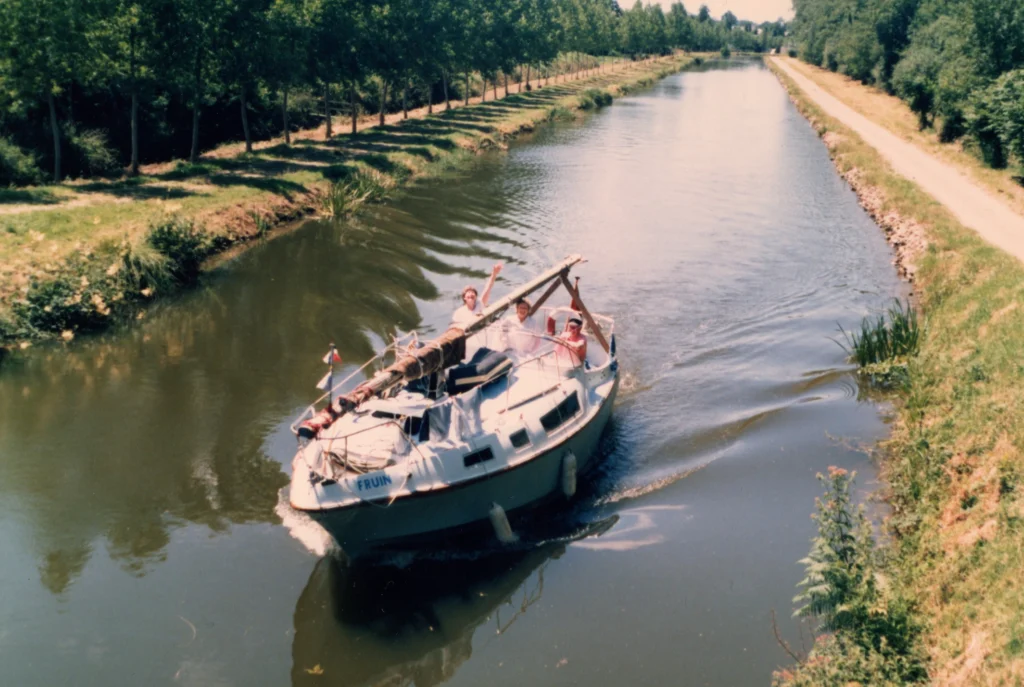
In 2012, Ward was invited to provide a display at the unveiling of a memorial stone for a different Auxiliary Units patrol leader. At a colleague’s suggestion, he contacted Joanna beforehand and invited her to what was, for her, a very local event. Mark Biffin, son of one of Weaver’s own SAS comrades, turned up at the same moment and asked after her. They kept in touch for years, swapping stories about their fathers, before any book was mentioned. Both her parents died within a year of each other, and Joanna, who spent long periods working overseas in hospitality in the years that followed, could easily have sold April Cottage, the Dorset cottage where Weaver spent his final years. She kept the house and most of its contents for twenty years before she met Ward.
This biography began with a decision about the title. It was almost called something else entirely. Full Circle was Weaver’s own title, dropped only because too many other books share the title. Ward chose instead to echo Ben MacIntyre’s SAS Rogue Heroes, though the word carries, in his own words, “a rather different meaning, reflecting his life beyond his wartime service.” His rogue is not simply the daring soldier. It is the complicated man who emerged when the fighting stopped. Even Damien Lewis, whose own books belong to the same genre, calls the result “revelatory,” an admission from someone with every reason to prefer his own version of events. Here, rogue runs on more than one level. It’s the failed sweet shop, the wedding with a dustman standing witness, and a farm that never really paid its way.
Most books ask us to admire wartime courage. Ward set out to show how everything except combat shaped Weaver. Page after page, the book proves it. The qualities that made Weaver so effective in moments of crisis did not always serve him as well at home. Weaver’s own thoughts about most of this are not known, and Ward refuses to invent them. Others might have made him a legend. Ward leaves behind something rarer. He recovers a brave man whose virtues and failings sprang from the same restless temperament, finding a natural purpose in war but never quite at home in peace.
For more London arts and culture, visit EyeOnLondon.
[Image Credits | Weaver Family Collection]
Casemate Publishers
SAS Rogue
The Clandestine Life of Peter Weaver
Available Now
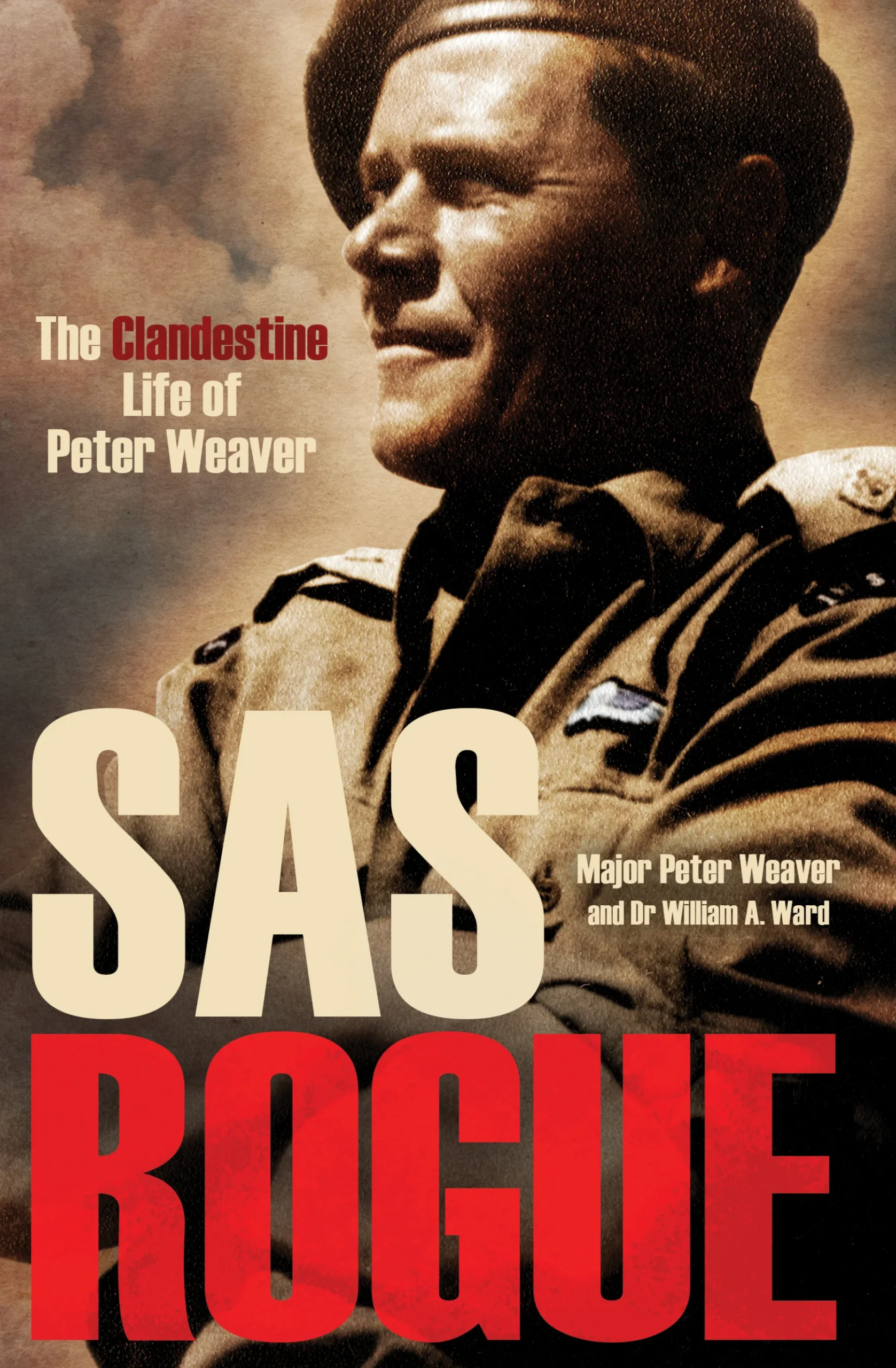
| Authors | Major Peter Weaver Dr William A. Ward |
| Publisher | Casemate Publishers |
| Format | Hardback |
| Pages | 320 |
| ISBN | 9781636246611 |