London’s museums have no AI rulebook. The British Museum’s deleted images show why that matters

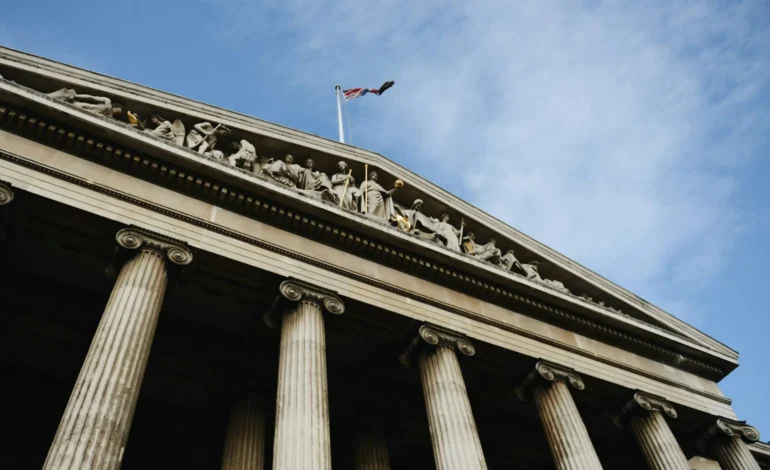
Earlier this year the British Museum posted a set of AI-generated images to promote an exhibition, then quietly deleted them after archaeologists and artists pointed out what they were. No statement followed. No policy was cited, because none of the London museums has a public one to point to.
That gap is what a new global survey, launched jointly by Unesco and the International Council of Museums (Icom) in June, is trying to measure. The survey asks museums worldwide to describe their institutional approach to AI, from exhibition development and research to visitor-facing tools, and to name whatever ethical frameworks, if any, actually guide that use.
A separate, smaller survey conducted last autumn by the MuseumWeek organisers gives an early sense of what the bigger picture will likely show. Of 180 institutions surveyed across 35 countries, 46% use AI today, but 11% don’t even know whether that’s the case internally, a finding that says as much about internal communication as it does about technology. Fewer than one in ten of those institutions have anything resembling a formal AI charter.
The experience of London museums experience over the past two years suggests why that matters. In 2024, an independent developer built The Living Museum, an unaffiliated AI interface letting visitors “converse” with British Museum objects, including its mummified human remains, using only the museum’s own openly licensed collection data. The museum had no involvement in it and no mechanism to stop it. The response inside the sector was alarm as much as curiosity, since nobody at the museum itself had been asked.
The London Museum took the opposite approach when it built its own AI tool, Clio, which connects objects in its collection through context rather than simple categories, tracing a gold coin back to the monarch on its face and the colonial history of where it was minted. The institution built the system itself, with what its team has described as considerably more due diligence than the free-for-all that produced The Living Museum. The contrast between the two projects, one done to a museum and one done by a museum, is close to the whole argument in miniature.
The Museums Association updated its own Code of Ethics in October 2025, its first revision since 2014, and the new version includes explicit guidance on AI use alongside decolonisation and climate responsibility. The organisation is now recruiting an AI and Ethics Expert Working Group to turn that guidance into something more practical, with applications due by 5 July. Arts Council England has gone further still, publishing a Responsible AI Policy and an accompanying toolkit last year. Neither the British Museum, the Natural History Museum, Tate nor the V&A has published anything comparable of their own.
London has its own recent example of what happens when that governance is missing. Twelve London museums , including the Natural History Museum and the V&A, have already agreed to license their own photographers’ work to AI firms through a new Creative Content Exchange, a decision with its own governance questions. Licensing archives out and building AI tools in-house are opposite transactions, but both rest on the same unresolved question: who inside a museum is actually deciding, and against what standard.
Oslo’s Munch museum offers a working example of AI used with a stated purpose rather than a vague enthusiasm for the technology. Its new exhibition Connect the Lines, running until 29 November, lets visitors draw on tablets and has an AI system match their lines to similar drawings among the roughly 7,000 the museum holds by Edvard Munch, most too fragile to display. Museum director Tone Hansen has framed the project as a way of making a fragile, rarely shown collection accessible without risking the originals, developed with Tata Consultancy Services through a research project called New Snow. It is a modest use case, not a chatbot pretending to be a mummy, and that modesty appears to be the point.
EyeOnLondon will be watching whether any of the capital’s four biggest museums actually publish an AI policy before the Riyadh report lands in September, rather than waiting to be asked.
For more London arts and culture, visit EyeOnLondon at eye-on-london.com
Follow us on:



Subscribe to our YouTube channel for the latest videos and updates!

We value your thoughts! Share your feedback and help us make EyeOnLondon even better!