NHS sends some patients to museums

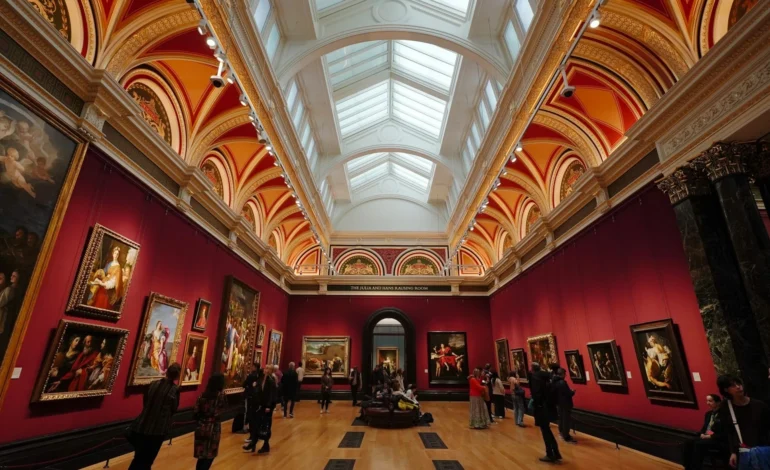
A GP in Camden can now refer a lonely, anxious or isolated patient not to a specialist, not to a waiting list, but to a museum. The referral goes through a care navigator, not a consultant. The prescription is ten weeks of object handling, drawing or conversation in a gallery, not a course of medication. This is arts on prescription, sometimes called social prescribing, and it has quietly become one of the NHS’s standard tools for a specific category of patient: the person whose problem does not have a drug that fixes it.
A patient tells their GP or practice nurse they are lonely, low, or struggling to cope, and instead of, or alongside, a clinical response, they are connected to a link worker who can point them toward a community activity that might help. In Camden, that service is run by Age UK Camden, which operates a Care Navigation and Social Prescribing team embedded across GP practices in the borough, taking referrals from doctors, hospitals, social workers and mental health services, as well as accepting people who refer themselves. It is one of dozens of such services now running across London, part of a citywide push the Mayor’s office has set a target for: every Londoner able to access a social prescription by 2028.
Between 2014 and 2017, UCL ran a project called Museums on Prescription, led by Professor Helen Chatterjee, working with Canterbury Christ Church University and seven partner museums across central London and Kent, including the British Museum, the Sir John Soane’s Museum, and Islington Museum. The scheme connected 115 socially isolated older people, referred through local authority social care, psychological services and third sector organisations including Age UK Camden, to ten-week programmes of creative and co-productive activity inside those museums. It was the first project of its kind attempted anywhere in the world, and it won two Royal Society of Public Health awards along with a special commendation from Public Health England.
What the study actually found is more modest than the language now used to promote arts on prescription generally. UCL’s own account of its results centres on psychological wellbeing: participants reported reduced loneliness, improved self-esteem, and greater optimism and hope, measured using a bespoke UCL Museums Wellbeing tool and diary entries participants kept during the ten weeks. Nowhere in UCL’s published material about Museums on Prescription is there a claim about GP consultation rates falling or hospital admissions dropping. Those figures belong to a different, much smaller project entirely.
The specific numbers that circulate constantly in sector press releases, a 37% drop in GP consultation rates and a 27% reduction in hospital admissions, trace back to Artlift, a Gloucestershire charity running an eight to ten week arts referral course for patients with chronic conditions. The figure comes from a single cost-benefit case study, originally commissioned by NHS Gloucestershire Public Health and evaluated around 2009 to 2011, calculating that the reduction in consultations and admissions saved roughly £216 per patient. It is a real finding from a real, small-scale programme, but it has been folded so often into general “arts on prescription” advocacy, including by the All-Party Parliamentary Group for Arts, Health and Wellbeing, that it now reads as though it describes the entire field. It describes one charity’s outcomes among its own patient group over a specific two-year window, not museums, and not London.
Writing in the British Journal of General Practice, researchers reviewing the field found that many evaluations have relied on small numbers of participants, weak designs, no control groups, short durations and considerable loss to follow-up. A realist review published in BJGP Open reached a similar conclusion, describing the evidence for social prescribing’s effectiveness as methodologically weak despite the model’s rapid policy adoption. None of this means arts on prescription does nothing. It means the specific, precise-sounding percentages that get quoted to justify it are frequently doing more persuasive work than the underlying research can support.
None of this changes what actually happens inside the Camden scheme, or ones like it, day to day. A care navigator meets a patient for up to four sessions across six weeks, works out what kind of activity, a choir, a walking group, a museum programme, an art class, might genuinely suit them, and makes the connection.
For patients with the kind of loneliness or low mood that a ten-minute GP appointment cannot address, that connection can matter regardless of whether it moves a national admissions statistic. A separate UCL study published this year found that adults who took part in arts and culture activities showed signs of slower biological ageing, a different research group asking a related but distinct question about what culture actually does to the body and mind.
The honest position sits between the sector’s own promotional framing and outright dismissal. Something is measurably happening to the people who go through these ten-week programmes: their own reported wellbeing improves, by UCL’s own instruments. Whether that improvement is large enough, durable enough, or common enough to justify treating museums as a genuine alternative to clinical care, rather than a welcome addition alongside it, is a separate question the current evidence does not settle either way.
The next time a headline statistic about arts on prescription gets quoted without its source, EyeOnLondon suggests asking which study it actually came from.
For more London arts and culture, visit EyeOnLondon at eye-on-london.com
Follow us on:



Subscribe to our YouTube channel for the latest videos and updates!

We value your thoughts! Share your feedback and help us make EyeOnLondon even better!