Genetics has always made predicting my future hair colour slightly complicated, and I find that fascinating.
My mum noticed her first grey hairs in her teens, suggesting early greying may run strongly through her side of the family. In contrast, my dad, now in his seventies, still has plenty of his original hair colour. His mother was similar, keeping several strands of perfectly pigmented light brown hair amongst the white well into her nineties.
So which path will my hair follow?
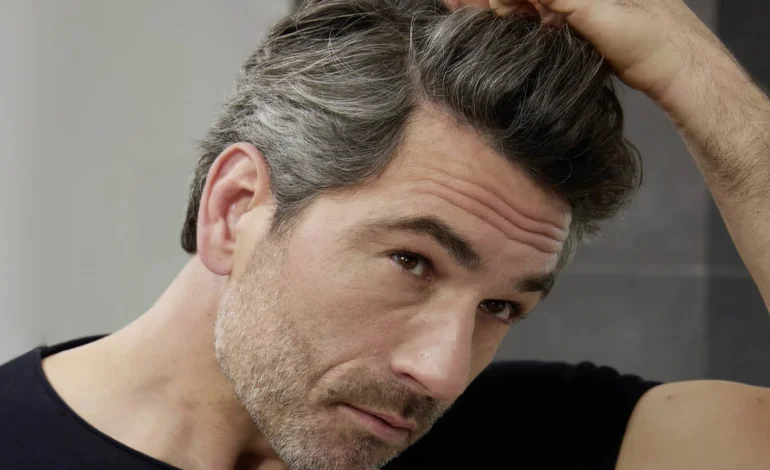
In the last few years, I have noticed my first few grey hairs appear. Recently, they seem to be expanding, although it is still too early to know what my final hair colour destiny will look like.
Rather than being concerned, I am genuinely curious. Hair colour is a visible sign of the complex biology happening inside our cells.
Part of the reason predicting greying is so difficult is that it is polygenic. Unlike traits controlled by a single gene, hair greying is influenced by many different genes, each contributing a small amount to the overall picture. These genetic influences interact with ageing, cellular stress, environmental factors and lifestyle, creating huge variation between individuals.
For decades, grey hair has been considered a simple, inevitable sign of ageing. Once a hair lost its pigment, the assumption was that it stayed that way.
However, fascinating research published in eLife suggests the biology may be more dynamic. Some individual hairs appear capable of losing pigment and later regaining it, providing a remarkable insight into how adaptable human biology can be.
Why Does Hair Turn Grey?
Hair colour comes from specialised cells inside the hair follicle called melanocytes. These cells produce melanin, the pigment responsible for hair colour, and package it into structures called melanosomes. As hair grows, these pigments are incorporated into the hair shaft.
Once outside the follicle, the hair shaft becomes a biological record of what was happening inside the body during that period of growth. This is why hair can be used for applications such as drug testing and measuring exposure to certain environmental substances.
Producing pigment requires energy, which brings us to mitochondria.
Often described as the “powerhouses” of the cell, mitochondria generate the energy required for many biological processes, including supporting hair follicle activity and pigment production.
Why hair turns grey
• Melanocytes are the specialised cells in the hair follicle that produce pigment.
• Melanin gives hair its colour and is incorporated into the hair as it grows.
• Genetics plays a major role in determining when greying begins.
• Ageing and cellular stress can affect the cells responsible for maintaining pigmentation.
• Mitochondria help provide the energy needed to support normal cellular and follicle activity.
As we age, melanocyte function gradually declines. Genetics plays a major role, but oxidative stress, inflammation and environmental factors may also contribute.
Mitochondria are particularly interesting because they sit at the centre of cellular energy production. They are essential for life, but their activity can also contribute to cellular stress through the production of reactive molecules.
Can Stress Influence Hair Greying?
Stress is not just something we experience psychologically. It triggers measurable biological changes, including alterations in hormones, metabolism, immune signalling and nervous system activity.
Animal research has shown that severe stress can accelerate greying. In mice, activation of the sympathetic nervous system, our “fight or flight” response, can deplete the stem cells responsible for producing pigment-producing cells.
However, mice are not humans, and translating animal findings into human biology requires caution.
The question remained whether stress could influence hair pigmentation in humans, and whether those changes could ever be reversed.
Following the Story Written in Hair
To investigate this, researchers collected 397 hair samples from 14 healthy adults.
The challenge was not collecting the hairs. It was developing a way to analyse tiny changes in pigmentation along a single strand.
The researchers created a method called the Hair Pigmentation Pattern (HPP), using high-resolution scanning to measure colour changes along individual hairs.
The results were surprising.
Some hairs showed clear transitions from dark pigmentation to grey within the same strand, suggesting that a follicle could stop producing pigment relatively quickly.
More surprisingly, some hairs showed the opposite pattern.
A grey section was followed by darker pigmentation closer to the root, demonstrating that pigment production had restarted.
In other words, some hairs had partially reversed their greying process.
The researchers observed this in scalp hair as well as beard and pubic hair, suggesting it was a genuine biological phenomenon rather than an unusual feature of one type of follicle.
The Mitochondrial Connection
To understand what was happening inside these follicles, researchers analysed the proteins present in grey and pigmented hairs using a technique called proteomics.
They found differences in proteins involved in mitochondrial function, energy metabolism, pigment production and antioxidant defence.
Interestingly, grey hairs contained more mitochondrial-related proteins, not fewer.
This may seem surprising because mitochondria are often described as the energy producers of the cell. However, more mitochondria does not always mean a healthier or more efficient system. Sometimes it reflects a cell responding to increased demand or stress.
Research from Martin Picard and colleagues has helped reshape our understanding of mitochondria, showing that they are not simply passive energy generators but dynamic structures that respond to the environment around them, including psychological and physiological stress.
In this context, the increased mitochondrial proteins found in grey hairs may represent a follicle adapting to increased metabolic pressure rather than simply “running out of energy”.
The cells may be working harder to maintain normal function.
Stress, Recovery and the Ageing Process
The most fascinating part of the study was the relationship between hair pigmentation and stressful life events.
In some participants, changes in hair colour appeared to coincide with periods of increased or reduced psychological stress.
One participant experienced hair repigmentation around the same time as a major reduction in stress following a holiday.
Another showed temporary greying during an intense two-month period of life stress, followed by repigmentation once that stressful period ended.
This does not mean that one stressful week will suddenly turn your hair grey. If that were the case, many parents, healthcare workers and anyone juggling a busy life would have turned silver years ago.
Instead, the researchers proposed a threshold model. Each follicle may accumulate biological stress over time through ageing, genetics, cellular damage and metabolic demands.
If a follicle is close to its individual threshold for greying, an additional stressor may push it into a grey state. If conditions improve, pigment production may resume.
How the researchers think it may work
• Each hair follicle has its own biological history.
• Ageing, genetics and cellular stress may gradually move a follicle towards a greying threshold.
• An additional stressor may push a susceptible follicle beyond that threshold.
• In some circumstances, pigment production may resume when conditions change.
• This does not mean grey hair can generally be reversed by reducing stress.
What Does This Mean for Healthy Ageing?
This research does not mean everyone can reverse grey hair through lifestyle changes. Genetics remains one of the strongest influences, and some follicles may lose the ability to produce pigment permanently.
However, it does challenge the idea that ageing is simply a one-way process of decline.
Our cells are constantly adapting to their environment. Stress, recovery, sleep, nutrition and physical activity all influence cellular function.
This is where exercise becomes particularly interesting.
Resistance training and cardiovascular exercise both stimulate beneficial adaptations within mitochondria, improving energy production, metabolic health and resilience. Maintaining muscle mass, fitness and metabolic function are some of the strongest strategies we have for supporting healthy ageing.
Exercise will not stop grey hair, and personally I am not trying to fight mine. I am much more interested in understanding the biology behind it.
Because ageing is not simply about the passing of time.
It is about how our cells respond to the experiences of our lives.
Genetics will decide most of this for you, but EyeOnLondon will keep tracking what the science actually says about the rest.
For more London arts and culture, visit EyeOnLondon at eye-on-london.com.
[Image Credit | Alpecin]
Follow us on:



Subscribe to our YouTube channel for the latest videos and updates!

We value your thoughts! Share your feedback and help us make EyeOnLondon even better!