Queen at Sea Turns Dementia and Consent Into a Devastating Family Drama

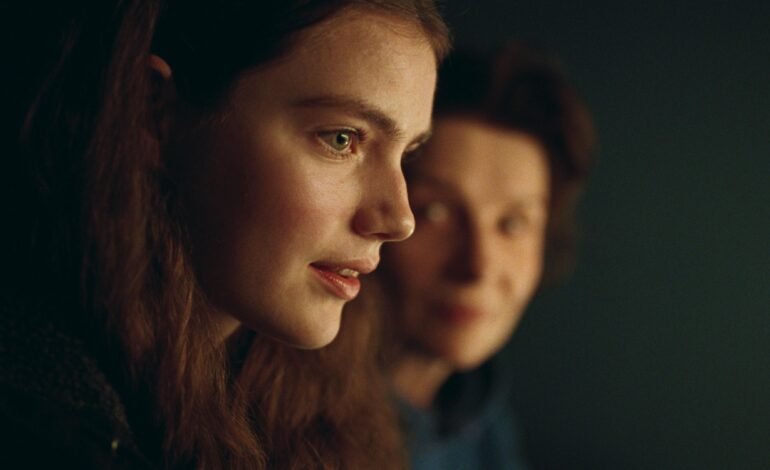
Queen at Sea | In UK Cinemas from 18th September 2026
Empowered by a quartet of nuanced performances, Queen at Sea is a human film that may affect people differently and bring about conversations surrounding the issues with dementia.
Queen at Sea dissects a social drama surrounding the tragic trials and tribulations that come with dementia. Written, directed and edited by filmmaker Lance Hammer, this is a devastating morality play that deals with the issues of ageing, illness, devotion and the generational differences that come with it all. Queen at Sea premiered at the 76th Berlin International Film Festival, where it picked up the Silver Bear Jury Prize and the Silver Bear for Best Supporting Performance.
At the very centre of this film is a collection of performances by actors being asked to handle harrowing and morally grey issues as a family unit under pressure, and each of the four central cast do remarkably well in making the conversations and altercations as heartbreaking as possible.
Beginning with the performance that the whole film swirls around, Anna Calder-Marshall gives an outstanding performance as Leslie. It is clear to see why she has been awarded for her performance as this woman whose mind is quickly decaying. Calder-Marshall gives the character a quiet sweetness that adds not only a charm to the quaint scenes of her daily life, but also a tender heartbreak to the entire film, as this is a woman who will be all too real for many viewers.
Calder-Marshall’s Leslie is performed with a past, a character we are only just meeting but a person in this world who has lived a life they don’t too much remember.
Alongside Calder-Marshall is Tom Courtenay, who was also awarded for his supporting performance as Leslie’s second husband, Martin. Courtenay’s role is complex. At times he’s the obvious antagonist of the piece and is used as a case study for some incredibly interesting debates when it comes to degenerative diseases and issues of consent.
However, as Queen at Sea unfolds and Courtenay’s Martin faces new circumstances, this performance takes on another dimension, one that encompasses one of the film’s main themes of devotion and love. Martin is morally grey, and both Courtenay and Hammer leave the audience to react to Martin’s actions with subjectivity.
Completing the trio of central performances is Juliette Binoche’s Amanda, Leslie’s daughter and Martin’s step-daughter. Binoche performs with a weight upon her shoulders, a stoic confusion around all that occurs, for she is the real central protagonist that we’re following. We experience the emotional mishaps and decision making through her perspective and, just like Courtenay’s work, she is given the subjectivity to blur the lines on who is in the moral good.
All three are impeccable in their own right but work off each other even better to create a shifting power dynamic that builds the tension and emotion up to a heartbreaking climax.
Also of note is Florence Hunt as Amanda’s daughter, Sara. While her story is rather sidelined for the main narrative, Sara’s story is essential to Hammer’s exploration of ageing and the implications that has on relationships.
The cinematography of Queen at Sea is also of interesting merit. Lance Hammer, alongside Director of Photography Adolpho Veloso, shot this film on 35mm, and at many times throughout the film that shows. Through the grain and the lighting exposure, it creates a look similar to that seen in another recently acclaimed family drama, Joachim Trier’s Sentimental Value.
Queen at Sea can be used as a case study for camera positioning. Throughout, there were times where the camera was placed in unique positions within the primary home that not only added a distinctive flair to the conversations taking place in hallways and staircases, but also positioned the characters both in contrast to the proximity of each other and the size they appear on the screen itself.
A natural observational look to the film is created by Veloso, in effect letting the script and performances shine while still having moments of beauty and showing the London filming locations.
Lance Hammer must act as both director of this film and also as a director of morality, a helmer of ideas and concepts that challenge our notions and open up taboos without the film ever coming across as overtly shocking.
Hammer holds a mighty level of restraint when it comes to his topics, always keeping a focus on his characters and never belittling the character of Leslie to simply a problem for the other characters. This is a film made from respect and curiosity, one that strives to explore family dynamics when they should logically be at their worst.
Queen at Sea is a modern-day morality play, one that would fit nicely a few decades earlier with the BBC’s Play for Today or, in a more contemporary landscape, with the work of Joachim Trier and Florian Zeller.
Lance Hammer creates a touching film about memory, family, love and many more topics and conundrums, which holds its sweet and its bleak in equal measure. Empowered by a quartet of nuanced performances, Queen at Sea is a human film that may affect people differently and generate conversations surrounding the issues with dementia.
Catch Queen at Sea before awards season catches up with it. This is a film EyeOnLondon thinks will be talked about long past its opening weekend.
For more London arts and culture, visit EyeOnLondon.
[Image Credit | Seafaring LLC]
QUEEN AT SEA
Directed by Lance Hammer
A London family confronts what dementia has taken from a mother, and what it leaves the people around her to decide.
★★★★☆
UK | 2026 | 121 MINS | Certificate 15
Juliette Binoche · Tom Courtenay · Anna Calder-Marshall · Florence Hunt
Screenplay Lance Hammer
Cinematography Adolpho Veloso
In UK cinemas from 18 September 2026
Further Reading on EyeOnLondon
- Nino Turns a Cancer Diagnosis Into a Wandering, Tender Paris Portrait — another quiet, character-first drama built around a family confronting a diagnosis rather than a plot, and a useful comparison for how differently two European filmmakers handle the same kind of unbearable subject.
- Dogs age like us, right down to the molecules in their blood — not a film piece at all, but EyeOnLondon’s own science coverage of what ageing actually does to a body, which sits oddly close to the questions Queen at Sea dramatises about decline, care and what’s owed to someone whose mind is going.
Follow us on:



Subscribe to our YouTube channel for the latest videos and updates!

We value your thoughts! Share your feedback and help us make EyeOnLondon even better!