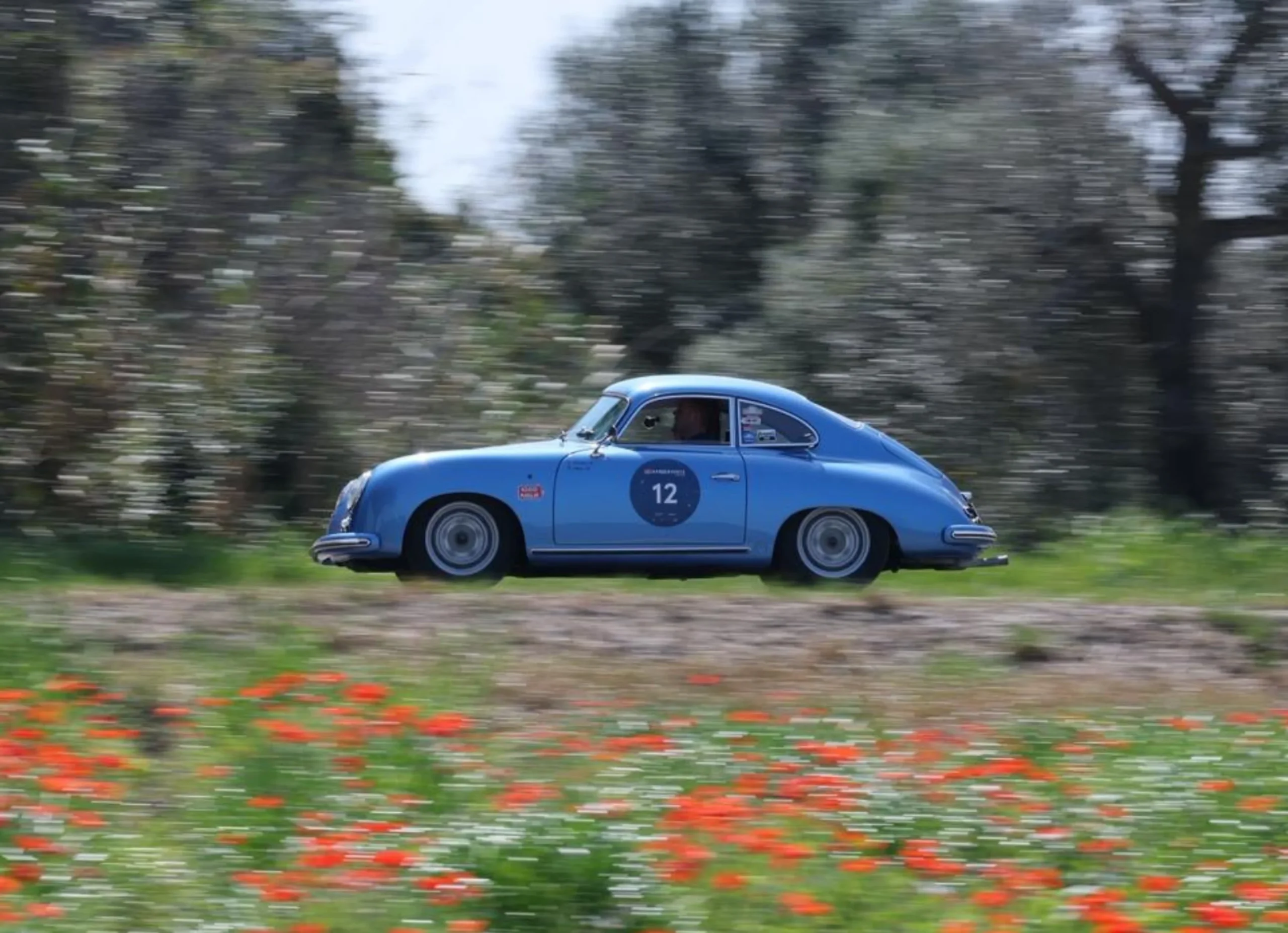
Somewhere in Brescia, or perhaps somewhere much further away, there is a black-and-white photograph of a family standing at the roadside as a red car went past, or a pair of driving gloves worn soft in a drawer, or a handkerchief nobody threw away for a reason nobody quite remembers. The organisers behind the 1000 Miglia want to find it before 2027.
That year marks the Centenary of the race’s first edition, when, on 26 March 1927, the Isotta Fraschini of Aymo Maggi and Bindo Maserati set off from Brescia and helped create what would become known as the most beautiful race in the world. To mark the milestone, 1000 Miglia Srl is launching the 1000 Miglia Collection Days, a public appeal asking anyone, in Brescia or anywhere else, to come forward with photographs, objects, documents or footage connected to the race’s history.
The organisers are not being narrow about what counts. A vintage poster, an old notebook carrying drivers’ autographs, an amateur film, a weathered helmet, a mechanical part found while clearing out a garage: all of it is being treated as a genuine fragment of the race’s history rather than clutter to be thrown out. The appeal is aimed first at Brescia itself, described by the organisers as the race’s beating heart and cradle since its founding, but it is open to anyone anywhere who has encountered what they call the magic of the Red Arrow, the race’s long-standing nickname, along the way.
The actual collecting will happen across five Wednesday afternoons this autumn, all held at the Sala Libretti inside the Giornale di Brescia’s editorial offices on Via Solferino: 14 and 21 and 28 October, then 4 and 11 November 2026. Anyone unable to attend in person can still take part by photographing or digitising their material and emailing it to collectiondays@1000miglia.it, along with whatever detail they can offer about its history. Selected contributions will feed into the 1000 Miglia Collection archive ahead of the Centenary year.
Aldo Bonomi, President of the Automobile Club of Brescia, framed the appeal as an attempt to hand the race’s story back to the people who actually lived alongside it. He described the bond between the race and the city as one built on history, identity and popular participation, and said the Collection Days offer a chance, ahead of 2027, to gather testimonies showing how much Brescia shaped a race now known around the world.
Fulvio D’Alvia, CEO of 1000 Miglia Srl, made a similar case from the organisers’ side, arguing that the race has always drawn its strength from ordinary people rather than the cars alone. He described clearing out an attic or dusting off an old photo album as a way of turning any citizen into part of a collective story, and said the Centenary was the right moment to make that explicit.
The 1927 debut itself was a rougher affair than the polished parade the race has since become: a long haul through rain, fog and dust on unpaved roads, run as a speed trial rather than the regularity event it is today. The race continued in that form until a fatal crash during the 1957 edition, near Guidizzolo in the province of Mantua, brought the speed race to an end. It returned two decades later, in 1977, as a competition for historic cars, and has run annually since 1987, evolving into the format now heading toward its hundredth year.
Got a photograph, a helmet or a half-remembered story from the roadside, EyeOnLondon would love to hear what you find before you send it to Brescia.
For more, visit EyeOnLondon at eye-on-london.com
Follow us on:



Subscribe to our YouTube channel for the latest videos and updates!

We value your thoughts! Share your feedback and help us make EyeOnLondon even better!