Painting the French Riviera: Beyond Matisse and Picasso


A casual glance at the notion of artists associated with the French Mediterranean coast conjures up two names very firmly associated with it, Matisse and Picasso, who committed themselves to the thrall of the blue sea and sky, both finding the very joy of life there.
But that would be to miss the large part of the story of the Royal Academy’s main winter exhibition, Painting the French Riviera, ignoring the hundreds of artists famous (and possibly infamous) and unknown who took the road in to the wide blue yonder.
It sets out to show how the strong colours, rich blue sea and sky, yellow sun and sand, verdant green grasses and cascades of floral colour, of the magical stretch of seaside from Marseilles to Menton, beguiled a seemingly endless stream of modernists from Monet to Maillol. From the 1880s to the 1960s they came, Impressionists first, led by Cézanne as in so much else, for their lives and their art to be transformed, though not always permanently, by what they found, the place that in 1887 the poet and politician Stéphen Liégeard called the Blue Coast, the Côte d’Azur.
“It’s like a playing card,” said Paul Cézanne. “Red roofs against the blue sea.” He first came in the 1860s in search of tranquility away from the growing madness of the Paris artists’ community, settling in L’Estaque at the western end of the Côte, followed by Pierre-Auguste Renoir, who found himself painting landscapes in the irresistible setting, and Claude Monet.
Cézanne developed a new style here, using broad strokes and vivid colours to create forms in his compositions. You can almost see he and Renoir sat together en plein air, with Cézanne’s almost unresolved The Viaduct at L’Estaque of 1882 where cascading rocks meet a questing line of trees around a lone red-roofed house, seen here next to Renoir’s slightly awkward Rocky Crags at L’Estaque, Renoir made his home further east at Cagnes-sur-Mer, and then both revelling in studies of bathers.
The Manet-Morisot family came later on in the decade, and pictures of boats by Berthe and her adolescent daughter Julie, seen here together, show a precocious talent emerging.
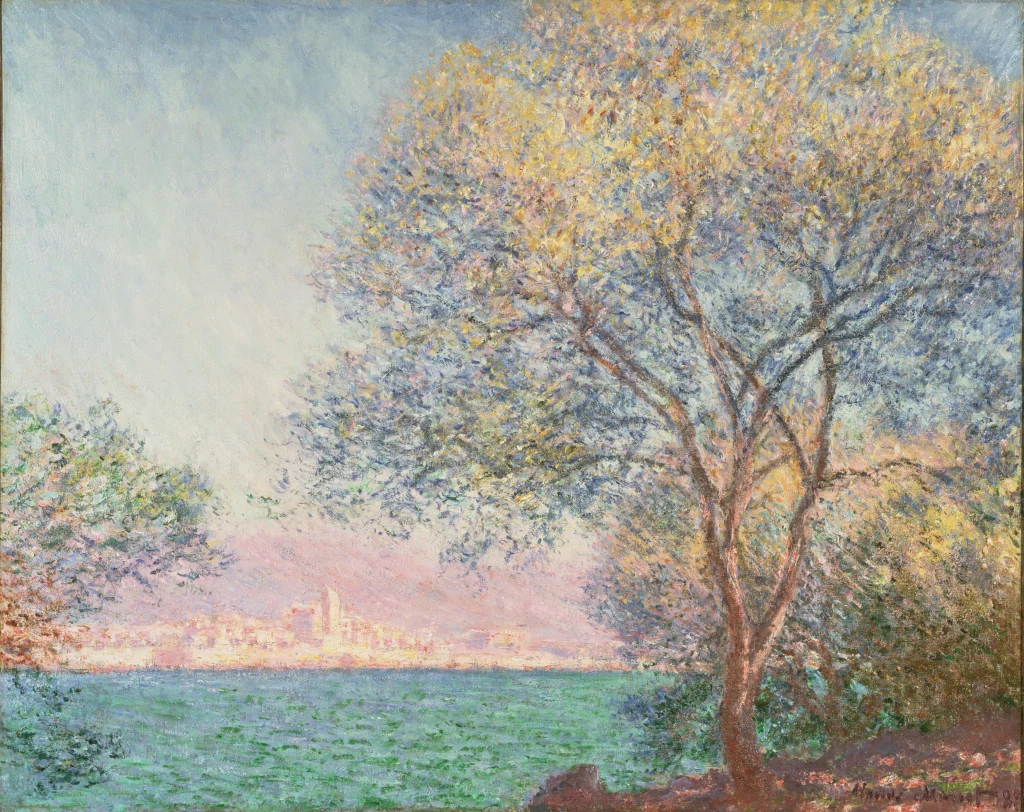
Monet first came to the Riviera in 1884 and again in 1888, to the eastern-most end of the Corniche where he painted scenes of Bordighera and Menton like a demon, thrilled by the light he could never find in Paris, and then Antibes, “a small, fortified town, baked to a golden crust by the sun,” he wrote to his partner Alice Hoschedé. “What I will bring back from here will be sweetness itself, white, pink, blue, all of it enveloped in this fairy-like air.” And to look at his The Mediterranean (Cap d’Antibes), with the soft tide caressing the bubbling rocks as it retires, you know exactly what he means. And then there’s the sudden drama of his View of Bordighera looking through the course and threatening thickets down to the luminescent old town.
And then, in the 90s, came the Neo-Impressionists, the Pointillists now sadly bereft of their leader, the inventive and questing Georges Seurat, who had died cruelly young in 1891. But his disciples were soon basking in the light they had made it their mission to draw through their dabs of colour. Paul Signac found a fishing village full of the space and tranquillity he sought and bought a house there. It was Saint-Tropez. Signac’s rather stiff Women at the Well, Opus 238, he sensed harmonies blending between music and painting, shows him at the start of his life there striving to catch the movement of the beach scene and not quite succeeding, while in the simpler composition of Storm at Saint-Tropez two or three years later, he’s got it. He was content. “There is enough material to work on for the rest of my days,” he wrote. “Happiness, that is what I have just discovered.”
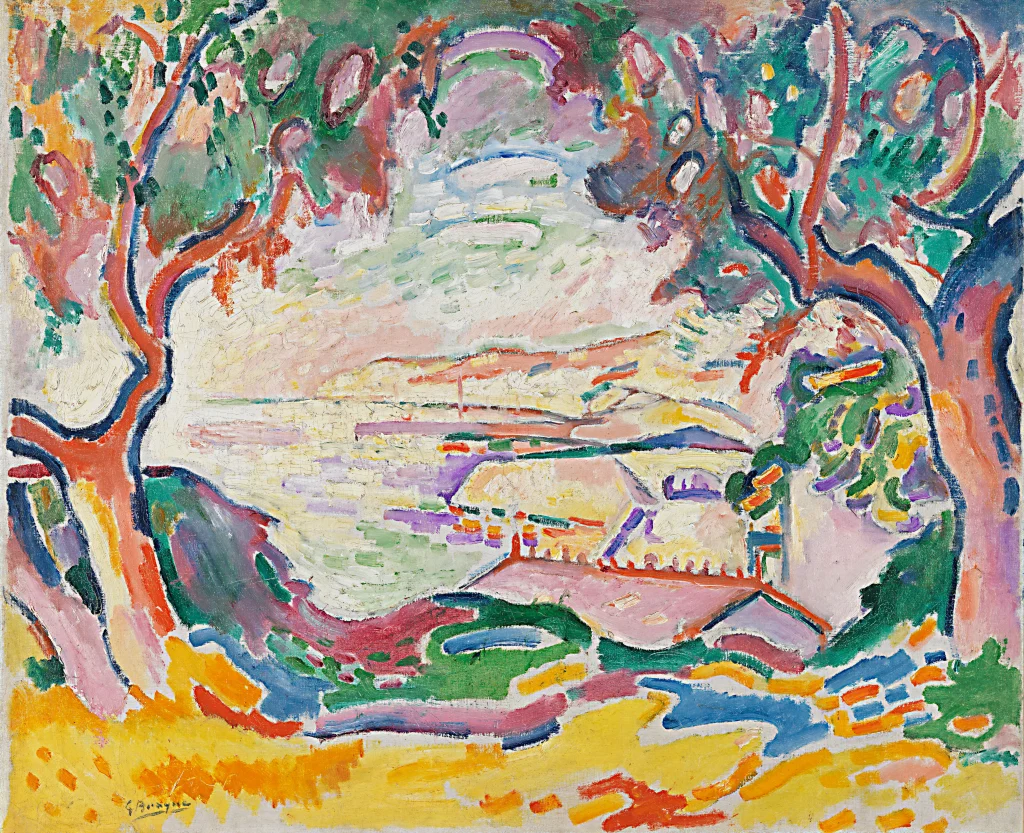
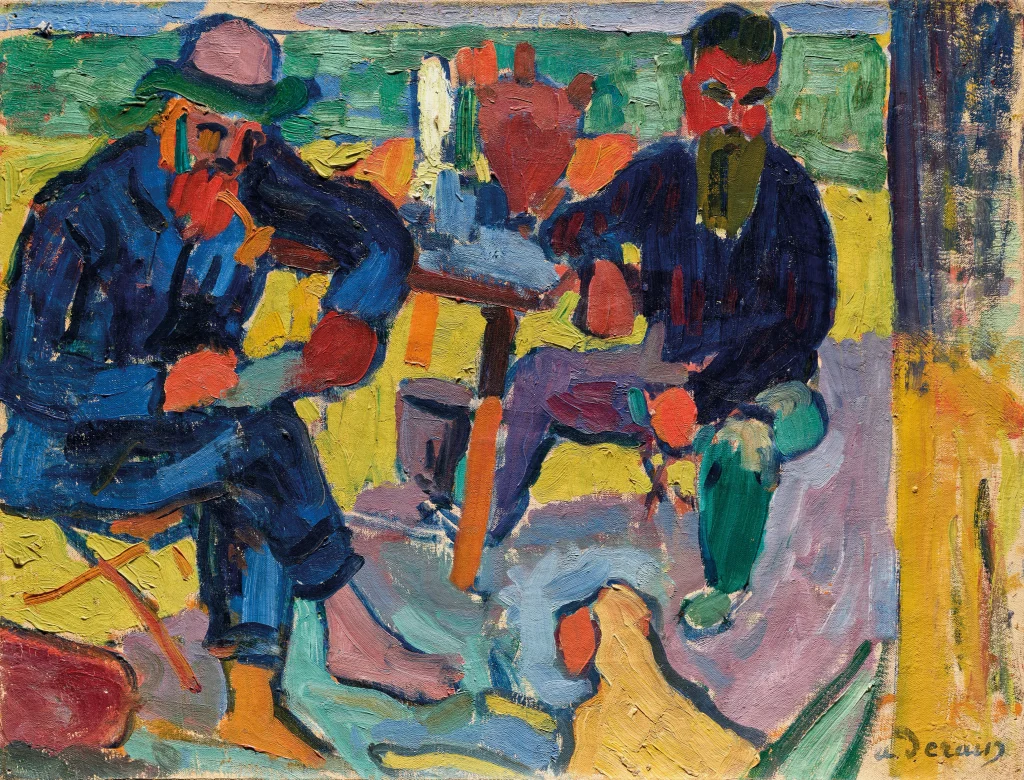
Then came Georges Braque, and there’s a curiously un-Cubist group of dizzily coloured boats by him here in The Port of La Ciotat of 1907; Aristide Maillol, painting his fabulous nudes here as well as modelling bronzes of them; and Matisse, who arrived in 1905, acting as Maillol’s assistant, who never really left, staying in a tiny fishing village called Collioure at the western limit of the Côte d’Azur. His fellow Fauvist André Derain joined him and they were to outrage Paris critics with their revolutionary uses of colour. Derain’s Matisse and Terrus, making a Fauve trio, shows how hard they were prepared to push under the influence of the Riviera.
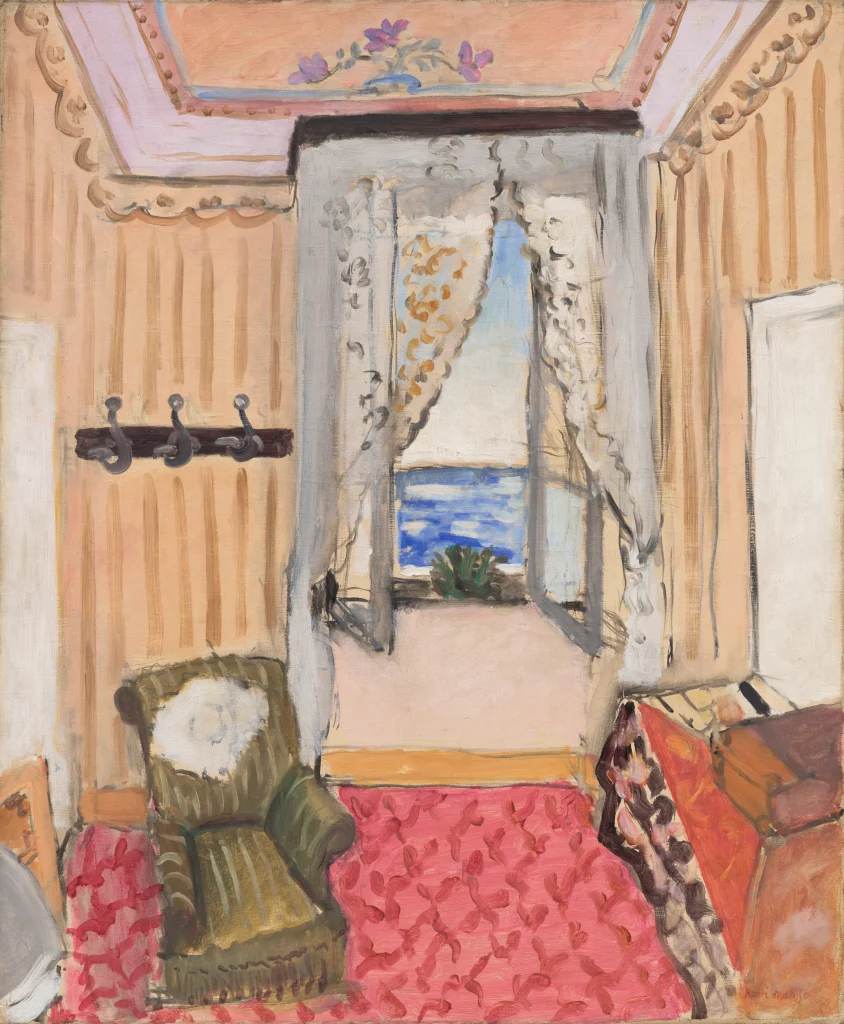
In 1909 Pierre Bonnard, a northern boy, met Signac in Saint-Tropez and they became friends, Bonnard buying a house in the hills above Cannes, and he was hooked. He’d found “an experience akin the thousand and one nights; the sea, the yellow walls, the reflections which are as coloured as the light effects.”
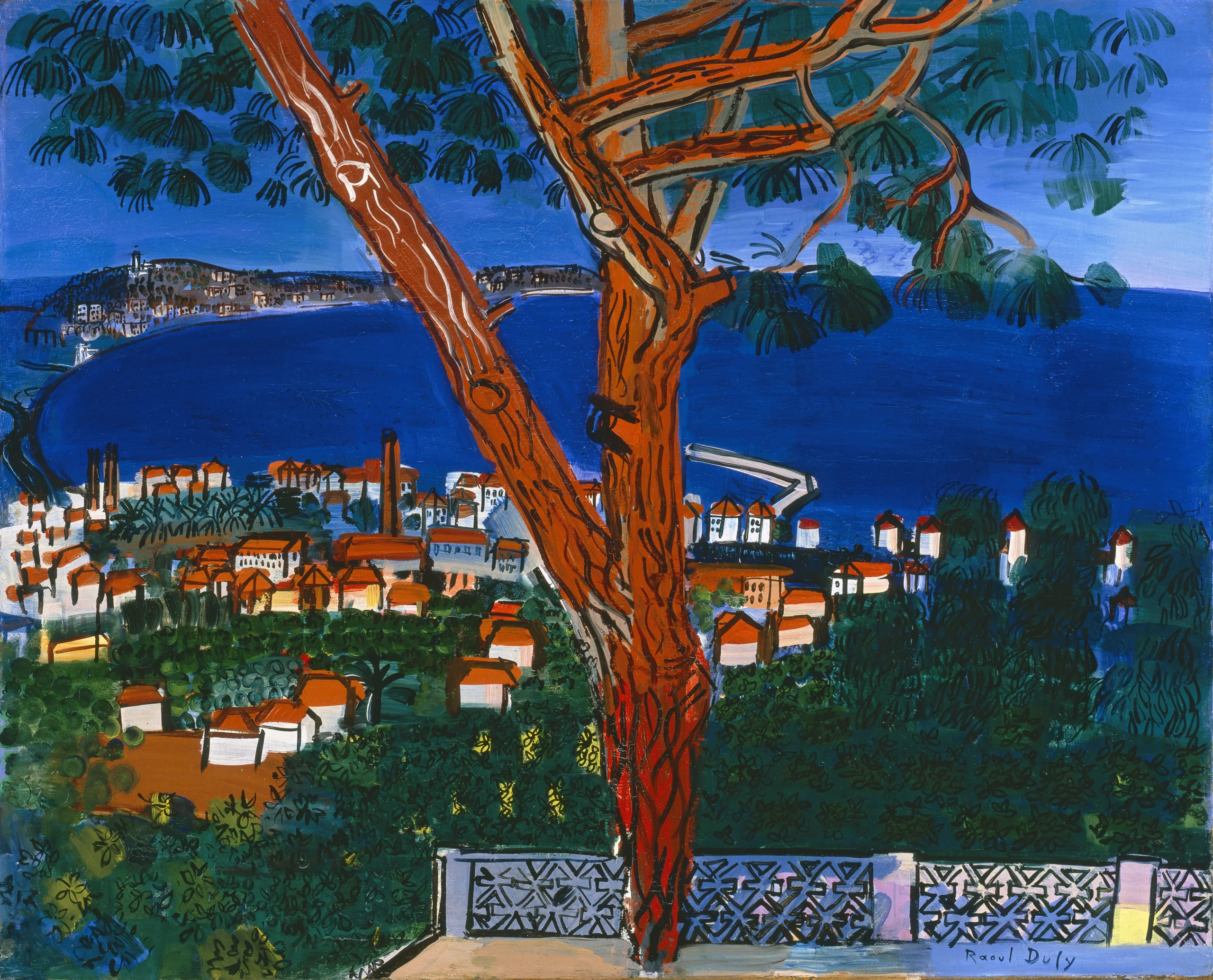
Until the First World War, however, the Côte d’Azur had been a winter playground essentially for the rich where artists were spread thinly along the coast in hitherto unsoiled spots such as Nice, where Matisse had settled, Saint-Tropez and Cannes. After 1918 more artists, like Raoul Dufy, joined them, and together with other avant-garde artists such as Francis Picabia they showed a new future in painting. In the 1920s casinos opened, society arrived, the beaches became populated and bohemian communities settled for a while before moving on, leaving memories behind.
Among them was an artist who had already made his name in Paris who had been born into the sun and sea, but of Spain, not France. Pablo Picasso, who came to St Raphael in 1919, melded into the burgeoning social scene of Le Weekend a la Sud. He worked furiously, though, and saw classical shapes and characters from antiquity appear on his canvasses, subject matter he had never assayed before, and from here he built his international reputation. With a break during the Second World War which he spent almost in seclusion in Paris, Picasso’s home was on the Côte for the rest of his life and died aged 91 at Mougins above Cannes.
Almost as an afterthought in the exhibition comes Yves Klein, born in Nice in 1928, a cultural enfant terrible in the 1950s whose Anthropometrie sans titre here he made by covering two naked women in his own recipe of blue paint and sliding them across a large piece of paper on the floor. Klein, who died of a heart attack at 34, believed he was sublimely akin to the sea and sky of the Nice plage. He invented a new pigment that he thought expressed that. It’s called Klein Blue.
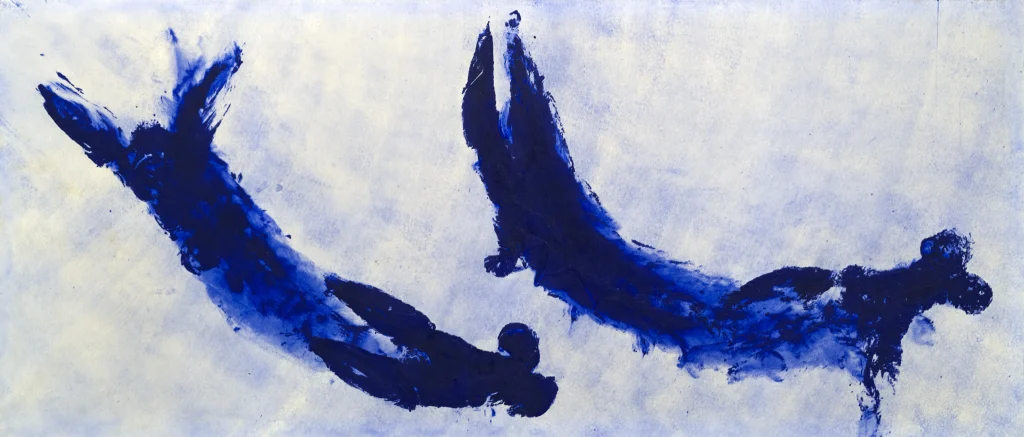
© 2026 Succession Yves Klein c/o ADAGP, Paris and DACS, London
“It is so beautiful here, so bright, so luminous. One swims in blue air.” Monet.
The Royal Academy’s rooms move from Cézanne’s playing-card coastline to Klein’s pure blue bodies, and EyeOnLondon suspects most visitors will linger longest where the colour gets strangest.
For more London arts and culture, visit EyeOnLondon at eye-on-london.com.
Painting the French Riviera
2 OCTOBER 2026 – 31 JANUARY 2027
Burlington House, Piccadilly, London W1J 0BD
Daily, 10am–6pm
Admission from £24 · Concessions available
Follow us on:



Subscribe to our YouTube channel for the latest videos and updates!

We value your thoughts! Share your feedback and help us make EyeOnLondon even better!