Crystal Palace dinosaurs removed from Heritage at Risk Register after major restoration

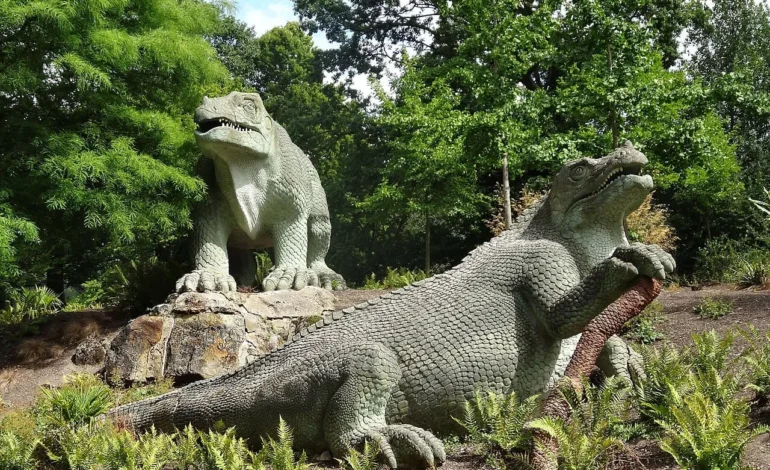
The famous Victorian dinosaur sculptures at Crystal Palace Park have been removed from Historic England’s Heritage at Risk Register following the completion of a major restoration programme that has returned the Grade I listed monuments to public view.
The nationally significant sculptures, first unveiled in 1854, had suffered decades of deterioration after more than 170 years exposed to the elements. Cracking, structural damage, and erosion had raised concerns that important features, including tails, teeth, and toes, could eventually be lost without intervention.
A wider regeneration project, funded primarily through Bromley Council’s £22 million investment generated from the sale of nearby land, alongside a further £5 million from The National Lottery Heritage Fund, has transformed large parts of Crystal Palace Park while securing the future of its best-known attraction.
Crystal Palace Park Trust, which helped deliver the restoration, said the sculptures have been carefully conserved to better reflect how Victorian visitors would have experienced them when they first appeared in the park.
Created during a period of rapid scientific discovery, the life-sized models represented some of the earliest public attempts to reconstruct prehistoric animals from fossil evidence. At the time, they were considered groundbreaking educational displays, introducing visitors to discoveries that were reshaping scientific understanding of Earth’s ancient past.
Historic England described the sculptures as internationally important for both the history of science and Britain’s cultural heritage. The organisation noted that they reflected Victorian curiosity about the origins of life, with Queen Victoria and Prince Albert among those known to have visited the displays during the nineteenth century.
The dinosaurs were added to the Heritage at Risk Register in 2020 as their condition worsened. Their removal from the list marks the successful completion of conservation work intended to safeguard the landmark for future generations.
To celebrate the completion of the regeneration programme, Crystal Palace Park will host a weekend of events and performances on 18 and 19 July, giving visitors the opportunity to explore both the restored dinosaur trail and the wider improvements across the historic park.
Image: Ian Wright
Want more updates on London’s heritage, science, and regeneration projects? Follow EyeOnLondon for the latest stories from across the capital.
Follow us on:



Subscribe to our YouTube channel for the latest videos and updates!

We value your thoughts! Share your feedback and help us make EyeOnLondon even better!