Study warns spacecraft exhaust could contaminate the Moon’s most valuable scientific sites

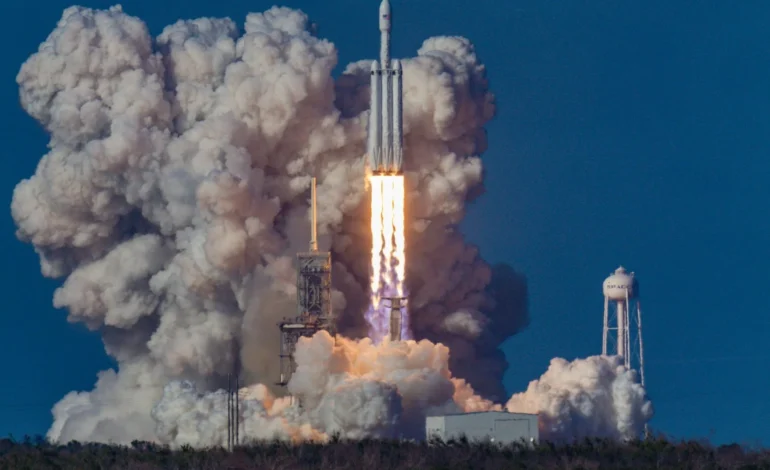
A new scientific study has warned that spacecraft exhaust released during future lunar landings could rapidly spread across the Moon, potentially contaminating ancient ice deposits that may hold clues about how life first emerged on Earth.
The research, published in the Journal of Geophysical Research: Planets, examined how methane released from spacecraft engines could travel across the lunar surface. The study, led by researchers including European Space Agency planetary protection officer Silvio Sinibaldi and physicist Francisca Paiva, concludes that contamination from future missions could reach some of the Moon’s most scientifically important regions within days.
The researchers used computer simulations based on the European Space Agency’s planned Argonaut mission to investigate how methane behaves after a landing near the Moon’s South Pole. Unlike Earth, the Moon has almost no atmosphere, allowing molecules to move freely by repeatedly bouncing across its surface.
According to the study, methane released during a landing could reach the Moon’s North Pole in less than two lunar days. Within seven lunar days, equivalent to almost seven months on Earth, more than half of the methane released in the simulations became trapped inside permanently shadowed polar craters.
These permanently shadowed regions are considered some of the Moon’s most valuable scientific locations because they contain ancient ice deposits that may have preserved organic material delivered by asteroids and comets billions of years ago. Scientists believe these frozen deposits could contain prebiotic molecules that may help explain the origins of life on Earth.
The researchers warn that spacecraft exhaust could mix with these pristine deposits, making it more difficult for future missions to distinguish naturally occurring material from contamination created by human exploration.
While the study highlights a potential challenge for future lunar missions, the researchers say contamination is not necessarily unavoidable. They suggest that landing locations, additional monitoring and improved contamination-control measures could help reduce the risks.
They also argue that future missions should carry instruments capable of measuring contamination directly so computer models can be tested in real lunar conditions.
With governments and private companies preparing a new wave of Moon missions, the researchers say understanding and managing contamination now will help protect one of the Solar System’s most important scientific archives for future generations.
Read more science and environment stories at EyeOnLondon.
Follow us on:



Subscribe to our YouTube channel for the latest videos and updates!

We value your thoughts! Share your feedback and help us make EyeOnLondon even better!