South Korean researchers develop longer-lasting anode-free battery technology for electric vehicles

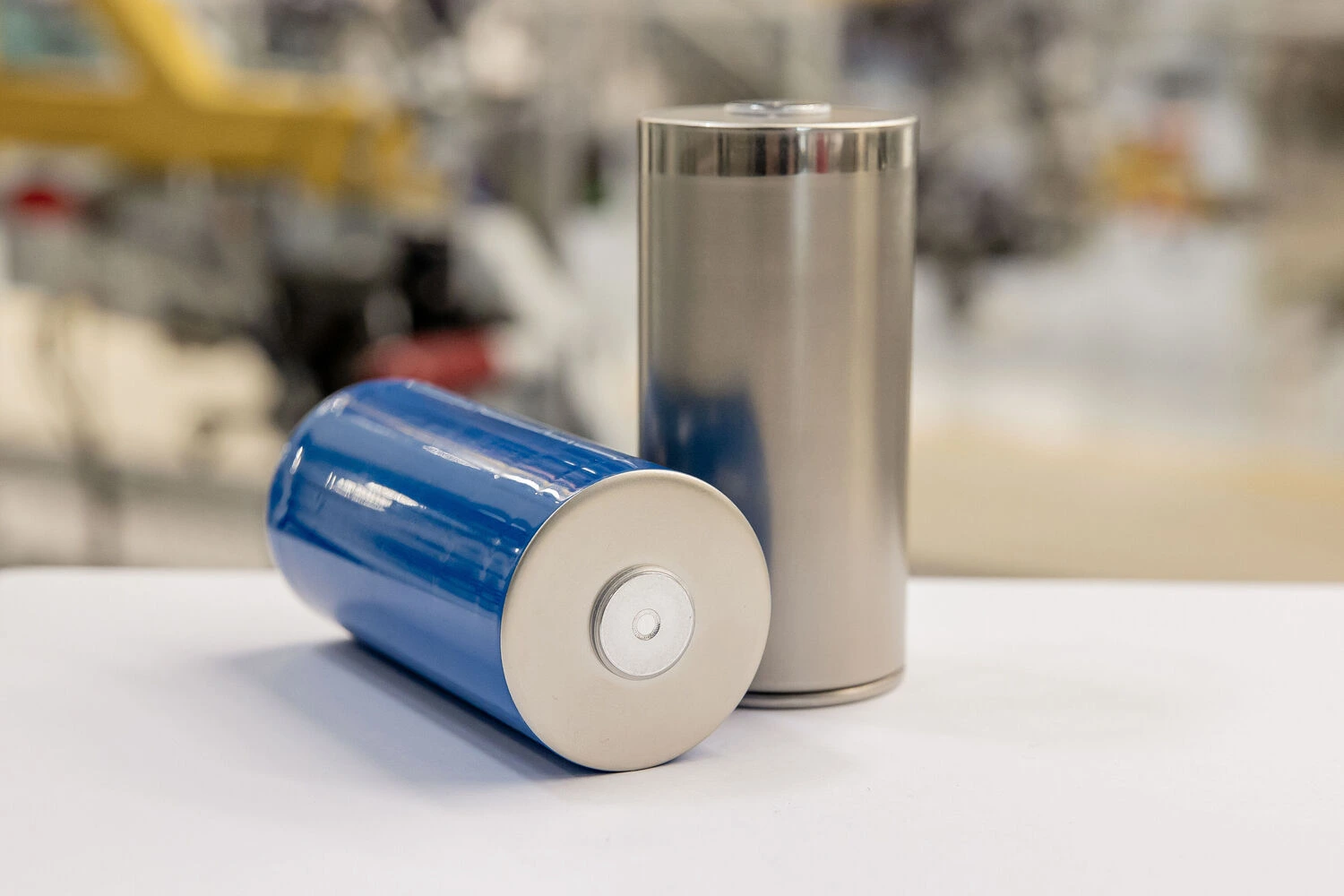
Scientists in South Korea have developed a new battery technology that could help electric vehicles travel further on a single charge without relying on larger or heavier battery packs. The breakthrough addresses one of the main obstacles to commercialising anode-free batteries: their tendency to deteriorate as lithium builds up unevenly during charging.
The research was led by Professors Jinwoo Lee and Hee-Tae Jung of the Department of Chemical and Biomolecular Engineering at the Korea Advanced Institute of Science and Technology (KAIST), working with researchers from Kyungpook National University and the National NanoFab Center.
Unlike conventional lithium-ion batteries, which use materials such as graphite to store lithium in the anode, anode-free designs allow lithium to accumulate directly on a thin copper surface. Removing the conventional anode creates more room for energy storage while reducing battery weight and thickness.
However, repeated charging can cause lithium to form sharp, branching structures known as dendrites. These formations disrupt battery performance and contribute to the deterioration of the protective layer around the electrode, shortening its operating life.
The KAIST team tackled the problem by borrowing precision manufacturing techniques from the semiconductor industry. Using a process called secondary sputtering lithography, the researchers created microscopic tube-like structures across the copper surface. Each measures approximately 300 nanometres wide and 150 nanometres high.
The patterned surface provides around four times the area of ordinary flat copper foil, helping lithium accumulate more evenly rather than concentrating in potentially damaging formations.
The researchers also applied an ultrathin coating of MXene, a two-dimensional material measuring just 10 nanometres thick. This encourages the formation of a stable protective layer rich in lithium fluoride, helping to limit unwanted chemical reactions and restrict the growth of lithium dendrites.
Advanced imaging and chemical analysis techniques, including transmission electron microscopy and X-ray photoelectron spectroscopy, helped the team examine how the protective layer develops.
Professor Lee said the approach demonstrates how semiconductor manufacturing methods can improve lithium deposition and electrode stability without adding excess lithium or changing the electrolyte formulation.
The findings were published online on 1 September in Advanced Functional Materials. KAIST researchers Eunji Kim, Hyunju Jung and Jinuk Kim were co-first authors.
Although further development will be needed before the technology reaches commercial vehicles, the research offers a potential route towards more compact, lighter and longer-lasting high-energy batteries.
For more, visit EyeOnLondon at eye-on-london.com
Follow us on:



Subscribe to our YouTube channel for the latest videos & updates!

We value your thoughts! Share your feedback and help us make EyeOnLondon even better!