Tate Modern’s light and magic finds the birth of art photography everywhere but Europe


For decades, the standard account of pictorialism has gone roughly like this: a brief, slightly embarrassing phase in the late nineteenth century when photographers, insecure about whether their new medium counted as art, borrowed the soft focus and staged compositions of painting to make their case, before modernism swept the whole movement away by the 1920s. Tate Modern’s new exhibition, Light and Magic: The Birth of Art Photography, treats that account as the problem rather than the premise.
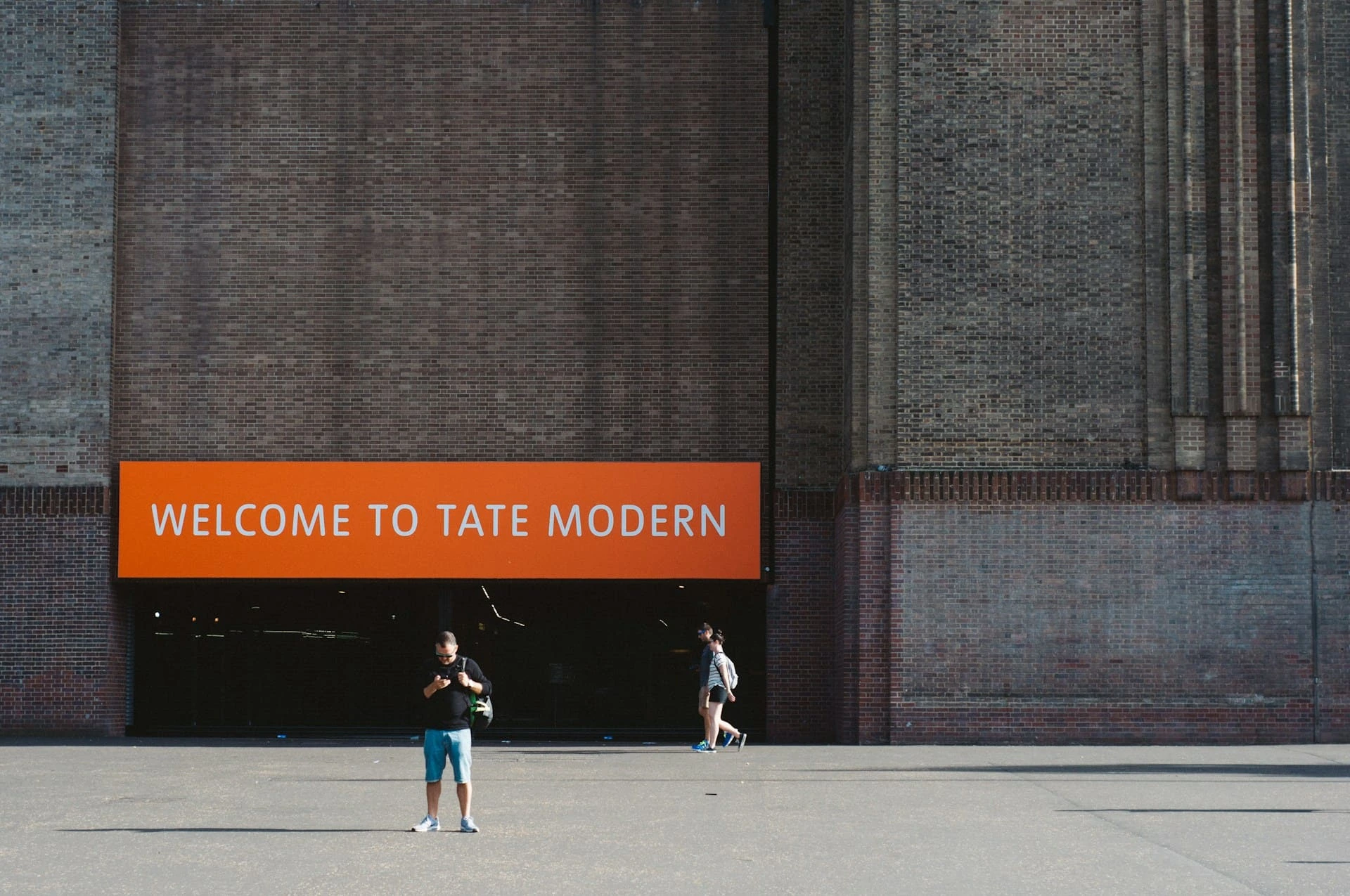
The show, which opened on 14 October and runs in the Eyal Ofer Galleries until 21 February 2027, brings together around 200 vintage prints by more than 80 photographers working across Europe, the Americas, Asia and Australia. It is, according to Tate, the first major exhibition to treat pictorialism as a genuinely global movement rather than a Western one with a few international footnotes. The claim is being made plainly by the person who built the show. Senior curator Charmaine Toh told The Art Newspaper: “This is probably our first ever revisionist photography exhibition. In the past we’ve celebrated certain movements or certain themes. But this time we wanted to do something different.”
Toh is unusually well placed to make that argument.
She wrote her PhD on pictorialism in her home city of Singapore, and received that doctorate from the University of Melbourne before publishing Imagining Singapore: Pictorial Photography from the 1950s to the 1970s. That detail matters more than a standard curatorial biography line, because it is precisely the gap her own research exposed: the textbook timeline for pictorialism has the movement fading out in the 1920s, and
Toh points to photographers around the world who kept making the work into the 1950s and 1960s, decades after London and New York supposedly moved on.
What makes the exhibition’s central claim tangible rather than abstract is which photographers actually hang in its opening rooms. The show places celebrated figures including Clarence H. White and Adolph de Meyer alongside photographers whose contributions have often been overlooked in Western histories, including Long Chin-san, Luo Bonian and Shapoor N. Bhedwar. Bhedwar is a particularly pointed inclusion: an Indian-born photographer who trained in London in the late 1880s, won medals in British photographic competitions as a student, and then returned to Bombay to build an internationally exhibiting studio practice, becoming, by most accounts, the first Indian art photographer to achieve that kind of international recognition. Long Chin-san’s Pavilion Fairyland, meanwhile, is a direct visual argument against the idea that pictorialism was simply painting imitated through a lens.
The work demonstrates how photographers adapted local artistic traditions while embracing photography’s expressive possibilities, in this case drawing on Chinese ink painting rather than the European impressionism usually credited as pictorialism’s visual source.
The exhibition’s second major section pushes the same argument through infrastructure rather than individual biography. Rather than treating pictorialism as a loose aesthetic that happened to crop up in different places, it traces the actual institutions that let photographers in different countries know what each other were doing.
Photographic societies, camera clubs and salons shaped Pictorialism internationally, enabling photographers to present and publish work while exchanging ideas and technical knowledge across borders, among them the Royal Photographic Society in London, Guangshe in Shanghai, The New Line Group in South Korea and the Photographic Society of Singapore. One particularly telling detail from Toh’s own research: these exhibitions were not a consolation prize for photographers working outside London or Paris.
In places like Singapore, Brazil, and Australia, international exhibitions were a source of pride, with local photographers judging work sent from Britain, reversing the usual direction in which cultural authority is assumed to travel.
The exhibition’s practical staging makes its own argument about process, not just geography. A functioning darkroom sits inside the galleries, and curators have deliberately hung prints made from the same negative side by side, so visitors can see how a single image changes entirely depending on the paper, chemistry and handwork applied to it afterward.
As assistant curator Genevieve Barton put it, pictorialists used so many processes, from Fresson prints and platinum prints to Vivex colour prints and photogravures, and the show treats that technical range as inseparable from its geographic one. A photograph altered by hand in a Shanghai darkroom in the 1930s and one altered by hand in London in the 1900s were, on this reading, participating in the same conversation about what a camera could be made to do, even without ever meeting.
For more London arts and culture, visit EyeOnLondon at eye-on-london.com
Light and Magic: The Birth of Art Photography
Venue: Tate Modern, Bankside, London SE1 9TG
Dates: 14 October 2026 to 21 February 2027
Opening times: 10.00 to 18.00 Sunday to Thursday, 10.00 to 21.00 Fridays and Saturdays
Admission: £20 full price, £19 concessions, £5 Tate Collective (16 to 25), free for Members
Follow us on:



Subscribe to our YouTube channel for the latest videos and updates!

We value your thoughts! Share your feedback and help us make EyeOnLondon even better!